Why You're Probably Deficient (And Don't Know It)
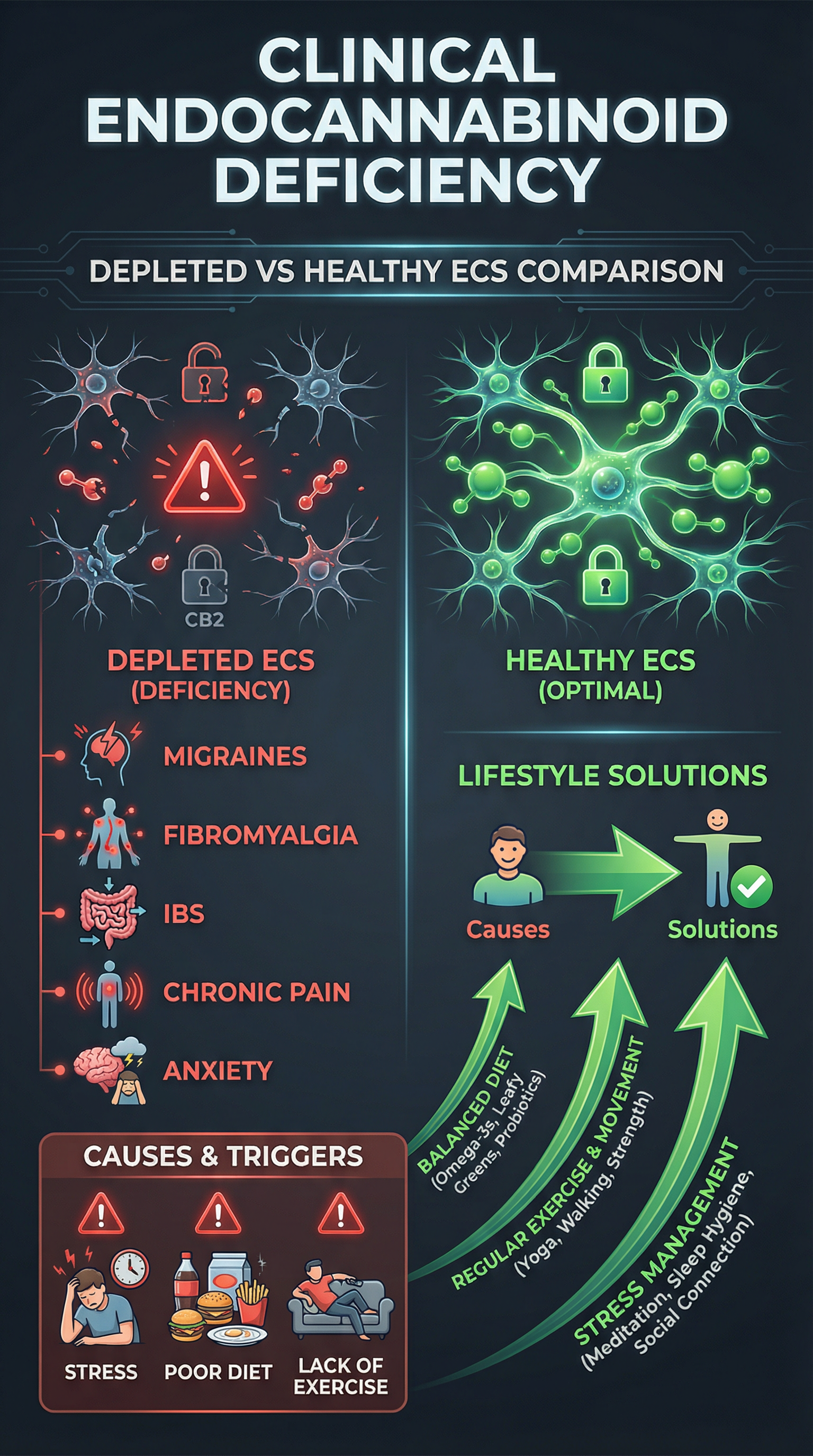
Clinical Endocannabinoid Deficiency is real. Migraines, fibromyalgia, IBS—all potentially linked to an ECS that's not getting what it needs.
Full Article
Why You're Probably Deficient (And Don't Know It)
Let’s cut the bullshit. You think you’re doing everything right. You’re eating clean, hitting the gym, maybe even meditating. You’re chasing that elusive state of “balance” everyone preaches. But what if I told you that balance is a myth? What if the very thing you’re striving for is the reason you feel like crap?
Migraines, fibromyalgia, irritable bowel syndrome (IBS)—sound familiar? You’ve probably been to a dozen doctors who’ve thrown a dozen different pills at you, all while telling you it’s “all in your head.” It’s not. These aren’t just random, disconnected ailments. They’re potential signs of a much deeper problem, a fundamental deficiency in your body’s master regulatory system. I’m talking about Clinical Endocannabinoid Deficiency (CED).
And the kicker? You’re probably suffering from it and don’t even know.
The Problem: Chasing a Ghost
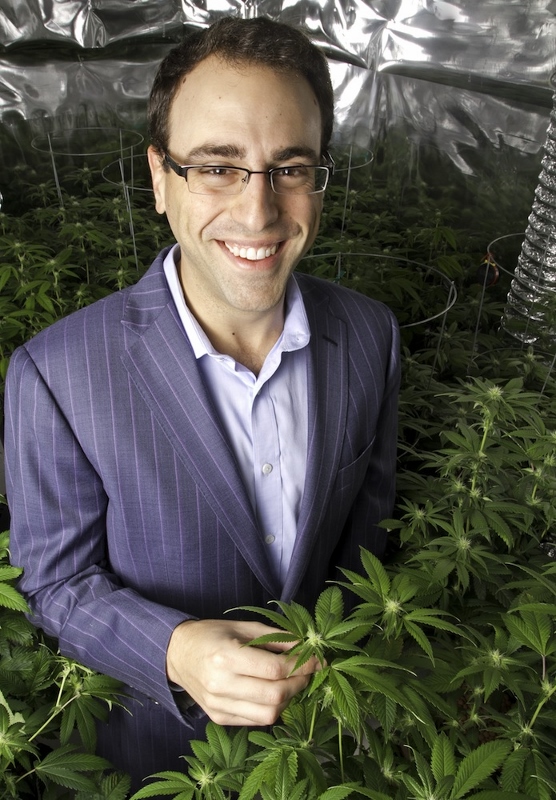
We’re all fed the same line: find balance. Homeostasis. A state of perfect equilibrium. It sounds nice, poetic even. But it’s a complete and utter fantasy. As my mentor, the great Dr. Bob Melamede, a man who looked like a stoned-out hippie but had a Ph.D. in molecular biology, taught me, life doesn’t exist in equilibrium. Life exists far from equilibrium.
"Equilibrium is death. The only truly balanced system is a dead one. Life is a process of constant adaptation, of surfing the edge of chaos."
Think about it. The universe is governed by the second law of thermodynamics, which dictates that entropy—disorder—always increases. Time’s arrow only moves forward. You can’t go back. The past is gone. Resisting this fundamental truth is like trying to swim up a waterfall. You’ll only exhaust yourself and get nowhere. Backward-Looking People (BLPs) are constantly fighting this current, clinging to an idealized past that never was. Forward-Looking People (FLPs), on the other hand, learn to ride the wave. They adapt, they evolve.
Your body is no different. It’s a complex, self-organizing system that thrives on flux. When you try to force it into a static state of “balance,” you’re working against its very nature. You’re creating the very stress and disorder you’re trying to avoid. And that’s where the endocannabinoid system (ECS) comes in.
The Application: How to Feed Your ECS
So, you’re probably thinking, “Great, another thing that’s wrong with me. What the hell do I do about it?” This isn’t about another pill or another fad diet. This is about a fundamental shift in how you approach your health. It’s about giving your body the tools it needs to self-organize and thrive in a far-from-equilibrium world.
First, you need to stop fighting the current. Embrace the flux. Understand that stress is a part of life, but it’s how you adapt to it that matters. This is where cannabinoids from the cannabis plant—phytocannabinoids like THC and CBD—can play a powerful role. They are, in essence, a supplement for a deficient ECS. They are the spare keys you need when your body can’t make enough of its own.
I’m not saying you need to get high. This is about therapeutic, targeted use. For some, a low dose of CBD can be enough to restore tone to the ECS. For others, a balanced ratio of THC and CBD is more effective. It’s a deeply personal journey of finding what works for your unique biology. It’s about listening to your body, not some dogmatic prescription.
But it’s not just about cannabis. You can support your ECS in other ways:
- Diet: Eat more omega-3 fatty acids, found in fish, flaxseeds, and walnuts. Your body uses these to synthesize endocannabinoids.
- Exercise: Move your body. Running, yoga, even a brisk walk can boost anandamide levels—the “bliss molecule.”
- Mindfulness: Reduce chronic stress through meditation or deep breathing. Cortisol, the stress hormone, is a known enemy of the ECS.
This isn’t a quick fix. It’s a lifestyle. It’s about making conscious choices every day to support your body’s innate ability to heal and adapt.
The Takeaway: Stop Chasing Balance, Start Surfing Chaos
It’s time to let go of the bullshit idea of balance. Your body is not a static machine; it’s a dynamic, flowing river of information. Your health depends on its ability to navigate the rapids, not to sit in a stagnant pond.
If you’re struggling with chronic, unexplained symptoms, it’s time to ask a different question. It’s not “What’s wrong with me?” but “Is my endocannabinoid system getting what it needs?” The answer could change your damn life.
Stop being a Backward-Looking Person, stuck in old paradigms that don’t work. Be a Forward-Looking Person. Embrace the science. Challenge the status quo. Give your body the support it needs to not just survive, but to thrive at the edge of chaos.
Related Reading
- The 13% Scandal — Why this isn't taught in medical school

Deeper into the Science: Meet Your Inner Pharmacy
Let's get a bit more granular, because understanding the how is crucial. Your ECS is a masterpiece of biological engineering. The two main endocannabinoids your body produces, anandamide and 2-arachidonoylglycerol (2-AG), are fascinating molecules. Anandamide, often called the "bliss molecule," is named after the Sanskrit word for joy, ananda. It plays a huge role in mood, memory, and appetite. It's the reason you feel that "runner's high" after a good workout. It's a fleeting molecule, synthesized on demand and broken down quickly by an enzyme called FAAH. This rapid turnover is key—it allows for precise, localized signaling.
2-AG is the workhorse of the ECS. It's found in much higher concentrations in the brain than anandamide and is a full agonist at both CB1 and CB2 receptors, meaning it binds to them perfectly and elicits a strong response. It's a critical player in regulating immune function, inflammation, and pain perception. Unlike anandamide, its breakdown is handled by a different enzyme, MAGL.
The receptors, CB1 and CB2, are the locks to these keys. CB1 receptors are primarily found in the central nervous system—the brain and spinal cord. They are the most abundant G-protein coupled receptors in the brain, which tells you how damn important they are. They mediate the psychoactive effects of THC, but more importantly, they regulate neurotransmitter release, which is how they control everything from mood to memory to motor control. When you're feeling anxious, or your memory is shot, it's often a sign that your CB1 signaling is off-kilter.
CB2 receptors, on the other hand, are found mostly in the periphery, on immune cells, in your gut, and in your spleen. They are the primary regulators of your immune system and inflammatory response. When you have chronic inflammation, it's a sign that your CB2 receptors aren't getting the signal to calm things down. This is why CBD, which has a strong affinity for CB2 receptors, is such a powerful anti-inflammatory.
Dr. Bob Melamede used to say that the ECS is the bridge between the mind and the body. It's the system that translates our experiences—our stress, our diet, our thoughts—into physiological responses. When that bridge is weak, the communication breaks down, and you get chaos. You get disease.
The Personal Anecdote: My Own Brush with Deficiency
Like a best friend, I share my deepest secrets and insecurities with you without fear of judgment. I have placed my entire being into this system, for better or for worse. I have excluded nothing, not even for the sake of political correctness or "common decency." My life is truly an open book for you to examine and, I hope, something upon which you eventually improve. Only through unspeakable honesty could I convey the ideas and Truths that are most likely to inspire and connect you to your higher self. Please take hold of my life preserver and attempt to see the world through my eyes, even if only for a while. When I speak to you throughout this course, know that I've been exactly where you are and I am in no way trying to condescend to you or demean you. I am simply offering the Truth as best as I know how.
In the spirit of complete openness, I want to share an experience that challenged some of my long-held beliefs and deepened my understanding of myself. One evening, I found myself in the company of people who were casually smoking weed. They were nothing like the stereotypes I had encountered before—neither unmotivated nor troubled—but instead appeared professional, wise, physically fit, and productive. This encounter prompted me to reconsider the fears and assumptions I had been conditioned to hold about drugs and those who use them. It was a subtle but meaningful step in my ongoing journey toward greater self-awareness and honesty.
This is not just my story. I've heard countless stories from people who have found relief from chronic conditions by supporting their ECS. It's a paradigm shift in how we think about health, and it's a message that I'm passionate about sharing.
Comments
Related Articles
Dr. Bob's Most Controversial Ideas

The Water That Wears Away Stone
The Only Law That Matters

The Red Pill for the AI Age
The Same Physics Runs Both
Want More?
Subscribe to The Forward Look on YouTube to get notified when new episodes drop.
Subscribe