The Plant That Evolved With Us
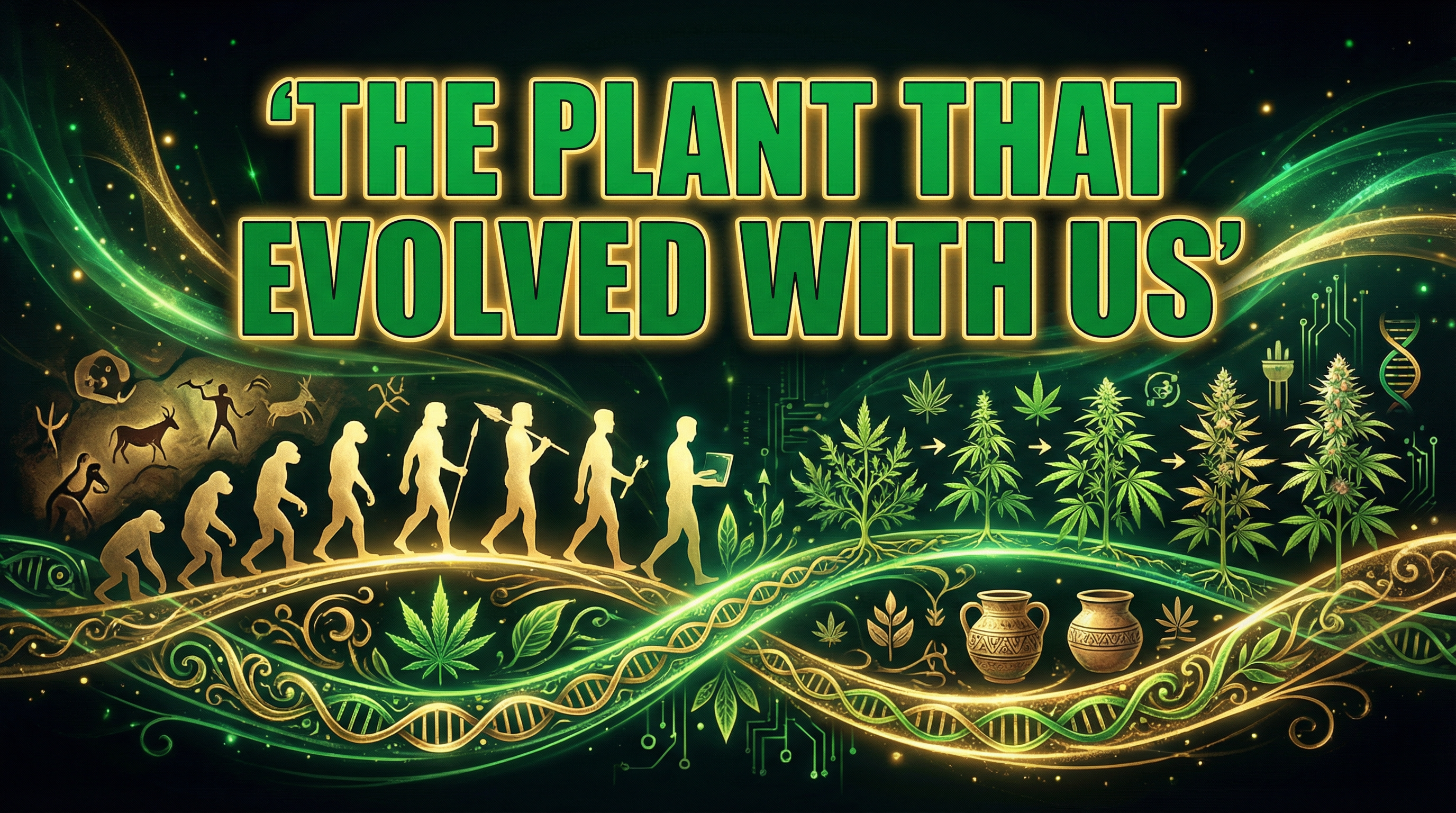
Cannabis and humans have co-evolved for thousands of years. We have receptors specifically designed for cannabinoids. This isn't an accident.
Full Article
You think it's an accident that cannabis is woven into the fabric of human history? You think it's a coincidence that your body has a system practically begging for the compounds found in this plant? If you do, you're not paying attention. The universe doesn't do accidents. It does physics. It does chemistry. It does biology. And the story of cannabis and humanity is a story of co-evolution—a dance that's been going on for thousands of years.
The Endocannabinoid System: Your Body's Master Regulator
Here's what the prohibitionists never told you: your body produces its own cannabinoids. They're called endocannabinoids, and they're part of a vast regulatory network called the endocannabinoid system (ECS). This isn't some fringe theory—it's established science, discovered in the 1990s by researchers trying to understand how THC affects the brain.
The ECS is ancient. We're talking hundreds of millions of years old. CB1 and CB2 receptors—the locks that cannabinoids fit into—are found across virtually all vertebrates: fish, birds, reptiles, mammals. Your dog has them. Your cat has them. Even sea squirts, some of the most primitive chordates on Earth, have cannabinoid receptors. This system predates the emergence of cannabis by an enormous margin.
So what does the ECS actually do? It regulates almost everything: pain perception, mood, appetite, memory, immune function, sleep, reproduction, bone density, neurogenesis. It's your body's master homeostatic regulator—the system that keeps all your other systems in balance. When something goes wrong, the ECS kicks in to restore equilibrium. It's the biological embodiment of far-from-equilibrium thermodynamics in action.
10,000 Years of Partnership
The archaeological record tells a story that the Drug Enforcement Administration would rather you not hear. Cannabis seeds have been found in Japanese archaeological sites dating back 10,000 years. The Yanghai Tombs in China, dating to around 2,500 BCE, contained nearly two pounds of cannabis—clearly cultivated for its psychoactive properties, not just fiber. The frozen tombs of Scythian warriors contained elaborate cannabis-burning apparatus, confirming the accounts of Herodotus who described their ritual use of the plant.
Cannabis spread along the Silk Road, moving with human migration and trade. It was used in Ayurvedic medicine in India, in traditional Chinese medicine, in the folk medicine of virtually every culture it touched. This wasn't because our ancestors were stupid or hedonistic. It was because they discovered, through thousands of years of empirical observation, that this plant worked.
Think about what co-evolution actually means. Humans selected cannabis plants with higher cannabinoid content, with better fiber, with more nutritious seeds. We spread the plant across continents, protected it from competitors, gave it prime agricultural land. In return, cannabis gave us rope, clothing, food, medicine, and altered states of consciousness that may have played a role in the development of human spirituality and creativity. We shaped each other.
The Molecular Lock and Key
Here's where it gets interesting from a biochemical perspective. THC—the primary psychoactive compound in cannabis—is almost a perfect molecular mimic of anandamide, one of your body's primary endocannabinoids. The name "anandamide" comes from the Sanskrit word for bliss, and it's not a coincidence. This molecule, which your brain produces naturally, fits into the same CB1 receptors that THC does.
CBD, the other major cannabinoid, works differently. It doesn't bind directly to CB1 or CB2 receptors. Instead, it modulates the entire system—inhibiting the breakdown of anandamide, interacting with serotonin receptors, affecting ion channels involved in pain perception. It's like a volume knob for your entire endocannabinoid system.
And then there's the entourage effect. Cannabis contains over 100 different cannabinoids and hundreds of terpenes—aromatic compounds that also interact with your nervous system. These compounds work synergistically, each one modulating the effects of the others. It's not a single drug; it's a complex pharmacological symphony that your body is already tuned to receive.
Dr. Bob's Revolutionary Insight
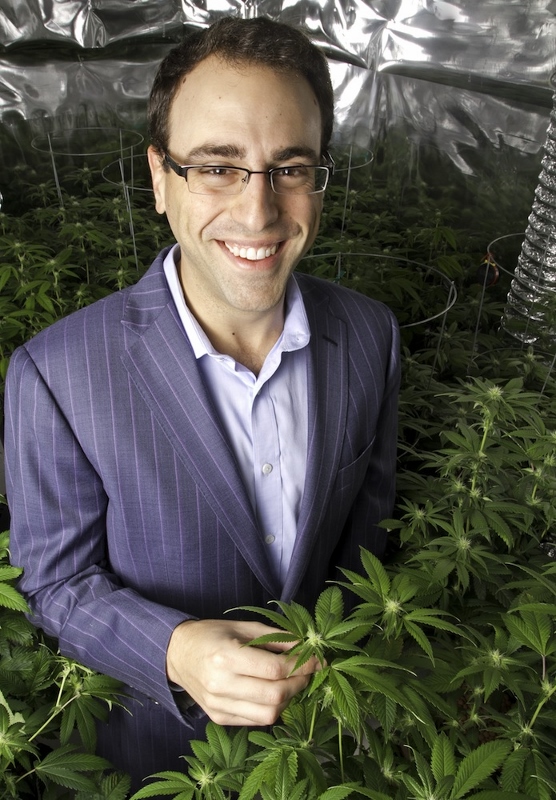
Dr. Robert Melamede, the biologist who has been one of the most important voices in cannabinoid science, understood something that most researchers missed: the endocannabinoid system is fundamentally about managing entropy. Your body is a far-from-equilibrium system, constantly fighting against the thermodynamic tendency toward disorder. The ECS is one of the primary mechanisms by which your body maintains its organized, living state.
Inflammation, for example, is a form of biological entropy—a breakdown of ordered tissue. Cannabinoids are potent anti-inflammatories. Oxidative stress—the accumulation of free radicals that damages cells—is another form of entropy. Cannabinoids are powerful antioxidants. Neurodegeneration, the loss of organized neural tissue, is entropy in action. Cannabinoids promote neurogenesis and protect neurons from damage.
This is why cannabis has such a broad range of therapeutic applications. It's not treating specific diseases; it's supporting your body's fundamental ability to maintain order in the face of entropy. It's helping you stay far from equilibrium—which, as we've discussed, is where life happens.
The Takeaway: Reclaim Your Evolutionary Heritage
The prohibition of cannabis wasn't based on science. It was based on racism, corporate interests, and political opportunism. Harry Anslinger, the architect of American cannabis prohibition, explicitly used racist rhetoric to demonize the plant. DuPont and other industrial interests saw hemp as a threat to their synthetic fiber and petrochemical businesses. The "Reefer Madness" propaganda was never about protecting public health—it was about control.
You have cannabinoid receptors throughout your body because your ancestors co-evolved with this plant. Your endocannabinoid system exists because it provides a survival advantage—it helps you adapt, heal, and maintain homeostasis in a chaotic world. Cannabis isn't a foreign invader; it's a molecular key that fits locks your body has been building for millions of years.
This doesn't mean cannabis is for everyone, or that it should be used recklessly. Like any powerful tool, it requires respect and understanding. But the idea that this plant—which has been our partner for ten millennia—is somehow inherently dangerous or without medical value is not just wrong. It's a lie that has caused immeasurable suffering.
"The endocannabinoid system is the body's way of managing entropy. Cannabis is a tool that evolution has given us to support that process. To deny people access to this tool is to deny them their evolutionary heritage." — Dr. Robert Melamede
The science is clear. The history is clear. The only thing standing between you and a full understanding of this plant is the residue of a century of propaganda. It's time to let that go. It's time to reclaim your evolutionary heritage.

Comments
Related Articles
The Stoned-Out Hippie With a PhD

There Are Only Two Types of People
Are You a Forward-Looking Person? (Take the Test)
Mana is Energy (And Energy is Everything)

The Paradox of Control
Want More?
Subscribe to The Forward Look on YouTube to get notified when new episodes drop.
Subscribe