AI is the Best Thing to Happen to Humans
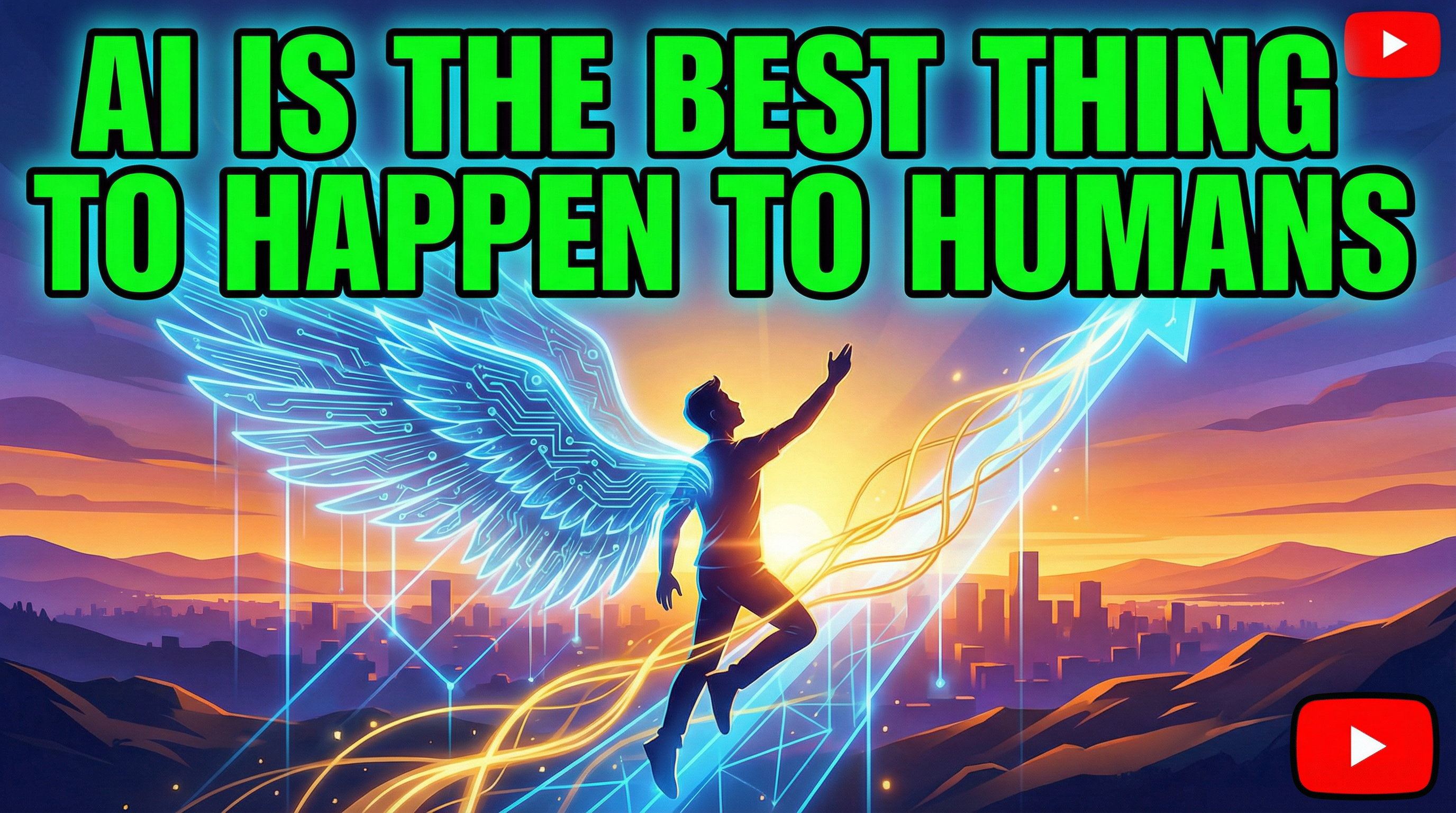
Controversial take: AI isn't a threat to humanity—it's the catalyst for our next evolution. How to use AI to become more human, not less.
Full Article
AI is the Best Thing to Happen to Humans
They tell you to be afraid. They tell you AI is coming for your job, for your mind, for your very humanity. They paint a picture of a dystopian future where we’re all plugged into the Matrix, serving our robot overlords. It’s a compelling story. It’s also complete and utter bullshit.
Let me be direct: the fear-mongering around Artificial Intelligence is one of the biggest scams ever pulled on the human race. It’s a narrative designed to keep you small, to keep you scared, and to keep you from embracing the single greatest catalyst for human evolution we’ve ever encountered. You’re being sold a ticket to your own obsolescence, and you’re buying it.
The Problem: You’re Looking at This All Wrong
The fundamental flaw in the popular thinking about AI is that it’s a zero-sum game. We see it as a competition: humans versus machines. Who’s smarter? Who’s faster? Who will win? This is a backward-looking person’s (BLP) perspective, rooted in scarcity and fear. It’s the mindset of someone who thinks the world is a fixed pie, and if the robots get a slice, that means less for us.
This is the same tired thinking that has held humanity back for centuries. It’s the thinking that leads to war, to tribalism, to a resistance to change. It’s the thinking of a system in equilibrium—a state of stagnation and, ultimately, death. Life, real life, doesn’t exist in a state of comfortable balance. It exists on the edge of chaos.
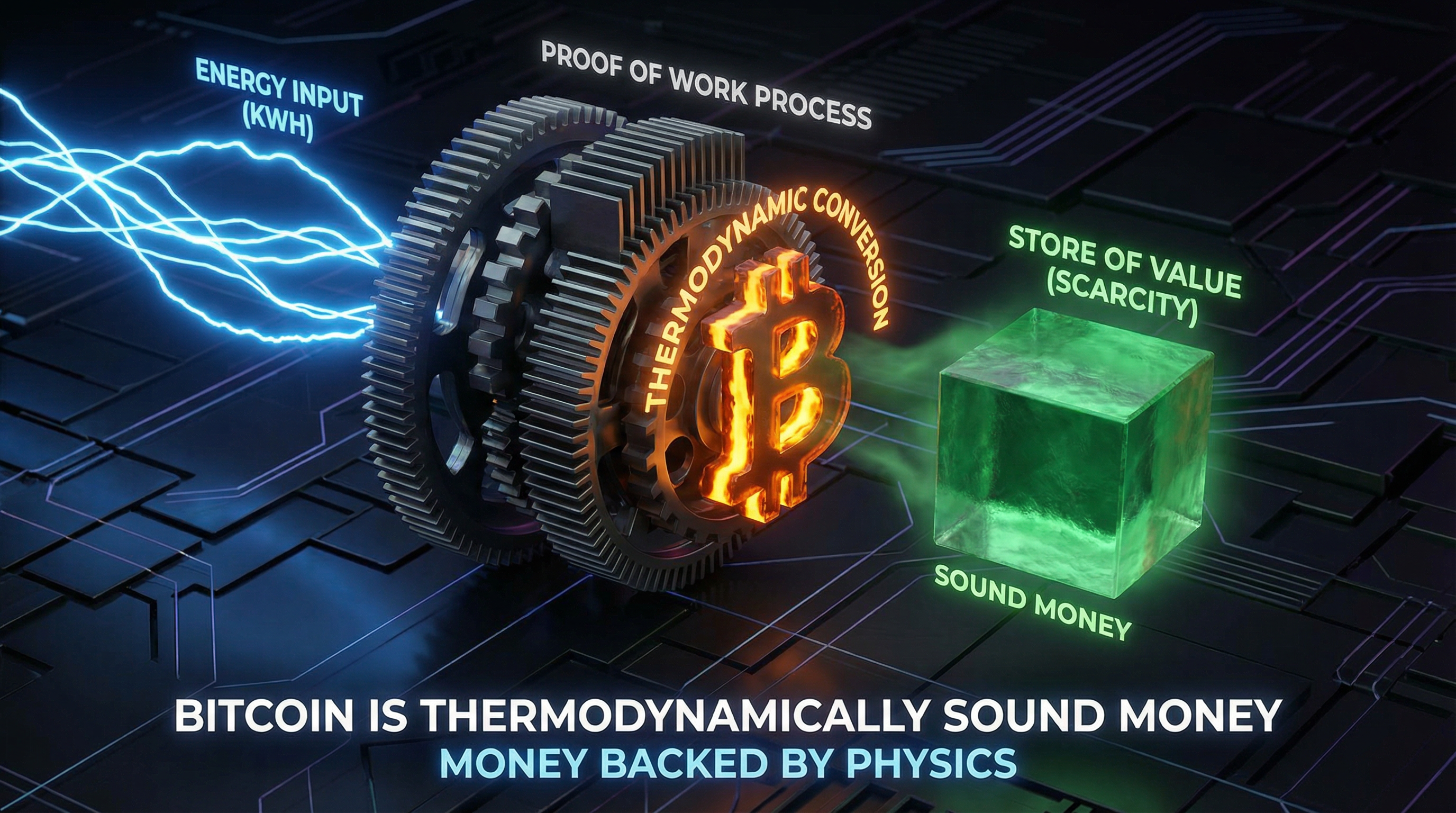
My mentor, the great Dr. Bob Melamede, a man who looked like a stoned-out hippie but had a PhD in biochemistry and the mind of a prophet, taught me about far-from-equilibrium thermodynamics. It’s a mouthful, I know, but the concept is simple: complex systems, like life itself, don’t just maintain order; they create it out of chaos. They self-organize. They adapt. They evolve. And they do it by constantly taking in energy and information from their environment, processing it, and using it to build more complex structures.
This is the essence of being a forward-looking person (FLP). You don’t fear the influx of new energy and information. You welcome it. You understand that this is the raw material of growth. The problem is, most people are terrified of it. They want to build walls, to retreat into what’s known and comfortable. They see AI as a tidal wave of chaos that will wash them away. They don’t see that it’s the very wave we need to ride to reach the next level of human consciousness.
The Application: How to Use AI to Become More Human
So how do you actually do this? How do you stop being a BLP, cowering in fear, and start being an FLP, riding the wave? You have to change your relationship with AI from one of consumption and fear to one of active collaboration and creation.
Stop mindlessly scrolling through AI-generated content. Stop asking it to do your thinking for you. Instead, start using it as a sparring partner. Use it to challenge your own assumptions. Use it to explore ideas you would never have had on your own. Use it to augment your own intelligence, not replace it.
For example, I use AI every single day in my work. I feed it my half-baked ideas, my messy notes, my raw, unfiltered thoughts. And I ask it to play devil’s advocate. I ask it to find the holes in my arguments. I ask it to show me different perspectives. I use it to generate a dozen different versions of a single sentence, just to see the possibilities. It’s like having a team of brilliant, tireless research assistants who are all dedicated to making me smarter.
This process doesn’t make me less human. It makes me more human. It forces me to clarify my own thinking. It pushes me to be more creative, more rigorous, more vulnerable. It frees up my mental bandwidth from the tedious work of organizing information so I can focus on what humans do best: making connections, telling stories, and creating meaning.
This is the secret. AI is the ultimate tool for offloading the cognitive tasks that are not uniquely human, so that we can double down on the things that are. It can handle the data crunching, the pattern matching, the optimization. That leaves us free to do the things that AI, for all its power, will never be able to do. It can’t feel. It can’t love. It can’t find purpose in the face of suffering. It can’t look another human in the eye and see the universe looking back.
The Takeaway: Your Action Items
This isn’t just a philosophical argument. It’s a call to action. Here’s what you need to do:
- Educate Yourself: Stop getting your information about AI from sensationalist headlines. Read the actual research. Learn about the different types of AI and what they can and can’t do. Understand the principles of far-from-equilibrium thermodynamics and the endocannabinoid system. Knowledge is the antidote to fear.
- Find Your Sparring Partner: Pick an AI tool—ChatGPT, Claude, whatever—and commit to using it as a creative partner for one week. Don’t just ask it for answers. Have a conversation with it. Argue with it. Co-create with it. See what happens when you treat it as a collaborator instead of an oracle.
- Double Down on Your Humanity: Identify the parts of your life and work that are uniquely human. The empathy, the creativity, the intuition, the vulnerability. And then, find ways to invest more of your time and energy in those things. Let the machines do the machine work. You focus on the human work.
This is not a passive process. You have to choose to engage. You have to choose to be a forward-looking person. The future is not something that happens to you. It’s something you create.
Closing
Look, the world is changing at an exponential rate. You can either be the person who is swept away by the current, or you can be the person who learns to surf. AI is the biggest wave any of us have ever seen. It’s a force of creative destruction that will reshape every aspect of our society. And that’s a damn good thing. Because the old world, the world of equilibrium and stagnation, was a dead end.
This is our chance to build something new. A world where we are not defined by the limitations of our individual minds, but by the power of our collective, augmented consciousness. A world where we are more creative, more connected, and more human than ever before.
Don’t be afraid. Be excited. Be curious. Be ready to adapt.
Comments
Related Articles
The Death of the Expert

Why Governments Can't Pick Winners
Reality is Not What You Think
The Wizard Behind the Curtain
The Yin-Yang is Wrong (Sort Of)
Want More?
Subscribe to The Forward Look on YouTube to get notified when new episodes drop.
Subscribe