The Death of the Expert
Why nobody trusts experts anymore—and why that's both a problem and an opportunity. How to think for yourself in the information age.
Full Article
The Death of the Expert
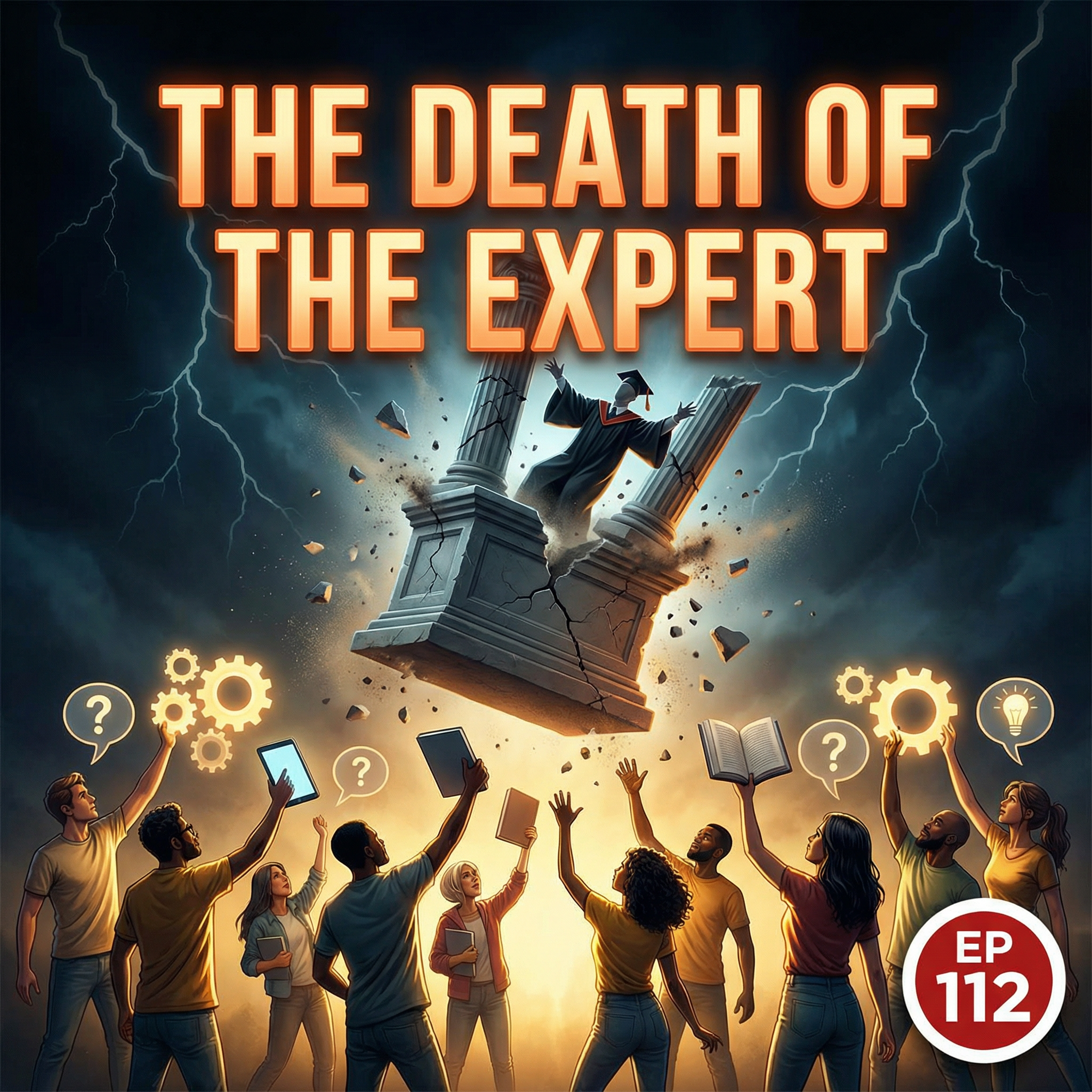
Let's get one thing straight: the expert is dead. And you know what? We're the ones who killed them. We did it with our search engines, our social media feeds, and our insatiable hunger for information that confirms what we already want to believe. We’ve traded in the PhD for the podcast, the peer-reviewed journal for the YouTube influencer. And now we’re drowning in a sea of noise, wondering why nobody seems to know what the hell they’re talking about anymore.
Is this a problem? Damn right, it is. But it’s also an opportunity. It’s a chance to stop outsourcing our thinking and start building a framework for understanding the world on our own terms. It’s time to learn how to think, not what to think.
The Problem: The Illusion of Consensus
You’ve been fed a lie your entire life. The lie is that there’s a consensus reality, a single, objective truth that a select group of credentialed “experts” has exclusive access to. They stand on their pedestals, armed with fancy degrees and impressive titles, and dictate what is and isn’t real. They tell you to trust the science, but what they really mean is trust their science. Trust their interpretation. Trust their authority.
Bullshit.
This model of top-down information flow is a relic of a bygone era, a centralized system in a decentralized world. It creates a population of what I call Backward-Looking People (BLPs)—individuals who cling to outdated models and resist the forward arrow of time. They want the comfort of certainty in a universe that is fundamentally uncertain. They want to believe that the world is a static, predictable machine, a system in equilibrium. But life, real life, doesn’t exist in equilibrium. It exists on the edge of chaos.
The minute you think you have the answer, you’re in trouble. The universe is a dynamic, constantly evolving system. The only constant is change. To stop learning, to stop questioning, is to fall behind the arrow of time.
When you blindly trust an expert, you’re not just giving away your power; you’re fundamentally misunderstanding the nature of reality. You’re trying to find a fixed point in a flowing river. It’s a fool’s errand. The very act of seeking a permanent answer in a dynamic system is a recipe for stagnation. You become a living fossil, perfectly adapted to a world that no longer exists. The BLPs are masters of this, collecting facts and expert opinions like trophies, polishing them daily, and wondering why the world feels so confusing and hostile. They’ve mistaken the menu for the meal.
The Application: How to Think for Yourself
So, how do you navigate this post-expert world? How do you separate the signal from the noise when everyone is shouting and no one has the definitive answer? You stop looking for answers and start building models.
- Become an Information Architect, Not a Follower: Stop passively consuming information. Start actively curating it. Who are the thinkers, the creators, the question-askers? Follow them, but don’t deify them. Triangulate their views. When you hear a claim, don’t ask if it’s “true.” Ask, “What model of the world does this claim fit into?” and “Does that model have predictive power?”
- Embrace First Principles: A first principle is a foundational proposition or assumption that stands alone. It’s not deduced from any other proposition. When you’re confronted with a complex problem, break it down to its fundamental truths. What do you know for a fact? Start there. Most of what people argue about are conclusions based on layers of assumptions. Dig deeper. For example, instead of arguing about whether a specific diet is 'good' or 'bad,' go back to first principles. What is the purpose of food? To provide energy and building blocks for the body. What does the body do with energy? It creates order. From there, you can start to evaluate dietary strategies based on their thermodynamic impact on your specific system, rather than relying on a one-size-fits-all prescription from an 'expert.'
- Stress-Test Your Beliefs: Your beliefs are not you. They are tools. And like any tool, they can become outdated or ineffective. You have to be willing to put them on the anvil and hammer them. Actively seek out intelligent people who disagree with you. Don’t just listen to their conclusions; learn to understand their models. If you can’t articulate the strongest version of your opponent’s argument, you don’t understand the issue well enough.
- Listen to Your Body: This isn’t some woo-woo nonsense. It’s thermodynamics. Your body, via the endocannabinoid system, is a highly sensitive instrument for detecting dissonance and coherence. That “gut feeling” is often your ECS telling you that something doesn’t add up, that the information you’re receiving is creating more disorder than order. Learn to trust that internal signal. It’s your own personal bullshit detector, honed by millions of years of evolution.
The Takeaway: Your Personal Arrow of Time
The death of the expert isn’t a tragedy. It’s an invitation. It’s a call to step up and take responsibility for your own mind. It’s a challenge to become a Forward-Looking Person in a world full of BLPs.
This doesn’t mean you should dismiss expertise entirely. It means you should treat it as a data point, not a destination. A true expert isn’t someone with all the answers; it’s someone who is constantly asking better questions. They are a fellow traveler on the path of discovery, not a gatekeeper of truth.
Your job is to build a resilient, adaptable framework for thinking. A framework that can handle uncertainty, integrate new information, and gracefully discard what no longer serves you. You are a system, and your thoughts are the energy that either propels you forward or traps you in the past.
Stop looking for a guru. Stop waiting for permission. The map is not the territory, and the degree is not the intellect. The only expert on you is you. The universe doesn't care about your credentials. It responds to energy, to adaptation, to flow. So, stop outsourcing your thinking. Stop waiting for the expert to give you the answer. You are the expert you've been waiting for.
Comments
Related Articles
Why Everything Falls Apart (And What To Do About It)

Spontaneous Order: The Most Beautiful Idea
What Dr. Bob Taught Me
The Hawaiians Knew: An Introduction to Huna
Why Attachment Causes Suffering
Want More?
Subscribe to The Forward Look on YouTube to get notified when new episodes drop.
Subscribe