How do you overcome fear or get over a phobia? This shows what fear conditioning is, what happens in the amygdala during fear extinction, why a fear comes back, whether it works the same in people, and what exposure therapy is and whether it works, from the 2002 Munich fear-tone study to a 2008 analysis of 33 trials on phobias.
The full answer
Can your brain unlearn a fear?
Can your brain unlearn a fear? It can, by learning a newer lesson on top of the old one, that this is safe now. Scientists call that fear extinction, and in mice it needs the CB1 lock, the one cannabis works on, at the very moment of letting go. I'm Justin Hartfield, I've spent twenty-five years in cannabis, and here's the experiment.
What is fear conditioning?
What is fear conditioning? It's how a fear gets learned, when something harmless keeps arriving just before something bad, until the harmless thing alone sets off the alarm.
In 2002, a lab in Munich taught mice to fear a sound: the tone, then a small shock. Now the tone plays with no shock. You're the normal mouse's brain. Every time the fear fires, release a key.
What is fear extinction?
And what is fear extinction? It's the unlearning, when the tone keeps playing with nothing bad after it, and the freezing slowly fades.
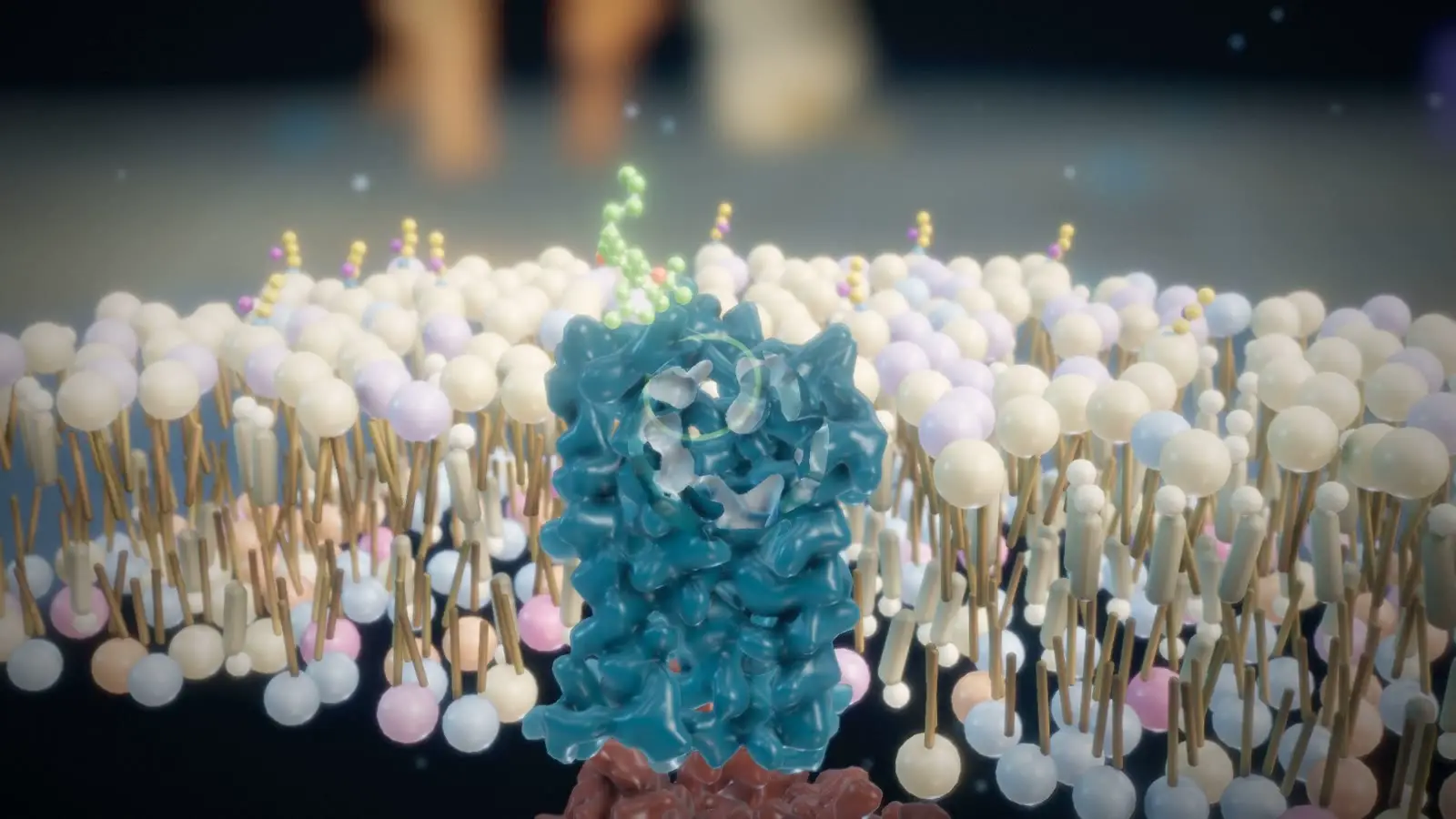
That's your own cannabinoid, landing on CB1 in the amygdala. It helps the brain learn this sound is safe now.
Each time nothing bad happens, the normal mouse freezes a little less. It's letting go of the fear.
Amygdala fear: why it stays without CB1
Amygdala fear, the alarm itself, is learned just as well by a mouse born without CB1, and what it struggles to do is let that fear go.
The mouse without CB1 makes the same keys. There's nothing for them to land on. The fear stays.
Now give a normal mouse the blocker, rimonabant, before the tones.
Its fear stays too. The lock has to be working at the moment of letting go.
That's what the Munich lab measured: normal mice let go of the fear. Without CB1, they kept freezing.
Why does a fear come back?
Why does a fear come back, sometimes months after you thought it was gone? A 2004 review of the research on extinction found that the original learning survives underneath the new learning, which depends heavily on where it happened, so a fear can return in a new place, after enough time, or after a fresh scare.
Is fear extinction the same in people?
Is fear extinction the same in people? One of the best clues comes from a gene, because about four in ten people of European descent carry a common variant of FAAH, the enzyme that breaks down anandamide, one of your own cannabinoids, so they have a little more of it.
In 2015, a team in New York taught forty people to fear a colored window on a screen, and the carriers unlearned it faster, just as mice built with the same variant did. The gap was small and closed with more tries, but it pointed the same way.
What is exposure therapy?
What is exposure therapy? It's this same unlearning done on purpose, meeting the thing you fear while the bad outcome you expect doesn't come, and the researchers who refine it build directly on extinction, including how to keep a fear from coming back.
Does exposure therapy work?
Does exposure therapy work? For phobias of one particular thing, the evidence is strong, because a 2008 analysis pooled thirty-three randomized trials and found exposure beat no treatment by a wide margin, and beat placebo and other psychological treatments too, whatever the phobia was. It doesn't work for everyone, and in some people the fear comes back afterwards.
How to overcome fear
So how do you overcome fear, of heights, flying, needles or spiders? The studies only tell me what the brain needs, which is to meet the thing again and have nothing bad happen, often enough for the new lesson to win. If a fear is running your life, a therapist trained in exposure is the person to do that with.
So your brain can unlearn a fear by learning on top of it, and in mice that needs CB1 at the moment of letting go. The whole film is on my site, linked below, and next, how do you let go of the past?
What the studies show
Every claim in this answer, the study behind it, who was studied, and who paid for the research. “None listed” means the paper names no funder.