The difference between CBD and THC, does CBD get you high (oil, gummies, tinctures, vapes), what CBD actually does, CBD vs THC for anxiety, taking CBD and THC together, and whether CBD shows up on a drug test.
The full answer
CBD vs THC: what's the difference?
CBD versus THC: what's the difference? They come from the same plant and they're built from exactly the same atoms, but THC gets you high and CBD doesn't, because of how each one meets a lock in your brain. I'm Justin Hartfield, I've spent twenty-five years in cannabis, and here's what each one does inside you.
Same formula, different shape
Count the atoms and they match: twenty-one carbons, thirty hydrogens and two oxygens in each. In THC, one ring of those atoms is closed, which holds the molecule in one stiff shape. In CBD that same ring is open, and that one change in shape is where everything else starts.
Why does THC get you high?
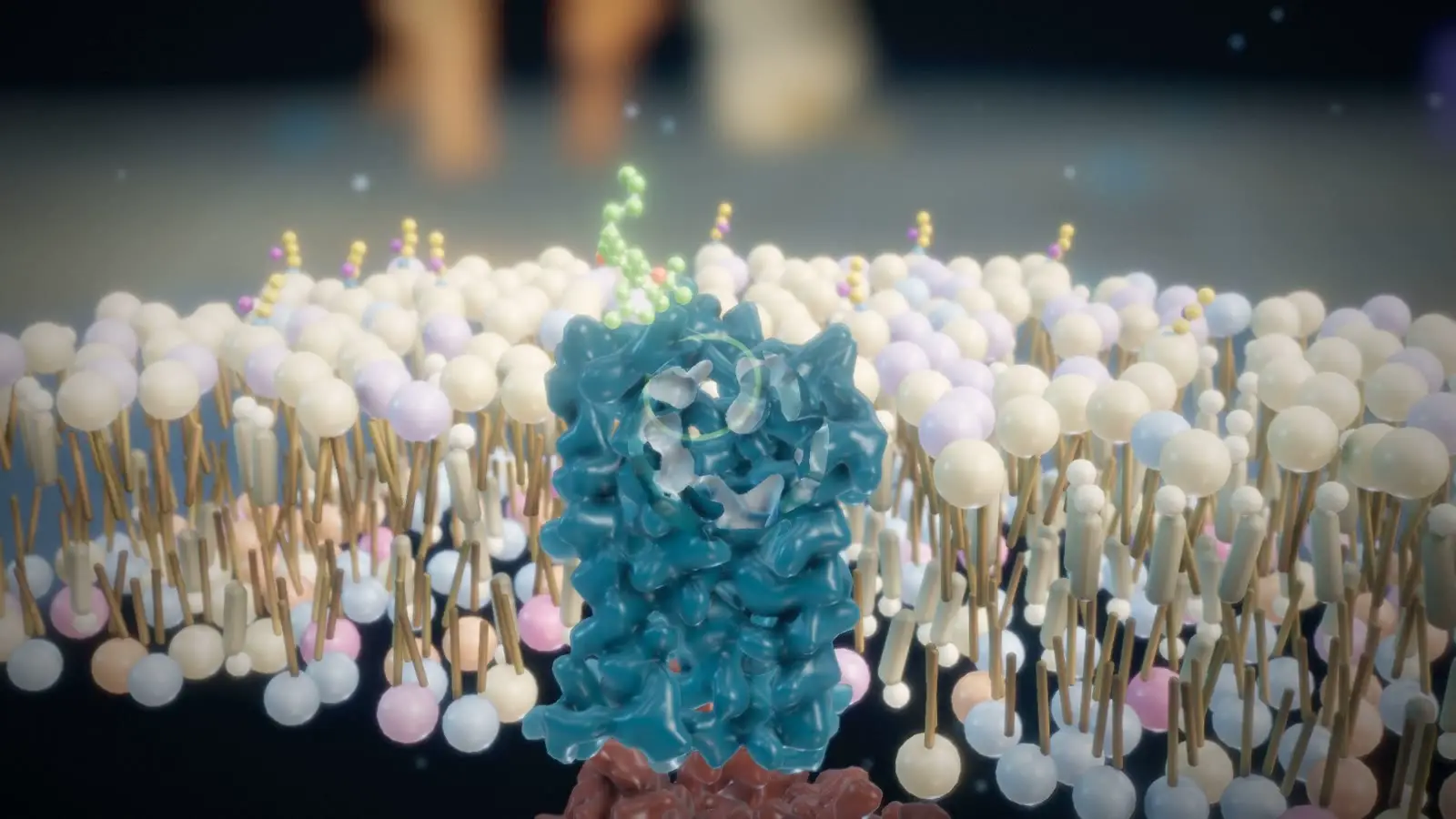
Why does THC get you high? Because it fits a lock on your brain cells called CB1, found in 1988, and turns it partway on, everywhere at once, in the parts of your brain that keep time, hold memories, read smells and feel reward. Your body makes its own keys for that lock, anandamide and 2-AG, but only where and when it needs them, and it breaks them down in moments, while THC stays for hours.
Does CBD get you high?
Does CBD get you high? On its own, no. CBD binds that lock only weakly, and in brain tissue and in cells it works more like a damper, making the lock harder for THC to turn. So whether it's an oil, a gummy, a tincture or a vape, a CBD product that gets you high has THC in it, and plenty do: in 2017, researchers bought eighty-four CBD products online, and about one in five contained THC.
Some people do feel calmer on CBD, or sleepy at big doses, and that's real, but it isn't a high.
What does CBD do?
So what does CBD do, if it isn't working that lock? It works on others. In cells, it turns on a serotonin receptor called 5-HT1A and the heat-sensing channel TRPV1, and it slows the proteins that carry your own anandamide to the enzyme that breaks it down, so your own key may last a little longer. Where it's proven is a rare childhood epilepsy. In a 2017 trial of a hundred and twenty children and teenagers with Dravet syndrome, CBD cut convulsive seizures from about twelve a month to six, while on placebo they barely moved.
CBD vs THC for anxiety
CBD versus THC for anxiety is where they really split. THC works on a curve: seven and a half milligrams calmed people through a stressful public speech, and twelve and a half left them feeling worse, while CBD has its own sweet spot. In Brazil, people with social anxiety who took six hundred milligrams of CBD before a speaking test were less anxious than those on placebo, and in healthy men, three hundred milligrams helped while a hundred and fifty and six hundred did not.
Can you take CBD and THC together?
Can you take CBD and THC together, and does CBD cancel the high? Mostly not. In a 2023 trial, vaping up to three times as much CBD as THC didn't change the high at all. Dose matters, though: in Australia, a tiny dose of CBD made people feel higher and a very large one made them feel less high, and when people swallowed a big dose of CBD with THC, the THC in their blood went up and they felt it more.
Will CBD show up on a drug test?
Will CBD show up on a drug test? Drug tests don't look for CBD at all; they look for what your body makes from THC. Pure CBD almost never tripped them in a Johns Hopkins study, but full-spectrum products carry a little THC, and in a 2021 study, half the people who took a full-spectrum CBD oil every day for four weeks tested positive.
So the difference comes down to shape: THC's shape lets it turn the lock that gets you high, and CBD's doesn't, so CBD works on other locks and on the keys your own body makes. You can drag both into that lock yourself in the film on my site, linked below, and next, what THC actually does in your brain.
What the studies show
Every claim in this answer, the study behind it, who was studied, and who paid for the research. “None listed” means the paper names no funder.