The Biology Foundation
What you actually are: cells, mitochondria, ATP, free radicals, sugar burning, fat burning, and repair.
Educational content, not medical or legal advice. The course discusses health, supplements, cannabis, personal development, and philosophy for educational purposes only.
The Cell as Far-from-Equilibrium System
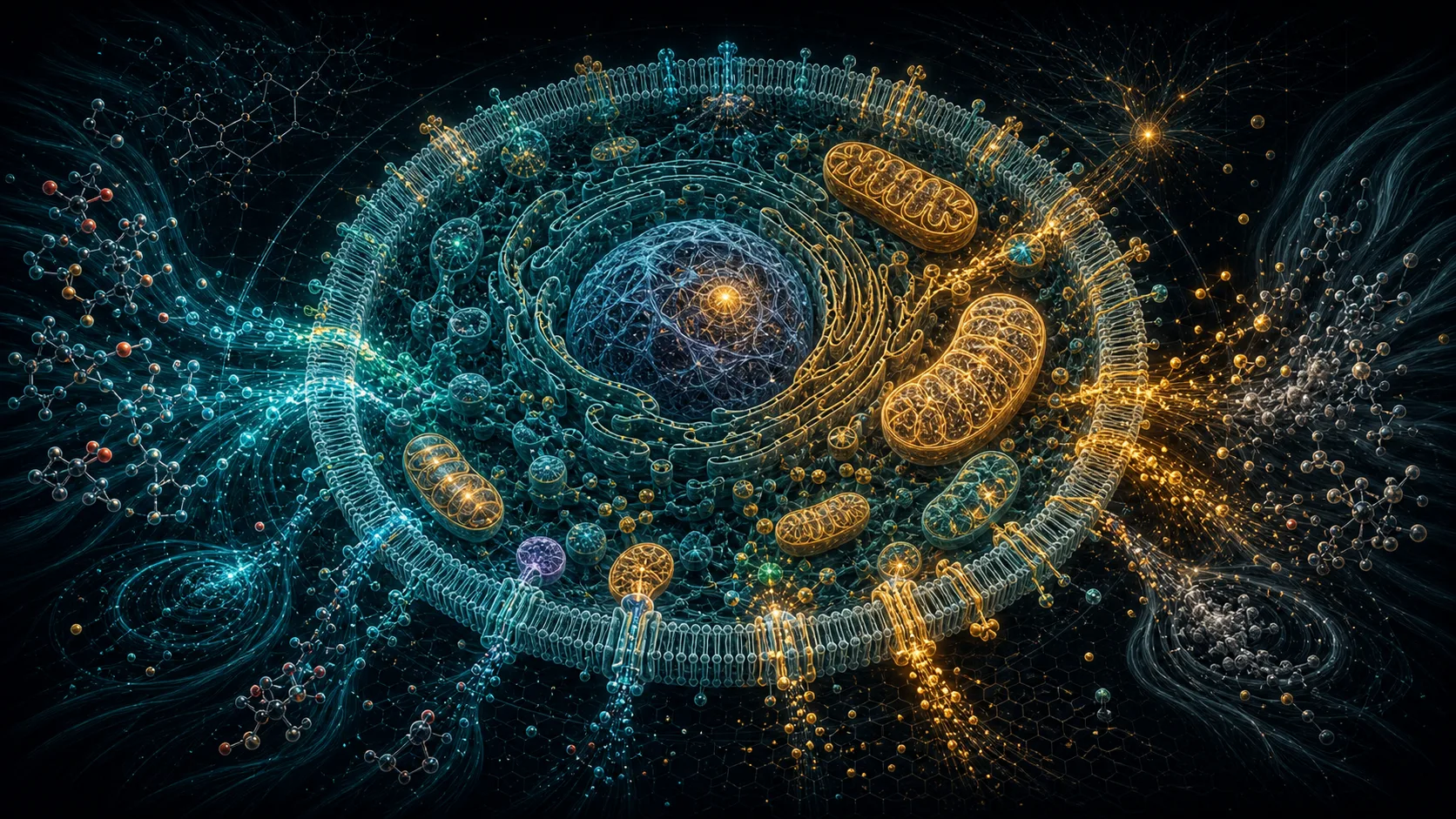
- Cell boundary
- Mitochondrial work
- Metabolic signal
- Adaptive energy
Lesson 2.1.1 You Are 37 Trillion Power Plants
Start here Your body contains approximately 37 trillion cells. Each one is an exquisitely complex far-from-equilibrium chemical system, maintaining its organization against the constant thermodynamic pressure to dissolve into equilibrium with its surroundings.
A human being produces approximately their own body weight in ATP every single day. Not accumulated — processed. You make it, use it, break it down, and recycle the components. You are not a thing with energy; you are an energy process that temporarily takes the form of a thing.
Lesson 2.1.2 The Mitochondria: Nuclear Reactors of the Cell
Start here The most important organelles in your cells for energy production are the mitochondria — often called the powerhouses of the cell. Mitochondria contain the electron transport system (ETS), the machinery that converts the chemical energy in food into ATP with remarkable efficiency.
But here is the critical detail that changes everything:
The electron transport system is a nuclear reactor.
It is extraordinarily efficient at producing energy. But — like a nuclear reactor — it leaks. As electrons are passed down the chain of protein complexes, some leak out and react with oxygen to form free radicals — specifically, superoxide and other highly reactive oxygen species.
These free radicals are the cost of doing business. The price of being alive and burning fuel.
And every single one of your 37 trillion cells makes approximately 20,000 free radical damages per day.
20,000 × 37 trillion = 740 quadrillion free radical damages in your body every single day.
One free radical molecule, if it hits the right gene in the right way, could theoretically initiate a cancer that kills you. And you are absorbing 740 quadrillion of these hits daily.
The fact that you are alive, reading this, is therefore not merely fortunate. It is one of the most extraordinary achievements in the known universe.
Lesson 2.1.3 ATP: the Dollar Bill of Life
Start here ATP (adenosine triphosphate) works like currency in your cellular economy. Just as a dollar bill can be exchanged for any good or service, ATP can be exchanged for any cellular function. Your cells don't care whether the ATP came from glucose or fat or protein — they just need the ATP.
Everything costs ATP. You are a far-from-equilibrium process powered by ATP, and your body produces its own body weight in this molecule every single day just to keep you running.
The answer will unfold in Unit 2.3.
Free Radicals — the Friction of Life
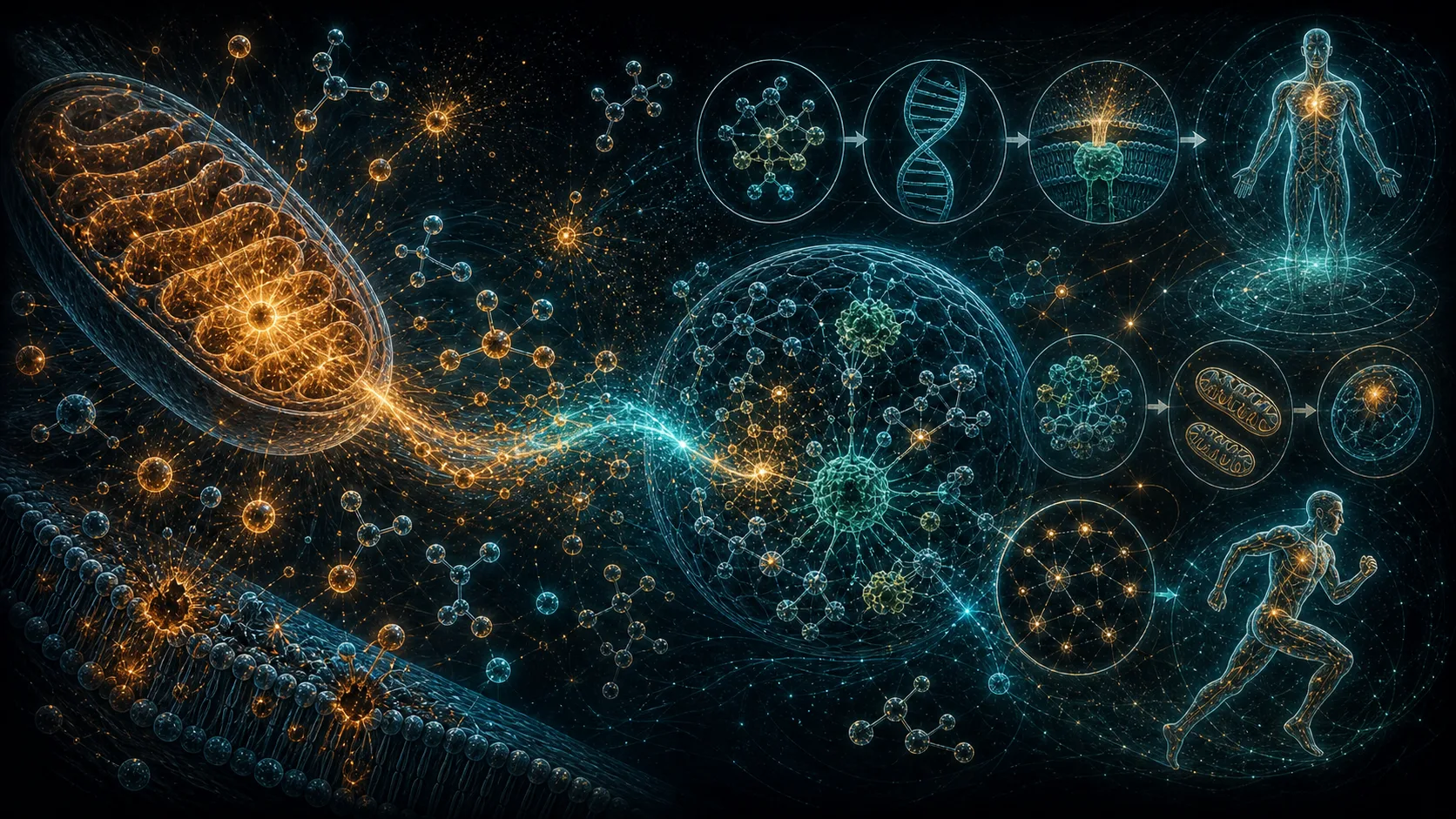
- Cell boundary
- Mitochondrial work
- Metabolic signal
- Adaptive energy
Lesson 2.2.1 What Is a Free Radical?
Start here A free radical is any molecule with an unpaired electron. Electrons, like people, prefer to exist in pairs. An unpaired electron makes a molecule extremely chemically reactive — it wants to grab an electron from something else, which then makes that molecule reactive, which then grabs from something else. This is the cascade of oxidative damage that underlies aging and disease.
The most damaging free radical is the hydroxyl radical (·OH). It is so reactive that it will attack essentially anything it touches. There is no specific target — it just reacts with the nearest available molecule, changing its structure and therefore its function.
Lesson 2.2.2 Free Radicals Are Not Just Villains
Start here Here is a critical nuance: free radicals are not simply bad. They are the friction of life — an inevitable consequence of being alive and producing energy. But they are also signals.
The problem is not free radicals per se. The problem is when free radical production exceeds the system's capacity to manage them — when the nuclear reactor leaks too much radiation, when the free radical load chronically outstrips the repair capacity. That is what causes aging, cancer, heart disease, neurodegeneration, and autoimmune conditions.
Lesson 2.2.3 The Free Radical Theory of Aging
Start here In 1956, Denham Harman proposed the Free Radical Theory of Aging: that aging is primarily caused by the progressive, irreparable accumulation of free radical damage to cells and tissues over time.
While the full story is more complex (as Dr. Bob's metabolic framework reveals), the basic insight holds: as you age, the balance between free radical production and antioxidant/repair capacity tilts increasingly toward damage. The accumulation of molecular errors compounding over decades manifests as:
All of these — every single major age-related disease — have free radical imbalance at their core.
Core lineThis is not a coincidence. It is physics.
Lesson 2.2.4 Your Body's Antioxidant Arsenal
Your body has evolved an extraordinary array of antioxidant defenses:
Sugar Burning Vs. Fat Burning — the Most Important Metabolic Choice
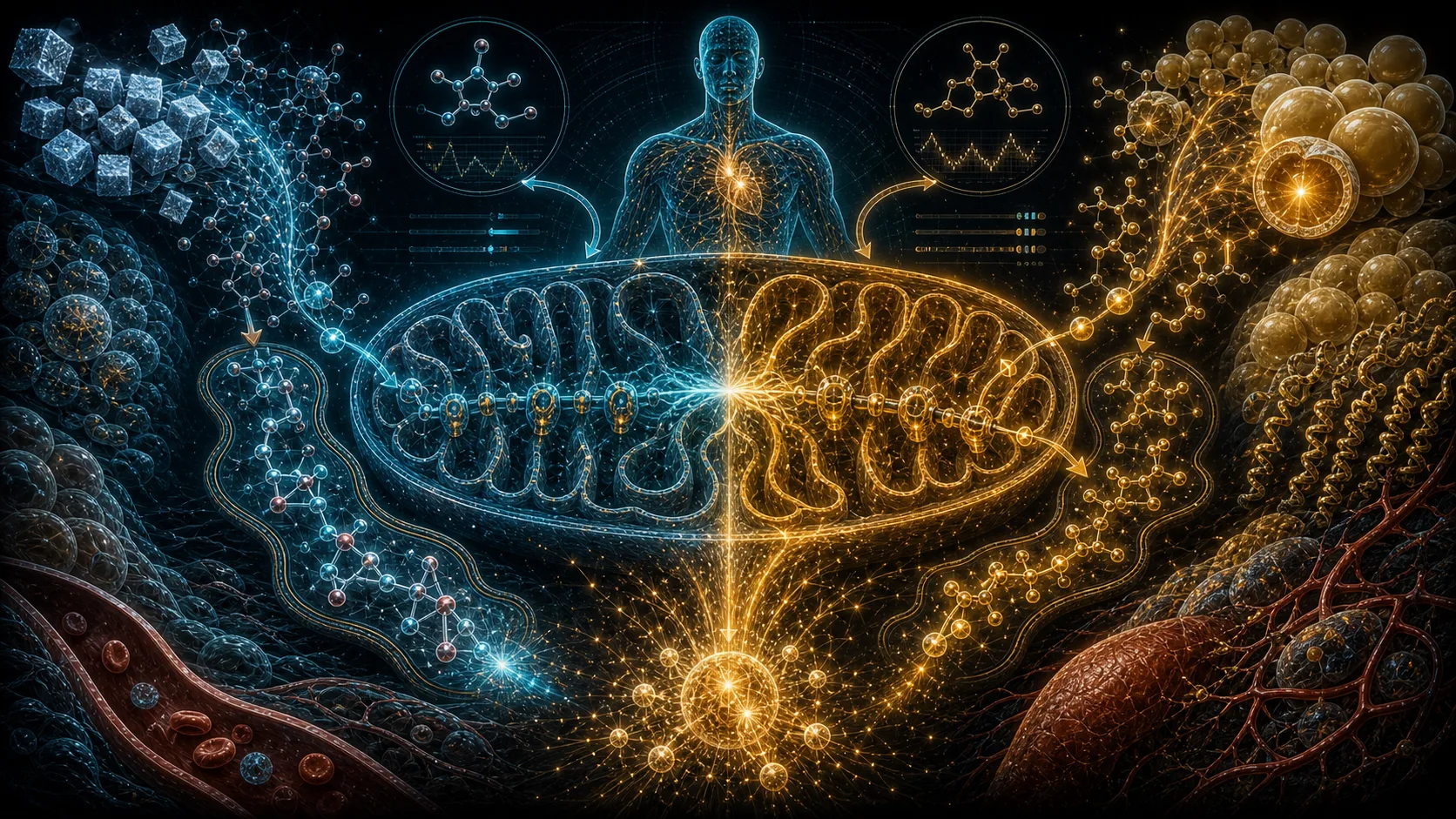
- Cell boundary
- Mitochondrial work
- Metabolic signal
- Adaptive energy
Lesson 2.3.1 Two Fuels, Two Consequences
Start here Your cells can generate ATP from two primary fuel sources: carbohydrates (glucose) and fats. These are not equivalent. They produce energy through different pathways, with radically different consequences for your health, aging, and consciousness.
Understanding this distinction is one of the most important practical applications of Dr. Bob's framework.
Lesson 2.3.2 The Warburg Effect: Why Cancer Loves Sugar
Start here Nobel laureate Otto Warburg observed in 1928 that cancer cells, even in the presence of oxygen, preferentially use aerobic glycolysis (sugar burning without the full electron transport chain) rather than the more efficient mitochondrial oxidation. This became known as the Warburg Effect.
Furthermore, aerobic glycolysis produces lactic acid (which is why the tumor microenvironment is acidic) and generates the building blocks needed for rapid cell division (lipids, nucleotides, amino acids) even at the cost of energy efficiency.
Lesson 2.3.3 The Fat-Free Diet Disaster
Start here For decades, the dominant dietary advice in Western medicine was: eat less fat. Low-fat diets were promoted as heart-healthy, weight-loss-friendly, and generally beneficial.
This advice was catastrophically wrong. And Dr. Bob explains precisely why.
When you eat excess carbohydrates that your body cannot immediately use for energy, your body converts them into fat for storage. This is accomplished via the enzyme fatty acid synthase (FAS), activated when insulin signals that blood sugar is high. Your body is literally making fat from sugar.
The fat-free diet literally keeps your cells from entering their repair-and-recycle mode. It is a slow, silent, FDA-approved aging protocol.
What you should eat instead: the right fats, especially omega-3 and omega-6 essential fatty acids (in the right ratio), adequate protein, and controlled carbohydrates. Hemp seeds are an excellent source: complete protein, ideal omega-3 to omega-6 ratio, and they contribute the raw materials for endocannabinoid synthesis.
Lesson 2.3.4 Stem Cells and the Secret of Youth
Start here Adult stem cells — the repair cells of your body, ready to differentiate into new neurons, muscle cells, blood cells, and more when needed — burn fat. They do not use the electron transport system. They exist in a quiescent, fat-burning state, protected from oxidative damage, essentially non-aging.
Core lineThis is why stem cells can be decades old and yet remain capable of generating fresh new cells. They have been in a protected, fat-burning, low-free-radical state, waiting.
When the body signals a need for new cells (injury, disease, normal turnover), the stem cells activate their CB1 receptors, turn on the electron transport system, shift to glucose burning, and differentiate into the needed cell type.
CB2 receptor activation — associated with fat burning — is what keeps stem cells in their youthful, regenerative state. This is, as Dr. Bob emphasizes, why cannabis (particularly CBD, which shifts the CB1/CB2 balance) has potential anti-aging properties. It promotes the fat-burning, repair-activating, stem-cell-expanding pathway.
Lesson 2.3.5 Practical Dietary Protocol
Start here Consider hemp seeds daily. Complete protein (all essential amino acids), ideal omega-6 to omega-3 ratio, hemp seeds provide the exact substrates your endocannabinoid system needs.
Eliminate seed oils. Industrial seed oils (corn, soy, canola, sunflower, safflower) are high in pro-inflammatory omega-6 fatty acids and are often oxidized by processing — delivering damaged fats that directly feed the free radical cascade.
Module 2 Quiz: The Biology Foundation
Use this as a retention check. Nothing is saved, scored, or required to keep reading.