The Bhagavad Gita and Adaptation
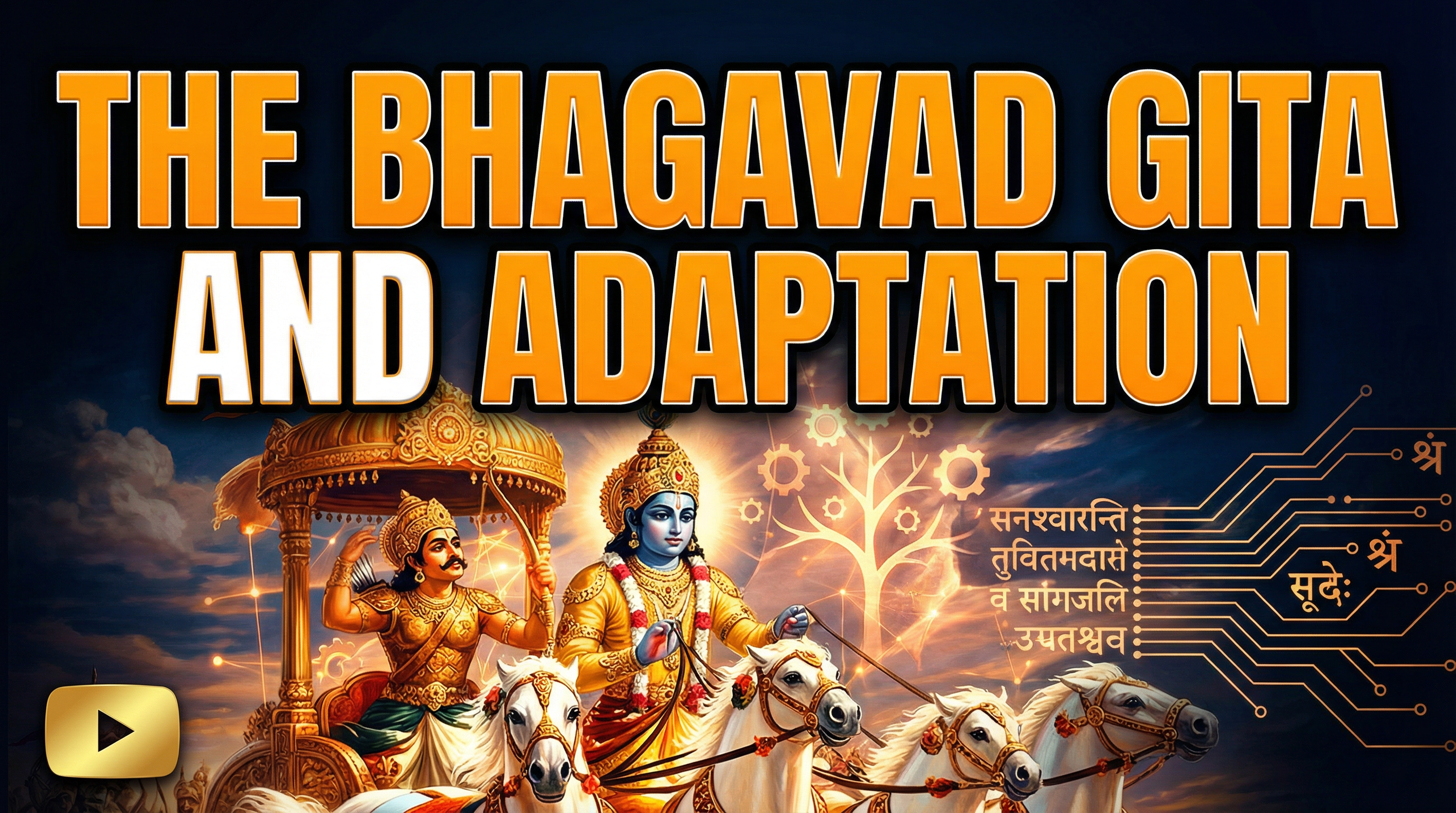
'You have the right to action, but not to the fruits of action.' Krishna was teaching thermodynamic wisdom. The Gita as a guide to flow.
Full Article
The Gita's Secret: Why Krishna Was Teaching Thermodynamics
"You have the right to action, but not to the fruits of action." When Krishna dropped this line on Arjuna in the middle of a battlefield, he wasn't just being philosophical. He was teaching a masterclass in thermodynamics. The Bhagavad Gita isn't a dusty religious text—it's a user's manual for living in a state of flow. And your body already has the hardware to run this software. It's called the endocannabinoid system.
The Modern Disease: Outcome Addiction
You've been sold a lie. A big, fat, culturally-sanctioned lie that your worth is tied to your achievements. You're chasing goals, celebrating wins, and mourning losses. You're riding an emotional rollercoaster that leaves you exhausted, anxious, and perpetually dissatisfied. You're a Backward-Looking Person (BLP), obsessed with the scoreboard, and it's making you miserable.
This addiction to outcomes is thermodynamically incorrect. Every time you attach your happiness to a future result—a promotion, a relationship, a number in your bank account—you're handing over your power to a future that may or may not happen. You're fighting against the fundamental nature of reality: that you don't control outcomes. You never have, and you never will. The universe is a far-from-equilibrium system, and trying to nail down a specific future is like trying to hold water in your fist.
What Dr. Bob Taught Me About the Gita
I've found this NLP trick to be particularly effective at letting go of negative energy. Visualize your feelings in all of their intensity as an orb of red energy building in your hands. Fans of Street Fighter: form a hadouken in your hands. Hold this glowing red fireball of emotion and feel its weight and heat. Feel it expanding as you pour your negative thoughts and emotions into it. Now imagine throwing your sphere of emotional baggage into a volcano, in a fire, or at an opponent (or Blanka!). Feel the burden of that emotional waste being lifted from your shoulders, into your palms, and finally out through your finger tips. As the red ball of energy leaves your hands, in its wake it leaves life-giving blue oxygen vapor. Breathe in the soothing blue air and relax your mind as you say to yourself, "Everything works out perfectly."
Dr. Bob would say that when you're obsessed with results, you're creating chronic stress. You're flooding your system with cortisol, which disrupts the delicate balance of your endocannabinoid system. You're literally making it harder for your body to do what it's designed to do: adapt and thrive. When you let go of the outcome and focus on the process, you're supporting your ECS. You're allowing it to do its job. You're getting out of your own way.
The Weedmaps Lesson: Letting Go of the Scoreboard
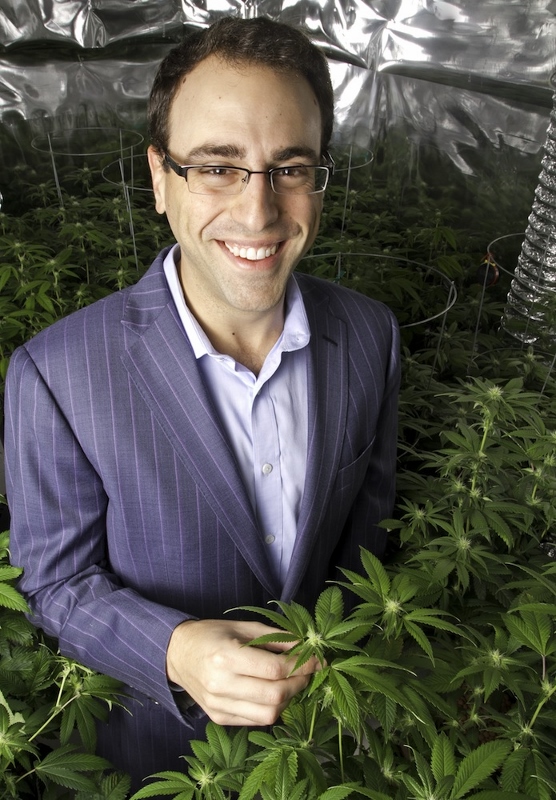
This shift in perspective became clearer one evening when I found myself among a group of people casually using cannabis—not the stereotypes I had long associated with drug use, but professionals who were balanced, thoughtful, and purposeful. This experience challenged many of my preconceived notions and prompted me to reconsider the role of cannabis beyond its cultural stigmas. Trying it myself, I realized that the effects were subtle and did not alter my sense of self as dramatically as I had imagined, reinforcing the idea that true change comes from within, not from external substances. This personal insight set the stage for a deeper understanding of Dr. Bob’s teachings, which emphasize focusing on intentional action and detaching from the fixation on outcomes.
It wasn't until I started to understand the principles that Dr. Bob taught me that I was able to let go. I started to focus on the work itself—on building a platform that actually helped people find safe, legal access to cannabis. I detached from the outcome. And you know what happened? The company thrived. And more importantly, I found a sense of peace and purpose that had been missing for years. I started to enjoy the process. I started to have fun again. I was no longer a slave to the outcome. I was free.
The Thermodynamics of Non-Attachment
Here's the physics: you are a flow-dependent structure. You exist because energy and matter are constantly flowing through you. The moment that flow stops, you die. Attachment to outcomes is an attempt to freeze the flow, to create a static state in a dynamic universe. It's a thermodynamic impossibility. It's like trying to stop a river by standing in it.
Non-attachment isn't about not caring. It's about caring deeply about the process while releasing your grip on the outcome. It's about being a Forward-Looking Person (FLP) who understands that the only thing you can control is your input into the system. The output is determined by the complex interplay of countless variables, most of which are completely outside your control.
Your Action Items for a Far-From-Equilibrium Life
This isn't just philosophy. This is a practical guide to living a better life. Here's what you need to do:
- Identify your attachments. What are the outcomes you're clinging to? What are the results you believe you're entitled to? Write them down. Be honest with yourself. This is the first step to letting them go. You can't release what you don't acknowledge.
- Focus on the process. Shift your attention from the goal to the steps you need to take to get there. Fall in love with the work itself. Find joy in the act of creation, in the process of becoming. This is where the magic happens. When you're in a state of flow, you're not thinking about the outcome. You're just doing.
- Embrace uncertainty. The future is unknowable. Stop trying to control it. Learn to dance with the chaos. See the unexpected as an opportunity for growth, not as a threat to your plans. This is the essence of being an FLP.
- Nourish your endocannabinoid system. Whether it's through cannabis, exercise, meditation, or diet, find ways to support your body's natural ability to adapt and flow. Your ECS is your greatest ally in the quest for a far-from-equilibrium life. It's the hardware that runs the software Krishna was describing 2,500 years ago.
Krishna knew what he was talking about. Dr. Bob knew what he was talking about. Now you know too. The question is: are you going to keep fighting the river, or are you going to learn to swim?
Comments
Related Articles
Why You're Probably Deficient (And Don't Know It)

The Kahuna Were Scientists
Why Young People Are Depressed
The Tortoise Strategy
Wu Wei: The Science of Effortless Action
Want More?
Subscribe to The Forward Look on YouTube to get notified when new episodes drop.
Subscribe