Life as a Dynamic Fractal
Unlike static mathematical fractals, life is a dynamic fractal where each iteration changes based on feedback. We are not individuals—we are quantized probes of collective human biochemistry.

Full Article
You've seen those trippy fractal images, right? The Mandelbrot set, the Sierpinski triangle—patterns that repeat infinitely at every scale. They're beautiful. They're mesmerizing. And they're completely wrong about how life actually works.
Here's the thing: those mathematical fractals are static. Zoom in, zoom out, same pattern forever. Life doesn't work that way. Life is a dynamic fractal—a pattern that changes with every single iteration based on feedback from its environment.
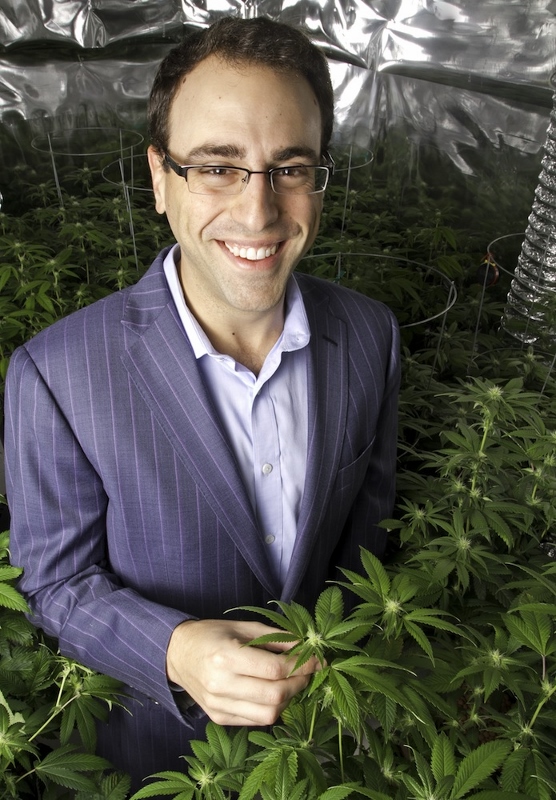
Dr. Bob Melamede put it in a way that hit me like a freight train: "Your first algorithm changed the environment, the environment changed you, now you must change back."
Read that again. Let it sink in.
The Feedback Loop IS Evolution
This constant feedback loop isn't just some feature of life—it IS evolution happening in real time. Every organism runs an algorithm. That algorithm produces outputs that change the environment. The changed environment feeds back into the organism. Adaptation required. Rinse and repeat, forever, at every scale from molecules to ecosystems.
Think about a plant growing toward light. Simple enough, right? But in reaching for that light, it creates shade. That shade changes everything beneath it—including its own lower leaves. Now the plant has to adapt to the conditions it created. This is far-from-equilibrium dynamics playing out in your backyard.
You Are Not an Individual
Now here's where it gets uncomfortable. Brace yourself.
Dr. Bob suggests that we mistakenly believe we are individuals, but we're actually "quantized probes of collective human biochemistry."
What the hell does that mean?

It means you're not a separate entity making independent decisions. You're a node in a vast network. A probe sent out by the collective to test adaptability. Your experiences, your choices, your wins and failures—they're all data points in a much larger experiment that's been running for millions of years.
"We mistakenly believe we are individuals, but we are actually quantized probes of collective human biochemistry—probes for adaptability."
This isn't meant to diminish you. Quite the opposite. As a probe, you're essential. Your unique perspective, your specific genetic makeup, your particular environment—all of these make you a valuable experiment in adaptation. You matter precisely because you're different.
The Dynamic Fractal in Your Body
This dynamic fractal pattern repeats at every level of your biology. Your endocannabinoid system constantly adjusts to feedback—too much stress triggers one response, too little activity triggers another. Your immune system learns from every pathogen it encounters, rewriting its algorithms based on experience.
Even your thoughts follow this pattern. An idea enters your mind. You act on it. The results change your understanding. That changes your next idea. You're not the same person you were yesterday—not because time passed, but because the feedback loop iterated.
This iterative process of change isn’t just theoretical—it’s deeply personal. I experienced my own feedback loops growing up in Inglewood, California, where social challenges and feelings of isolation shaped my early years. Despite struggles with self-confidence and fitting in, each difficulty forced me to adapt, learn, and gradually redefine who I was. These cycles of challenge and response transformed me over time, illustrating how personal growth mirrors the dynamic fractal patterns we see in life. Understanding this connection helped me embrace change rather than resist it, a mindset crucial for survival and growth.
Implications for How We Live
If life is a dynamic fractal, then rigidity is death. The organisms that survive are the ones that can change their algorithms based on feedback. The Forward-Looking People (FLPs) embrace this—they see change as opportunity. The Backward-Looking People (BLPs) resist it, trying to maintain static patterns in a dynamic universe.
The universe doesn't care which approach you take. But thermodynamics has a clear preference: adapt or dissipate.
The choice, as always, is yours.

Comments
Related Articles

The Universe Doesn't Care About Your Feelings

New Here? Start With The TLDR

Why You Can't Go Back (And Why That's Good)

Mana is Energy (And Energy is Everything)
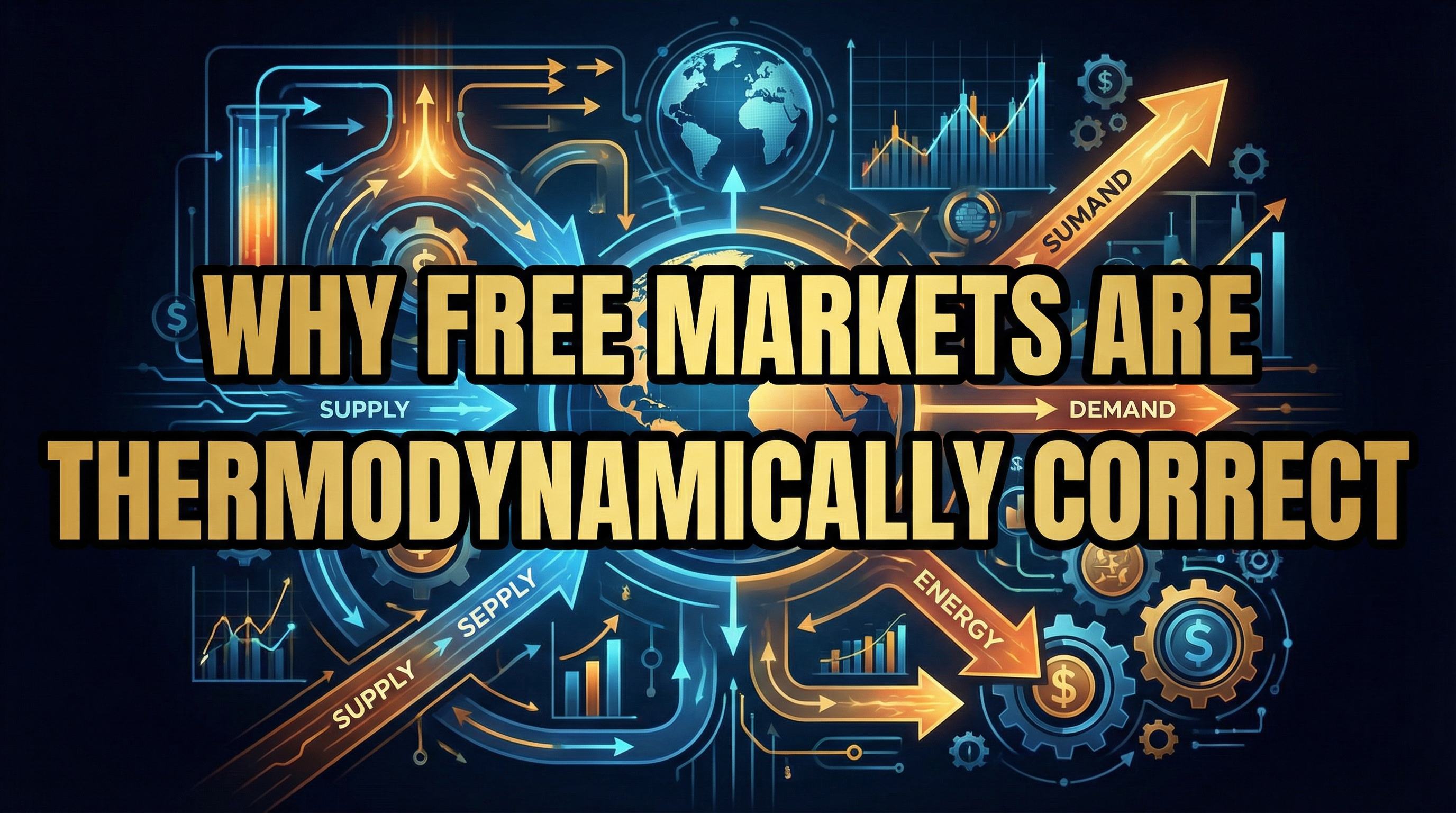
Why Free Markets Are Thermodynamically Correct
Want More?
Subscribe to The Forward Look on YouTube to get notified when new episodes drop.
Subscribe