What does THC do to your brain, how does THC work, and how does weed get you high? This shows the CB1 receptor, the backward signal your own cannabinoids send, what part of the brain THC affects, why THC affects memory, whether weed releases dopamine, and whether weed affects your brain permanently.
The full answer
What does THC do to your brain?
What does THC do to your brain? It holds down a brake your brain already has, a lock called CB1, everywhere at once and for hours, and that's the high. Your own brain only taps it for a moment, wherever a cell gets too busy. I'm Justin Hartfield, I've spent twenty-five years in cannabis, and for most of them I never asked what it was doing in there.
What is THC?
What is THC? It's tetrahydrocannabinol, the main molecule in cannabis that gets you high.
People have burned this plant to get high for at least 2,500 years.
In 1964, two chemists in Israel finally pulled out the molecule that does it. THC.
It took until 1988 to find where it goes. A lock in your brain that THC fits.
CBD, the other famous cannabis molecule. Surprise. It barely touches this lock.
How does THC work?
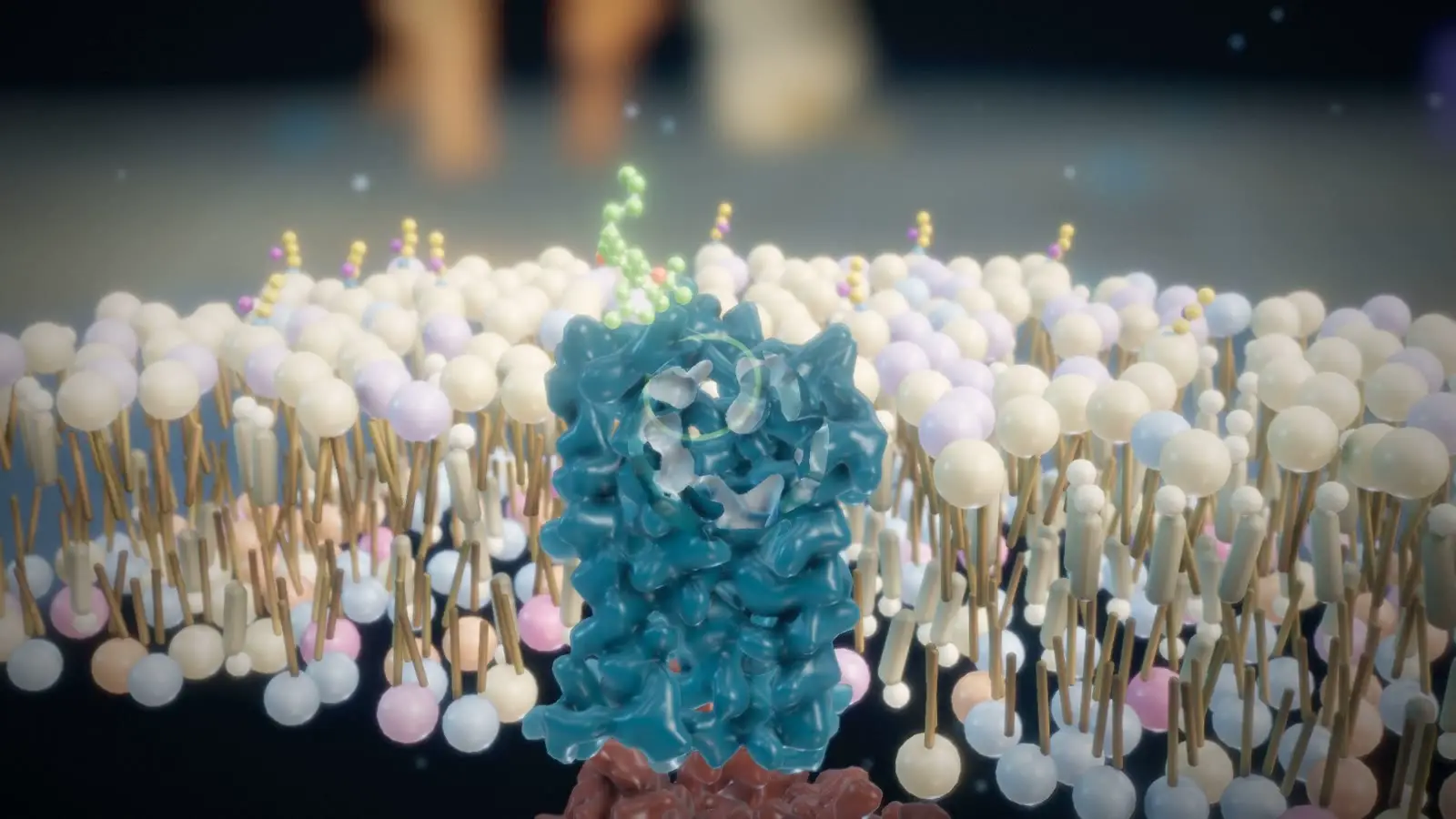
How does THC work? It slips into CB1 like a key into a lock, and it would be easy to think the lock was there for the plant.
But that lock is hundreds of millions of years older than the plant.
So it was built for something your own body makes. You've been high your entire life, and nobody's told you.
How does weed get you high?
How does weed get you high? You can see it in one connection between two brain cells.
This is a synapse. You have about a hundred trillion of them. Messages cross the gap one way, from the top cell to the bottom one.
The lock sits on the top cell, the one doing the talking, and when the bottom cell starts getting too much, it makes its own key on the spot.
See that? The bottom cell carves 2-AG out of its own membrane and sends it backward. Against the traffic.
Your brain makes that key only when it needs it, then breaks it down in moments.
That's happening in your head right now. Somewhere behind your eyes, a cell just fired, and another one is already telling it to ease off.
THC holds the locks part of the way open, whether the cell asked or not. And your own brake has a harder time getting through. Now picture that everywhere at once. That's the high.
Your enzymes can't cut THC. Your liver has to clear it. That's one reason a high lasts hours, not moments.
What part of the brain does THC affect?
What part of the brain does THC affect? It reaches every part that has the lock, and a 1990 map found the lock densest in the deep movement centers, the hippocampus and the cerebellum, with plenty across the cortex too. So a high changes how you move and how you think at the same time.
Why does THC affect memory?
Why does THC affect memory? The hippocampus, where today becomes memory, is packed with CB1, and THC keeps braking it. A 2006 review of decades of studies found that THC makes it harder to recall what you learn while you're high, though not what you learned before, and it passes with the high.
Does weed release dopamine?
Does weed release dopamine? It does, a little, and it works through the same brake: in rat brain slices, a THC-like drug quieted the cells that normally hold dopamine cells back. In 2015, Dutch and British researchers pooled the brain scans of twenty people given THC and found a small dopamine rise in the reward hub, modest next to other drugs.
Does weed affect your brain permanently?
Does weed affect your brain permanently? In 2012, scans at the US National Institutes of Health found fewer CB1 locks in the cortex of men who smoked every day, and after about four weeks without it, the locks were back to normal. Whether anything else lasts is a bigger question, and I answer it in the video on whether weed kills brain cells.
So THC borrows a brake your brain already had and holds it on everywhere at once. The whole film is on my site, linked below, and next, is weed a depressant?
What the studies show
Every claim in this answer, the study behind it, who was studied, and who paid for the research. “None listed” means the paper names no funder.