What does smoking weed do to your body? Why does weed make your heart race and your eyes red, and why does it make your mouth dry? This walks through what being high feels like, how long a high lasts, and what happens when you smoke weed every day, from the first breath to the come-down.
The full answer
What happens when you smoke weed?
What happens when you smoke weed? THC crosses from your lungs into your blood within seconds and switches on locks your body built for its own cannabinoids. For the next two or three hours, that changes your heart, your eyes, your senses and your appetite. I'm Justin Hartfield, and I've been selling cannabis for twenty-five years.
What does smoking weed do to your body?
So what does smoking weed do to your body first? Your lungs pass THC into your blood so quickly that, in a 1992 study at the US National Institute on Drug Abuse, levels peaked before people had finished the joint and then dropped fast.
Why does weed make your heart race?
Why does weed make your heart race? THC works on the nerves that set your heart's pace. In a 1979 study, four people got drugs that block those nerves' signals before their THC, and their hearts didn't speed up at all, though they felt just as high. At Johns Hopkins, seventeen people who rarely used cannabis smoked twenty-five milligrams of THC, and their hearts sped up by about nineteen beats a minute, back to normal within three hours.
Why does weed make your eyes red?
Why does weed make your eyes red? THC also relaxes your blood vessels, so the tiny ones in the whites of your eyes widen and show. In Norway, among almost six hundred drivers with THC and no other drug in their blood, the more THC they had, the redder their eyes.
Why does weed make your mouth dry?
And why does weed make your mouth dry? In mice, the CB1 lock sits on the nerve endings that tell the salivary glands to make spit, and THC cut the flow within an hour. Your own anandamide works that lock too, because mice missing the enzyme that breaks it down made less saliva.
What does weed do to your brain?
What does weed do to your brain? It borrows a messenger system that works differently from almost every other one you have.
Most of those messengers are made ahead of time and kept in tiny packets at the tips of nerve cells. Dopamine, serotonin, glutamate. When a signal arrives, out they go.
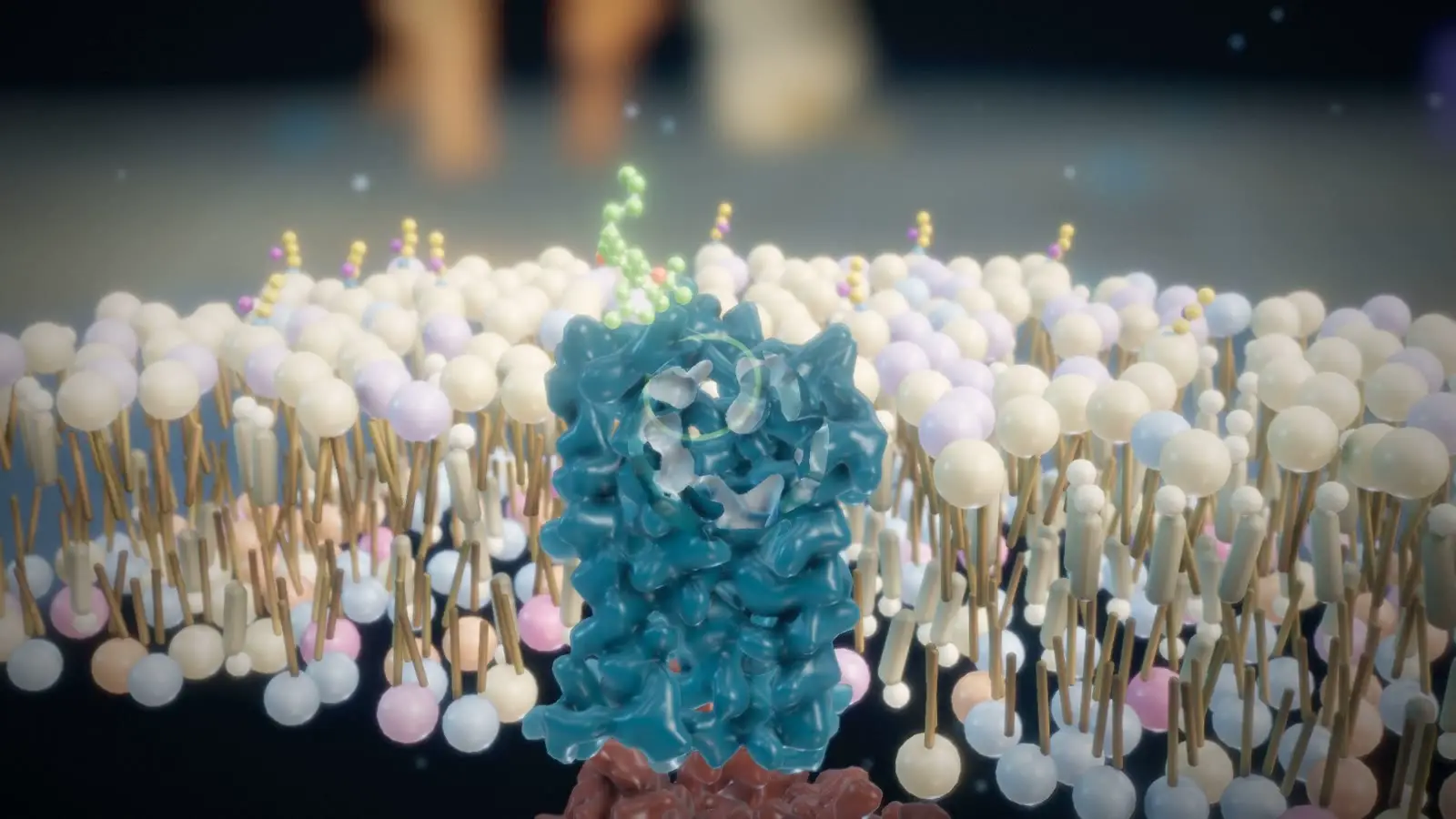
But your cannabinoids aren't kept in packets. A cell makes them when something happens, cuts them from its own membrane, uses them right there, and breaks them down in moments.
THC comes in through your blood and opens locks all over your brain at once, whether anything happened or not. Your enzymes can't cut it, so it lasts two to three hours.
What does being high feel like?
So what does being high feel like? It depends on where the locks are.
They're densest in the deep structures that start and stop your movements. In the cerebellum, which keeps your timing. In the hippocampus, where today becomes memory. And in the olfactory bulb that reads smells. We'll come back to that one.
That's why being high feels the way it does. Where the locks are packed, things shift. If you've ever felt music land in your chest, or laughed your balls off uncontrollably at an inside joke with your BFF, or learned a profound insight, you've felt this system working.
How long does a high last?
How long does a high last? When you smoke, it comes on within minutes and peaks after fifteen to thirty, then fades over the next two or three hours.
Some of it outlasts the THC in your blood, because in that Hopkins study people still felt the strongest dose six hours later, hours after blood tests had stopped finding any.
What happens when you smoke weed every day?
What happens when you smoke weed every day? Your body turns the volume down, so the racing heart fades as tolerance builds, and your brain pulls in some of its CB1 locks. Scans of men who smoked daily found fewer of them in the cortex, and about four weeks off brought them back to normal.
So smoking hands your body a key that turns locks everywhere at once for a couple of hours. The whole film is on my site, linked below, and next, why weed makes you hungry, which starts in that smell center I promised to come back to.
What the studies show
Every claim in this answer, the study behind it, who was studied, and who paid for the research. “None listed” means the paper names no funder.