JUSTIN HARTFIELD

THCA VS THC · 5:51

THCA vs THC: what's the difference?

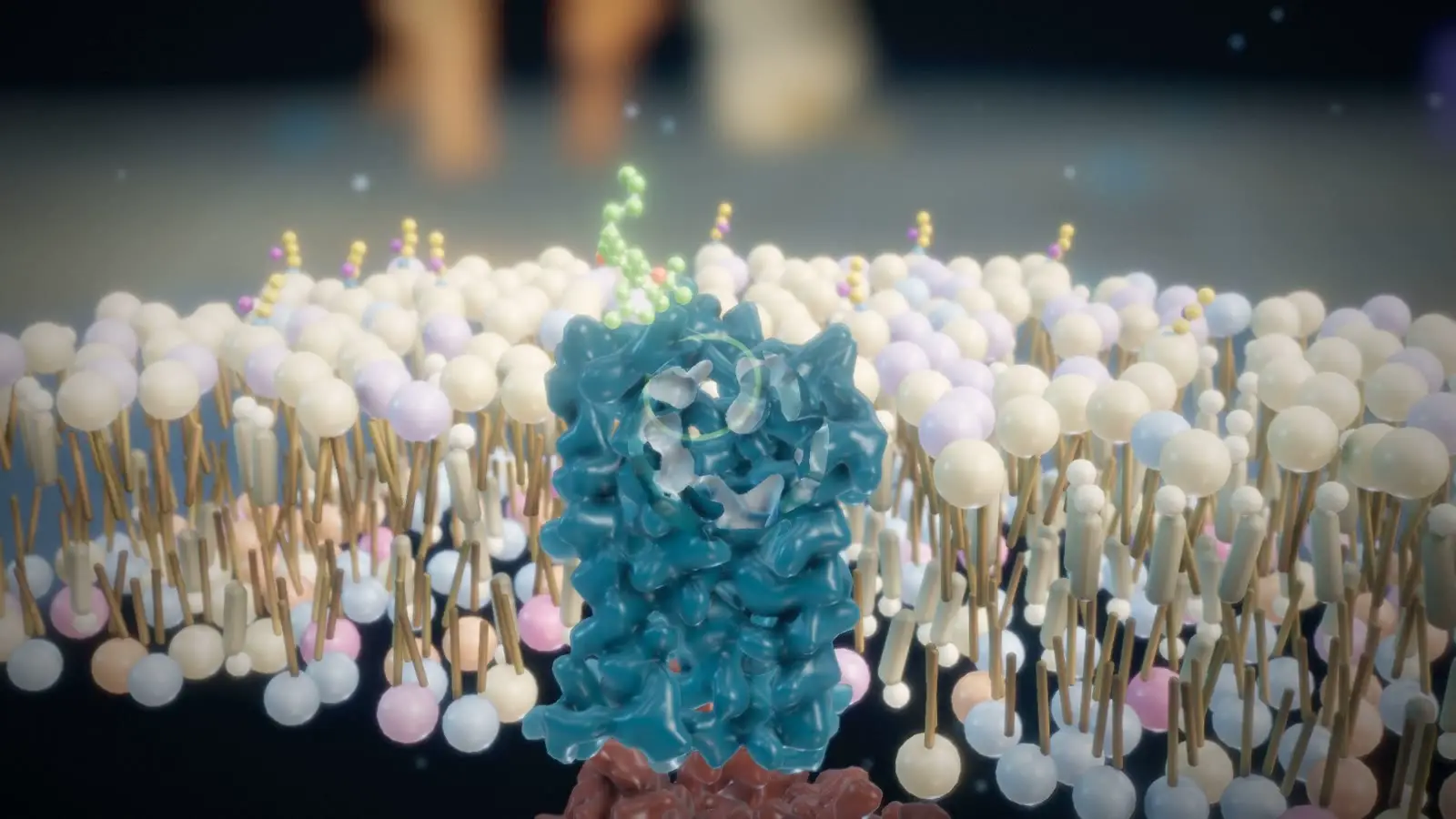
THCA is the form the cannabis plant actually makes. It barely fits the CB1 lock that THC turns, so on its own it doesn't get you high.

THCA vs THC: Why Raw Weed Doesn't Get You High Watch on YouTube Subscribe

What is THCA, does it get you high, and how does it turn into THC? This covers where the plant makes it, what a 2017 test on human CB1 locks found once the sample was checked for THC, how fast heat converts it in a vacuum oven and how much smoking converts, what happens when you swallow it raw, what studies in rats, shrews and mice found, and whether THCA shows up on a drug test.

The full answer

THCA vs THC: what's the difference?

THCA versus THC: what's the difference? THCA is the form the cannabis plant actually makes, and it barely fits the lock in your brain that THC turns, so on its own it doesn't get you high. I'm Justin Hartfield, and I've been selling cannabis for twenty-five years. Most of the THC in a cannabis flower is still THCA until someone heats it, and the heat from a lighter or an oven is what turns it into THC.

What is THCA?

What is THCA? THCA is tetrahydrocannabinolic acid, which is THC with an acid group, a carbon and two oxygens, still attached to its side. In 2004, a team in Japan found the gene for the enzyme that builds it, THCA synthase, and showed that it turns a precursor called CBGA into THCA. The plant makes and stores it in the sticky glands on its flowers and leaves, and in fresh plant material about ninety percent of the THC is still in this acid form. Hemp plants run a different enzyme on the same precursor and make CBD's acid instead.

Does THCA get you high?

Does THCA get you high? Not by itself, because it barely fits the lock. THC gets you high by holding down a brake your brain already has, a lock called CB1. In 2017, a team at the University of Auckland tested THCA on human CB1 locks in cells. They used a certified reference sample, checked it first, and found that even it was two percent THC. THCA bound the lock about sixty-two times more weakly than THC did, and at their highest dose the binding they saw matched what that two percent of THC would do by itself. A lab in Vienna had reported in 2014 that THCA bound about as tightly as THC, and the Auckland team thinks THC that formed in the sample explains results like that. In rats, THCA didn't lower body temperature or slow them down, two standard signs of a drug turning CB1.

How does THCA turn into THC?

How does THCA turn into THC? Heat knocks the acid group off as carbon dioxide, and what's left is THC, the shape that fits the lock. Chemists call this decarboxylation. In 2016, chemists at the University of Mississippi heated cannabis extract in a vacuum oven and timed it. Below about a hundred degrees Celsius, some THCA was still left after an hour. At a hundred and ten degrees, about two hundred and thirty Fahrenheit, it was nearly gone in thirty minutes, at a hundred and thirty in nine minutes, and at a hundred and forty-five in six. Smoking doesn't convert all of it. When forensic chemists in Basel simulated smoking in 2005, only about thirty percent of the THCA came out as THC. Time does the same job, only much more slowly. In dried flower kept in glass at room temperature, THCA had dropped to eighty percent of its starting level after twenty-five months.

Does raw THCA get you high if you eat it?

Does raw THCA get you high if you eat it? Probably not, because your body doesn't seem to do the job that heat does. In 2009, forensic toxicologists in Freiburg fed pure THCA to rats and found its breakdown products in their urine, but no THC. Swallowed THCA does reach the blood in people. In 2025 at Johns Hopkins, fifteen adults swallowed a hemp extract with roughly equal amounts of THC and THCA, and THCA, along with CBD's acid form, peaked in their blood at nineteen to twenty-five times the level of THC and CBD. That tells you the acid is absorbed well. It doesn't tell you THCA does anything once it's in the blood, and whether much of it reaches the brain hasn't been measured. A 2016 review pointed out that brain levels had been reported for several plant cannabinoids but not for THCA, and its author suspected the acid group keeps most of it out. Raw flower also isn't pure THCA, because part of it turns into THC on the shelf.

Does THCA do anything in the body?

Does THCA do anything in the body? In animals it does something. In 2013, a team in Canada gave tiny doses of THCA to rats, which then showed fewer signs of nausea, and to shrews, which vomited less. Oddly, a drug that blocks CB1 stopped the effect, even though THCA barely binds that lock, and the Auckland team lists that as an open question. In 2017, a team in Spain gave THCA to mice poisoned with a toxin that damages the striatum, a movement center in the brain, and it protected those nerve cells through a different receptor, called PPAR-gamma. I found no trial that has given people THCA on its own and measured whether it helps with anything, so the health claims for raw THCA rest on studies in rats, mice and cells.

Will THCA show up on a drug test?

Will THCA show up on a drug test? If you smoke it, yes. Smoking turns part of it into THC, and urine tests look for what your body makes from THC, a breakdown product called THC-COOH. THC made from THCA flower is the same molecule as THC from any other flower. The THCA that doesn't convert gets into your blood as well. In 2024, a forensic lab in Leipzig checked blood from more than eight hundred drivers with THC in it, and nearly half also had measurable THCA. I found no study that gave people flower sold as THCA and then ran a workplace drug test, but chemically there's nothing to tell that THC apart. My guess is that plenty of people buying THCA flower don't realize it tests like any other weed.

The whole film is on my site, linked below. Next: What are delta-8 and HHC?

What the studies show

Every claim in this answer, the study behind it, who was studied, and who paid for the research. “None listed” means the paper names no funder.
What the video saysSourceWho was studiedFunded by
THCA is the form the cannabis plant actually makes; the neutral forms "do not occur in significant concentrations" in the plant Wang 2016
Moreno-Sanz 2016
lab chemistry; narrative review Wang: none listed; one co-author is from Waters Corporation, an instrument maker. Moreno-Sanz: none listed
THCA barely fits the lock in your brain that THC turns, so on its own it doesn't get you high McPartland 2017
Moreno-Sanz 2016
human receptors in cells, lab study; review McPartland: none listed; the first author lists GW Pharmaceuticals as an affiliation
Most of the THC in a cannabis flower is still THCA until someone heats it Jung 2009
McPartland 2017
review statement in a rat study; seized samples reviewed Jung: none listed; McPartland: none listed; the first author lists GW Pharmaceuticals as an affiliation
The heat from a lighter or an oven is what turns it into THC Geci 2022
Wang 2016
McPartland 2017
review; lab chemistry Geci: none listed; Wang: none listed (one co-author from Waters Corporation); McPartland: none listed; the first author lists GW Pharmaceuticals as an affiliation
THCA is tetrahydrocannabinolic acid, THC with an acid group, a carbon and two oxygens, still attached to its side McPartland 2017 chemistry McPartland: none listed; the first author lists GW Pharmaceuticals as an affiliation
In 2004, a team in Japan found the gene for THCA synthase and showed that it turns a precursor called CBGA into THCA Sirikantaramas 2004 plant gene, lab study none listed
The plant makes and stores it in the sticky glands on its flowers and leaves, and in fresh plant material about ninety percent of the THC is still in this acid form Moreno-Sanz 2016
Jung 2009
review; review statement in a rat study none listed
Hemp plants run a different enzyme on the same precursor and make CBD's acid instead Taura 2007
Moreno-Sanz 2016
plant enzyme, lab study; review none listed
THC gets you high by holding down a brake your brain already has, a lock called CB1 Matsuda 1990
Wilson 2001
the receptor cloned; the backward brake signal in brain slices none listed
In 2017, a team at the University of Auckland tested THCA on human CB1 locks in cells; their certified reference sample, checked first, was 2% THC; THCA bound the lock about 62 times more weakly than THC, and at their highest dose its binding matched what that 2% of THC would do by itself McPartland 2017 cells, lab study none listed; the first author lists GW Pharmaceuticals as an affiliation
A lab in Vienna reported in 2014 that THCA bound about as tightly as THC; the Auckland team thinks THC that formed in the sample explains results like that Rosenthaler 2014
McPartland 2017
cells, lab study; critique Rosenthaler: none listed; McPartland: none listed; the first author lists GW Pharmaceuticals as an affiliation
In rats, THCA didn't lower body temperature or slow them down, two standard signs of a drug turning CB1 Rock 2013 rats, lab study none listed (PubMed tags it non-US-government support)
Heat knocks the acid group off as carbon dioxide, and what's left is THC; chemists call this decarboxylation Geci 2022 review none listed
In 2016, chemists at the University of Mississippi heated cannabis extract in a vacuum oven: below about 100 °C some THCA was still left after an hour; at 110 °C (about 230 °F) it was nearly gone in 30 minutes, at 130 °C in 9 and at 145 °C in 6 Wang 2016 cannabis extract, lab chemistry none listed; one co-author is from Waters Corporation
Smoking doesn't convert all of it: when forensic chemists in Basel simulated smoking in 2005, only about 30% of the THCA came out as THC Dussy 2005 lab simulation none listed
In dried flower kept in glass at room temperature, THCA had dropped to 80% of its starting level after 25 months McPartland 2017 review of storage studies McPartland: none listed; the first author lists GW Pharmaceuticals as an affiliation
In 2009, forensic toxicologists in Freiburg fed pure THCA to rats and found its breakdown products in their urine, but no THC Jung 2009
Rock 2013
rats, lab study none listed
In 2025 at Johns Hopkins, 15 adults swallowed a hemp extract with roughly equal amounts of THC and THCA; THCA and CBD's acid peaked in their blood at 19 to 25 times the level of THC and CBD; that shows absorption, not that THCA does anything Elder 2025 15 healthy adults, double-blind placebo-controlled lab study none listed; co-authors from Cultivate Biologics, the product's maker
Whether much of it reaches the brain hasn't been measured; a 2016 review found brain levels reported for several plant cannabinoids but not THCA, and its author suspected the acid group keeps most of it out Moreno-Sanz 2016 review none listed
Raw flower also isn't pure THCA, because part of it turns into THC on the shelf McPartland 2017
Moreno-Sanz 2016
review McPartland: none listed; the first author lists GW Pharmaceuticals as an affiliation
In 2013, a team in Canada gave tiny doses of THCA to rats, which showed fewer signs of nausea, and to shrews, which vomited less; a CB1 blocker stopped the effect, an open question Rock 2013
McPartland 2017
rats and house musk shrews, lab study Rock: none listed (PubMed tags it non-US-government support); McPartland: none listed; the first author lists GW Pharmaceuticals as an affiliation
In 2017, a team in Spain gave THCA to mice poisoned with a toxin that damages the striatum, and it protected those nerve cells through PPAR-gamma Nadal 2017 mice and cells, lab study authors from Phytoplant Research SL, Vivacell Biotechnology SL and Emerald Health Pharmaceuticals (PubMed affiliations)
I found no trial that has given people THCA on its own and measured whether it helps with anything Elder 2025
Kruger 2026
Elder: none listed, co-authors from Cultivate Biologics, the product's maker; Kruger: none listed
Urine tests look for what your body makes from THC, a breakdown product called THC-COOH Spindle 2020 6 adults, crossover NIDA (T32 DA007209); one co-author is from SAMHSA's Division of Workplace Programs
THC made from THCA flower is the same molecule as THC from any other flower Wang 2016 lab chemistry none listed; one co-author is from Waters Corporation
In 2024, a forensic lab in Leipzig checked blood from more than 800 drivers with THC in it, and nearly half also had measurable THCA Höfert 2024 routine forensic samples from drivers, lab analysis none listed

Next answers

All 27 answers →

Where this answer came from

You’ve Been High Your Whole Life, the playable film

Free, in English, Spanish and German. You run the experiments yourself.

Play the film

Get the next answer first

Subscribe on YouTube, or get an email.