What is the endocannabinoid system, and what does it do? This animated explainer covers what endocannabinoids and cannabinoid receptors are, how the ECS works as a brake at your synapses, how THC and CBD act on it, how to increase endocannabinoids naturally, why humans have cannabinoid receptors at all, where cannabis originated and why the plant makes THC, whether dogs and cats have an endocannabinoid system, and what endocannabinoid deficiency is, with my teacher, the biologist Dr. Bob Melamede, in his own voice.
The full answer
What is the endocannabinoid system?
What is the endocannabinoid system? It's locks on your cells and the keys your body makes to turn them, and together they work as a brake. I'm Justin Hartfield, and I've spent twenty-five years in cannabis.
People have burned this plant to get high for at least 2,500 years.
In 1964, two chemists in Israel finally pulled out the molecule that does it. THC.
It took until 1988 to find where it goes. A lock in your brain that THC fits.
But that lock is hundreds of millions of years older than the plant.
So it was built for something your own body makes. You've been high your entire life, and nobody's told you.
What are cannabinoid receptors?
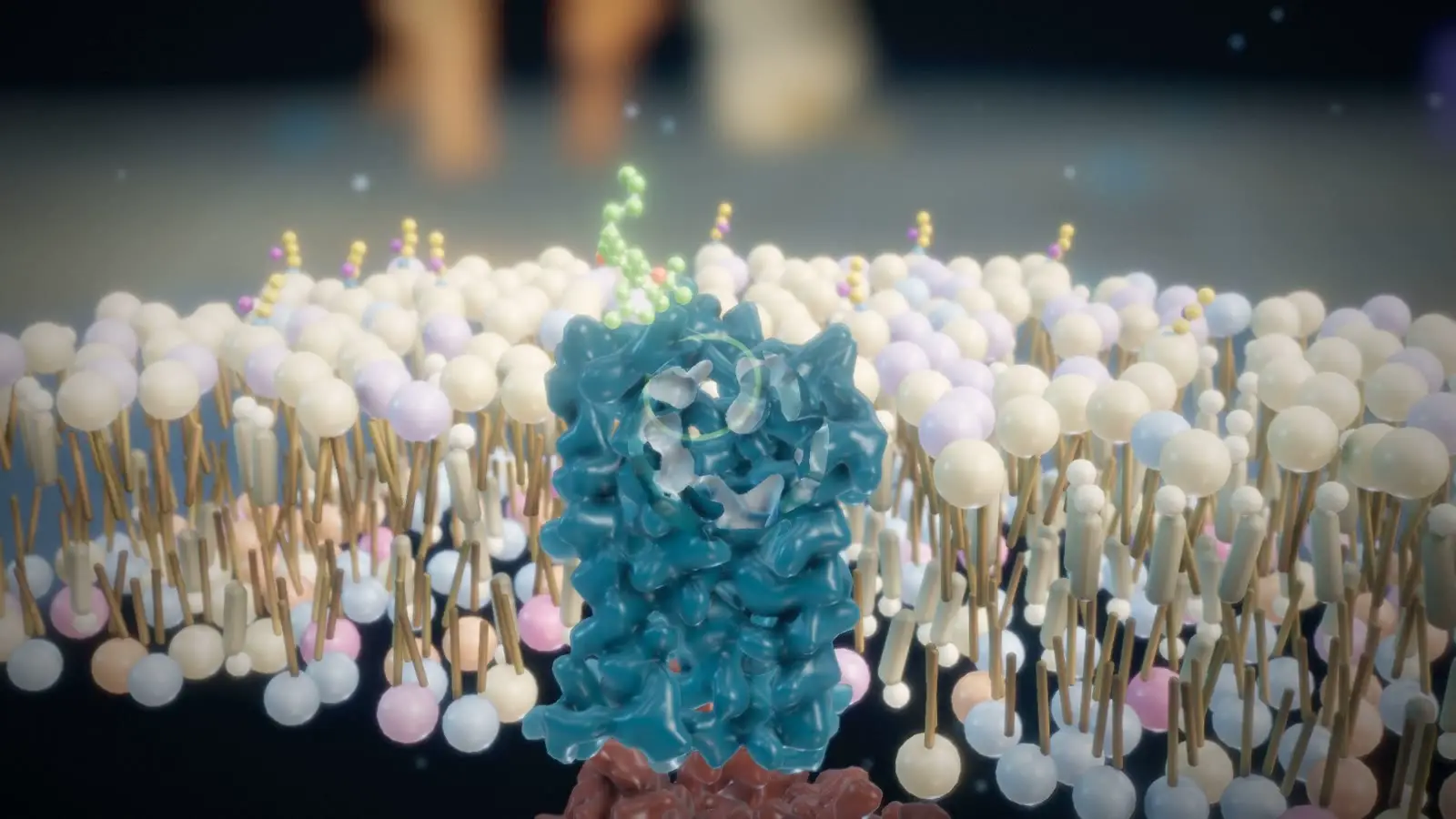
What are cannabinoid receptors? They're the locks, proteins in a cell's wall that switch on when a key lands, and you have two main kinds.
CB1 sits mostly on nerves, and on the liver and fat that store fuel. CB2 was found in 1993 in the spleen, and it sits mostly on immune cells.
What are endocannabinoids?
What are endocannabinoids? They're the keys, the cannabinoids your body makes itself, and the first ever found, in pig brain in Jerusalem in 1992, is the one sliding in now.
That's yours. Anandamide. Your cells make it on demand. Its name comes from the Sanskrit word for bliss.
2-AG. Your brain makes far more of it than anandamide, and it turns the lock all the way.
FAAH. It cuts anandamide in two. That's why your own keys only last moments.
Dr. Bob described it like this:
They're made out of your cell membrane. They're made on demand as your body needs them.
What does the endocannabinoid system do?
What does the endocannabinoid system do? Mostly it works as a brake on the messages between your nerve cells.
This is a synapse. You have about a hundred trillion of them. Messages cross the gap one way, from the top cell to the bottom one.
See that? The bottom cell carves 2-AG out of its own membrane and sends it backward. Against the traffic.
That tells the top cell to ease off, and the same brake has a hand in hunger, pain, stress and letting go of fear.
My teacher, the biologist Dr. Bob Melamede, went further. He thought this system keeps your whole body in balance:
So your immune system, digestive system, cardiovascular system, skin, bones, muscle, everything is regulated from conception until death.
He called it "a very primal homeostatic mechanism", and he saw life as balancing acts, awake and asleep, breathe in and breathe out.
How do THC and CBD act on the endocannabinoid system?
So how do THC and CBD act on the endocannabinoid system? THC is a key from outside the body that fits CB1.
Dr. Bob liked to explain that with hunger:
So every time you get hungry, you're getting hungry because your body is giving you some pot, and that pot is giving you the munchies.
THC holds the locks part of the way open, whether the cell asked or not. And your own brake has a harder time getting through. Now picture that everywhere at once. That's the high.
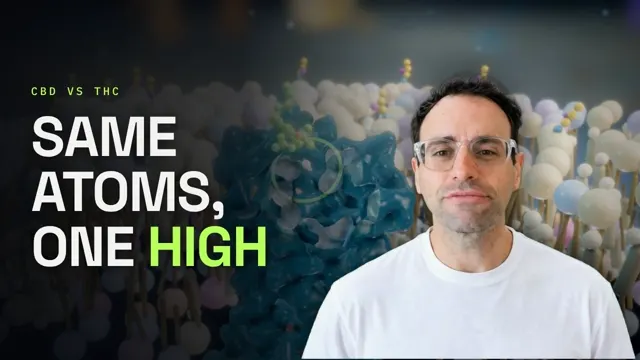
CBD, the other famous cannabis molecule. Surprise. It barely touches this lock.
How can I get endocannabinoids naturally?
How can you get more endocannabinoids naturally?
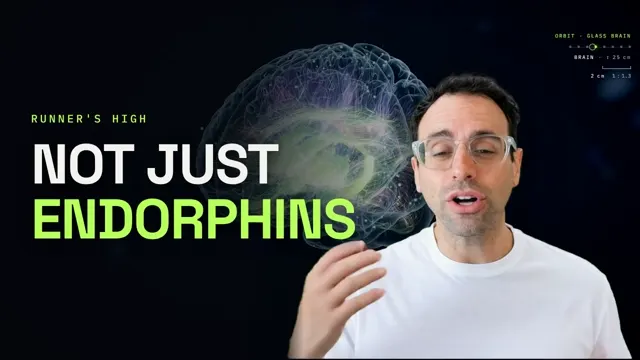
You keep making these keys for the rest of your life, and you can make more. A long run is one way. After forty-five minutes, both of your endocannabinoid keys rise in your blood, and runners still felt the high when scientists artificially blocked their opioid receptors.
And your food supplies the raw material. Your keys are built from fat. In mice raised without enough omega-3s, the locks in the brain's mood centers stopped working.
Dr. Bob put it more bluntly:
So when you hear everybody say, 'Take omega-3s, take essential fatty acids,' it's so you can, your body can make more pot.
Both main keys are built from an omega-6 fat, and omega-3s help keep the locks working, as my answer on always being hungry explains. His own choice was hempseed oil.
Why do we have cannabinoid receptors?
Why do we have cannabinoid receptors? They were never there for the plant.
Start with how old this lock is. A sea squirt has a version of it, so it's more than 500 million years old. Early in the vertebrates, the gene doubled. CB1 went mostly to the nerves. CB2 went mostly to the immune cells.
Dr. Bob had a bigger answer. He thought this lock helped drive our own evolution:
And that's, in my mind, what powered the evolution of humanity. It was the CB1 receptor, which first appeared with the vertebrates.
Where did weed originate?
Where did weed originate? Fossil pollen points to the Tibetan Plateau, and a DNA clock dates its split from hops, its closest relative, to about twenty-eight million years ago. People domesticated it in East Asia about twelve thousand years ago, by one genetic estimate, and ancient China counted hempseed among its five grains. The plant makes THC's raw form, THCA, out in its resin glands, because THCA can kill its own cells. Why it makes cannabinoids isn't settled, but the best evidence is for defense. In a 2023 Cornell study, caterpillars fed them grew less and died more, and one researcher thinks they also evolved against grazing animals like horses, which already had the CB1 lock. As the biologist Dr. Bob Melamede put it,
So the plant is just imitating the way your body works.
Do animals have an endocannabinoid system?
Do animals have an endocannabinoid system?
Everything with a backbone carries this lock. A fly has none at all.
Dr. Bob loved that contrast, between our branch of the animal tree and the insects' branch, which never got the lock:
So protostomes are successful at survival. You look at today's cockroach, and it looks pretty much like, you know, it did millions and millions of years ago. But look at us and how we've changed,
He thought evolution kept making more use of this system, so we have more of it in the higher centres of the brain than "the dog or a chicken".
So yes, cats and dogs have cannabinoid receptors too, but a dog that eats an edible needs a vet, not a stoner flick.
What is endocannabinoid deficiency?
What is endocannabinoid deficiency? It's the neurologist Ethan Russo's hypothesis that some cases of migraine, fibromyalgia and irritable bowel syndrome come from this system running low. An Italian study did find less anandamide in the spinal fluid of people with chronic migraine.
Dr. Bob thought this system's thermostat is "set a little bit too low" for modern life, because of when the set points for inflammation were chosen:
Are they set correctly? And my answer is no, because when did we set them? We set them over the past millions of years,
A century ago, most people died of infections. Today most die of heart disease, cancer and other illnesses of age and inflammation.
His other big ideas have their own answers on my site: what life is, why we age, how weed affects your weight, and what it does to memory and fear.
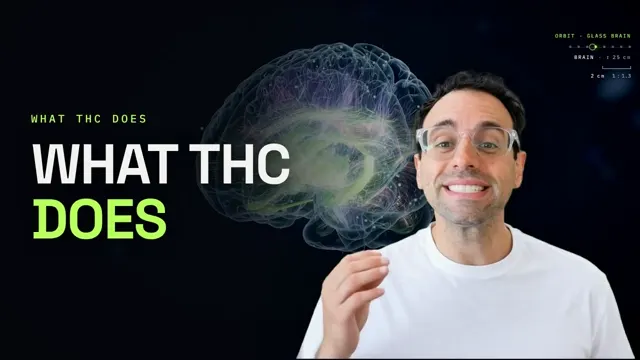
So the endocannabinoid system is your own locks and keys, and THC is a plant's key that fits them. The whole film is on my site, linked below, and next, what THC actually does in your brain.
What the studies show
Every claim in this answer, the study behind it, who was studied, and who paid for the research. “None listed” means the paper names no funder.