JUSTIN HARTFIELD

CHS · 5:56

What is CHS?

Cannabinoid hyperemesis syndrome (CHS) is repeated attacks of severe vomiting after long, heavy cannabis use. It goes away when people stop.

Cannabinoid Hyperemesis Syndrome (CHS): Symptoms, Causes and Recovery Watch on YouTube Subscribe

What is CHS, what are its symptoms, and why do hot showers help? This covers the three phases, what a review of 183 published reports found, why cannabinoids stop vomiting at low doses and cause it at high doses in animal studies, which emergency-room drugs have been tested against it, how long recovery takes, whether CHS can kill you, how vitamin B1 gets tangled up in it, and why emergency-room visits for it rose after 2016. Some people call it scromiting.

The full answer

What is CHS?

Cannabinoid hyperemesis syndrome, or CHS, is repeated attacks of severe vomiting in people who have used cannabis heavily for a long time. It goes away when they stop, and it usually comes back when they start again. I’m Justin Hartfield, and I’ve been selling cannabis for twenty-five years. A pill form of THC has been prescribed for chemotherapy nausea since 1985, the exact opposite of what CHS is purported to do to people, so obviously this needs some further explaining.

What are the symptoms of CHS?

What are the symptoms of CHS? A 2016 review pulled together 183 published reports. Every patient used cannabis regularly, and 97 percent used it at least once a week. They had cycles of nausea and vomiting, most had stomach pain, and about three in four were men. Reviews describe three phases: months of milder nausea, then attacks of vomiting that usually ease within two days, then recovery.

Why do hot showers help with CHS?

Why do hot showers help with CHS? In that review, 92 percent of patients had found that hot baths or showers eased the attacks. Heat is sensed by a receptor called TRPV1, the same one that makes chili burn, and anandamide, one of your own cannabinoid keys, can switch it on too. In a 2020 pilot trial with thirty emergency patients, capsaicin cream from chili, rubbed on the stomach, left them with about half the nausea of a placebo cream after an hour.

Why does weed make some people throw up?

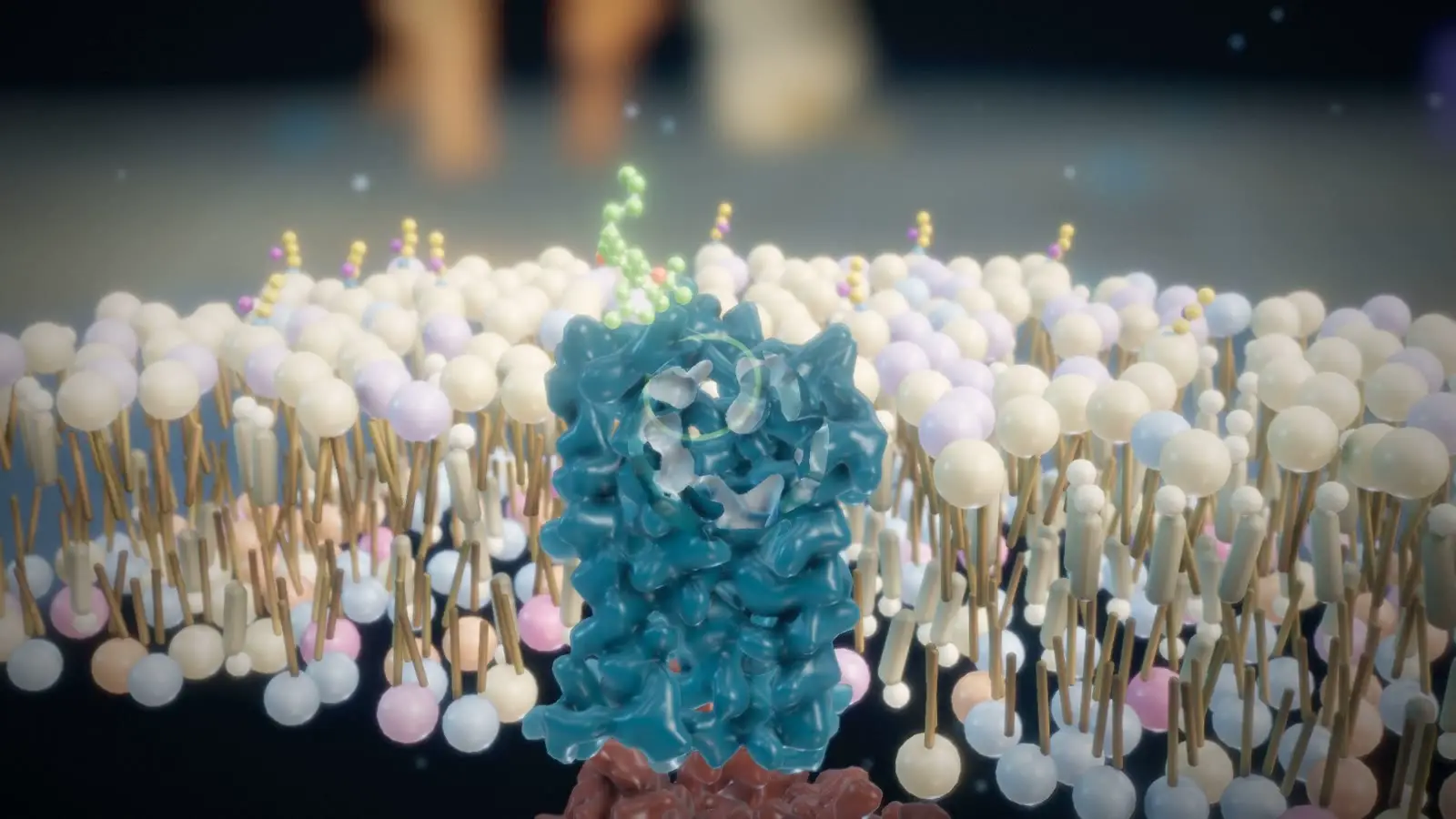
Why does weed make some people throw up? Nobody has proven why. The best clue is dose: in animal studies, cannabinoids stop vomiting at low doses and cause it at high doses. In a 2021 study, patients used several grams a day of high-THC flower or concentrates. THC holds the CB1 lock part of the way open whether the cell asked or not, and with heavy daily use the body pulls some of those locks back. Reviewers think this overload throws off the systems the lock helps run, including stress, body temperature and nausea.

Most heavy users never get CHS. In that study, patients more often carried variants in five genes than heavy users without symptoms, including TRPV1 and the liver enzyme that breaks down THC. Only forty people were tested, and nobody has repeated it yet.

How is CHS treated?

How is CHS treated? Standard anti-nausea drugs often fail. In a 2020 trial with thirty emergency patients, haloperidol, an old antipsychotic, worked better than ondansetron, the usual anti-nausea drug, and patients went home after about three hours instead of five and a half. A 2026 study found that people given haloperidol or droperidol came back to the emergency room within three days about half as often. However, none of these drugs treat the cause of CHS, which is still unknown. The only known way to end CHS is to stop using cannabis.

How long does it take to recover from CHS?

How long does it take to recover from CHS? An attack usually eases within two days, but recovery from the syndrome takes longer. In the 2021 survey, about 88 percent of patients got better after they stopped, and most who started again got sick again quickly. One 2024 review says symptoms settle over six to twelve months after quitting. I found no study that measured this directly, however.

Can CHS kill you?

Can CHS kill you? Rarely, but it has. Repeated vomiting drains the body of water and salts. A 2018 report described three young adults with CHS who died, and in two of them CHS was judged the cause. If you can’t keep water down, go to a hospital.

Is CHS caused by a vitamin deficiency?

Is CHS caused by a vitamin deficiency? Nobody has shown that. Doctors class CHS as a vomiting disorder tied to heavy cannabis use, not as a deficiency. But one vitamin, B1, also called thiamine, gets tangled up in it. Your cells need B1 to turn food into energy, and your body holds only about 25 to 30 milligrams, so it needs a steady supply from food. Weeks of vomiting cut that supply off. In 2026, doctors reported two such patients: a 28-year-old woman who had been vomiting for eight weeks, and a 15-year-old boy who had lost 25 to 30 pounds. Both became confused and unsteady on their feet, and both had trouble with their eyes. Doctors call that Wernicke's encephalopathy. It comes from low B1, and both recovered once they were given it.

It can also run the other way, because low B1 by itself can cause vomiting and stomach pain. In a 2021 case, a 57-year-old woman who used cannabis often and had cut meat and fish from her diet got better within days of high-dose B1. Her doctors thought the B1 did most of the work, but she had also stopped cannabis, so one case can't settle it. I found no study showing that a vitamin lets you keep using without getting CHS. If you've been vomiting for weeks, ask your doctor about B1, and get help fast if you become confused, see double or can't walk straight.

Is CHS getting more common?

Is CHS getting more common? In US emergency rooms, likely CHS visits rose from 4.4 per hundred thousand visits in 2016 to 33 in spring 2020, and were still 22 in 2022. The risk was highest at ages 18 to 25. In a 2026 survey of over a thousand people who had or suspected CHS, the ones using vape cartridges got sick sooner. A larger survey that year linked frequent edibles and concentrates to higher risk, so it isn't settled which form is worst.

The whole film is on my site, linked below.

What the studies show

Every claim in this answer, the study behind it, who was studied, and who paid for the research. “None listed” means the paper names no funder.
What the video saysSourceWho was studiedFunded by
CHS is repeated attacks of severe vomiting in people who have used cannabis heavily for a long time; it goes away when they stop, and it usually comes back when they start again Sorensen 2016
DeVuono 2020
Russo 2021
systematic review of 183 papers, mostly case reports; review; online survey of people with CHS Sorensen: NIGMS, NIDA, NCATS; DeVuono: none listed; Russo: PubMed lists no grants, and several authors work for or advise Endocanna Health, which has applied for a patent on the gene test
A pill form of THC has been prescribed for chemotherapy nausea since 1985 FDA dronabinol label US drug label
That is the exact opposite of what CHS is purported to do to people, so it needs some further explaining Galli 2011 review NIDDK (K24 DK083268)
A 2016 review pulled together 183 published reports: every patient used cannabis regularly, 97% used it at least once a week, they had cycles of nausea and vomiting, most had stomach pain, and about three in four were men Sorensen 2016 systematic review, 183 papers, mostly case reports and case series NIGMS, NIDA, NCATS
Reviews describe three phases: months of milder nausea, then attacks of vomiting that usually ease within two days, then recovery Galli 2011 review NIDDK (K24 DK083268)
In that review, 92% of patients had found that hot baths or showers eased the attacks Sorensen 2016 systematic review, 183 papers NIGMS, NIDA, NCATS
Heat is sensed by a receptor called TRPV1, the same one that makes chili burn, and anandamide, one of your own cannabinoid keys, can switch it on too Caterina 1997
Zygmunt 1999
cloned receptor in cells; isolated arteries none listed for either (PubMed tags both as US Public Health Service supported)
In a 2020 pilot trial with 30 emergency patients, capsaicin cream from chili, rubbed on the stomach, left them with about half the nausea of a placebo cream after an hour Dean 2020 humans, 30 ED patients, double-blind pilot RCT none listed (PubMed tags it non-US-government support)
Nobody has proven why; the best clue is dose: in animal studies, cannabinoids stop vomiting at low doses and cause it at high doses DeVuono 2020
Sorensen 2016
review of mostly preclinical studies; systematic review DeVuono: none listed; Sorensen: NIGMS, NIDA, NCATS
In a 2021 study, patients used several grams a day of high-THC flower or concentrates Russo 2021 online survey, 205 with CHS and 54 heavy users without it PubMed lists no grants; several authors work for or advise Endocanna Health, which has applied for a patent on the gene test
THC holds the CB1 lock part of the way open whether the cell asked or not Pertwee 2008 review of receptor pharmacology NIDA (DA-09789, DA-03672)
With heavy daily use the body pulls some of those locks back Hirvonen 2012
D'Souza 2016
humans, brain PET Hirvonen: NIMH intramural; D'Souza: NIDA, NIMH, NCATS
Reviewers think this overload throws off the systems the lock helps run, including stress, body temperature and nausea DeVuono 2020 review none listed
Most heavy users never get CHS Habboushe 2018
Glodosky 2026
humans, 155 in one New York ED; 10,255 in a national online survey Habboushe: none listed; Glodosky: PubMed lists no grants (International Cannabis Policy Study; one author reports support from the Canadian Institutes of Health Research and the Washington State Liquor and Cannabis Board)
In that study, patients more often carried variants in five genes than heavy users without symptoms, including TRPV1 and the liver enzyme that breaks down THC; only forty people were tested, and nobody has repeated it yet Russo 2021 humans, 40 genotyped PubMed lists no grants; several authors work for or advise Endocanna Health, which has applied for a patent on the gene test
Standard anti-nausea drugs often fail DeVuono 2020 review none listed
In a 2020 trial with 30 emergency patients, haloperidol, an old antipsychotic, worked better than ondansetron, the usual anti-nausea drug, and patients went home after about three hours instead of five and a half Ruberto 2020 humans, 30 ED patients, randomized, triple-blind none listed
A 2026 study found that people given haloperidol or droperidol came back to the emergency room within three days about half as often O'Brien 2026 US ED records, retrospective cohort none listed
None of these drugs treat the cause of CHS, which is still unknown; the only known way to end CHS is to stop using cannabis Sorensen 2016
DeVuono 2020
reviews Sorensen: NIGMS, NIDA, NCATS; DeVuono: none listed
An attack usually eases within two days, but recovery from the syndrome takes longer; in the 2021 survey, about 88% of patients got better after they stopped, and most who started again got sick again quickly Galli 2011
Russo 2021
review; online survey, 205 with CHS, self-reported Galli: NIDDK; Russo: PubMed lists no grants (authors tied to Endocanna Health)
One 2024 review says symptoms settle over six to twelve months after quitting Stubbs 2024 narrative review none listed
Rarely, but it has: repeated vomiting drains the body of water and salts Galli 2011 review NIDDK (K24 DK083268)
A 2018 report described three young adults with CHS who died, and in two of them CHS was judged the cause Nourbakhsh 2018 case reports, 3 none listed
Doctors class CHS as a vomiting disorder tied to heavy cannabis use, not as a deficiency Rome V 2026 consensus classification none listed
Your cells need B1 to turn food into energy, and your body holds only about 25 to 30 milligrams, so it needs a steady supply from food NIH ODS thiamin fact sheet US government fact sheet
Weeks of vomiting cut that supply off; in 2026, doctors reported two such patients, a 28-year-old woman who had been vomiting for eight weeks and a 15-year-old boy who had lost 25 to 30 pounds; both became confused and unsteady on their feet, both had trouble with their eyes, and doctors call that Wernicke's encephalopathy; it comes from low B1, and both recovered once they were given it Kattamuri 2026
Abes 2026
case reports, 2 Kattamuri: none listed, no conflicts declared; Abes: authors declare no financial support
It can also run the other way, because low B1 by itself can cause vomiting and stomach pain Smith 2021 review none listed (PubMed tags it non-US-government support)
In a 2021 case, a 57-year-old woman who used cannabis often and had cut meat and fish from her diet got better within days of high-dose B1; her doctors thought the B1 did most of the work, but she had also stopped cannabis, so one case can't settle it Al Shabeeb 2021 one case report none listed
In US emergency rooms, likely CHS visits rose from 4.4 per hundred thousand visits in 2016 to 33 in spring 2020, and were still 22 in 2022; the risk was highest at ages 18 to 25 Swartz 2025 US national ED sample, cross-sectional, billing codes none listed (PubMed tags it non-US-government support)
In a 2026 survey of over a thousand people who had or suspected CHS, the ones using vape cartridges got sick sooner Peterson 2026 humans, 1,134, self-selected online survey none listed; one author runs a CHS Facebook support group, another consults through Plant Amplified Wellness
A larger survey that year linked frequent edibles and concentrates to higher risk, so it isn't settled which form is worst Glodosky 2026 humans, 10,255, national online survey PubMed lists no grants; one author reports support from the Canadian Institutes of Health Research and the Washington State Liquor and Cannabis Board

Next answers

All 26 answers →

Where this answer came from

You’ve Been High Your Whole Life, the playable film

Free, in English, Spanish and German. You run the experiments yourself.

Play the film

Get the next answer first

Subscribe on YouTube, or get an email.