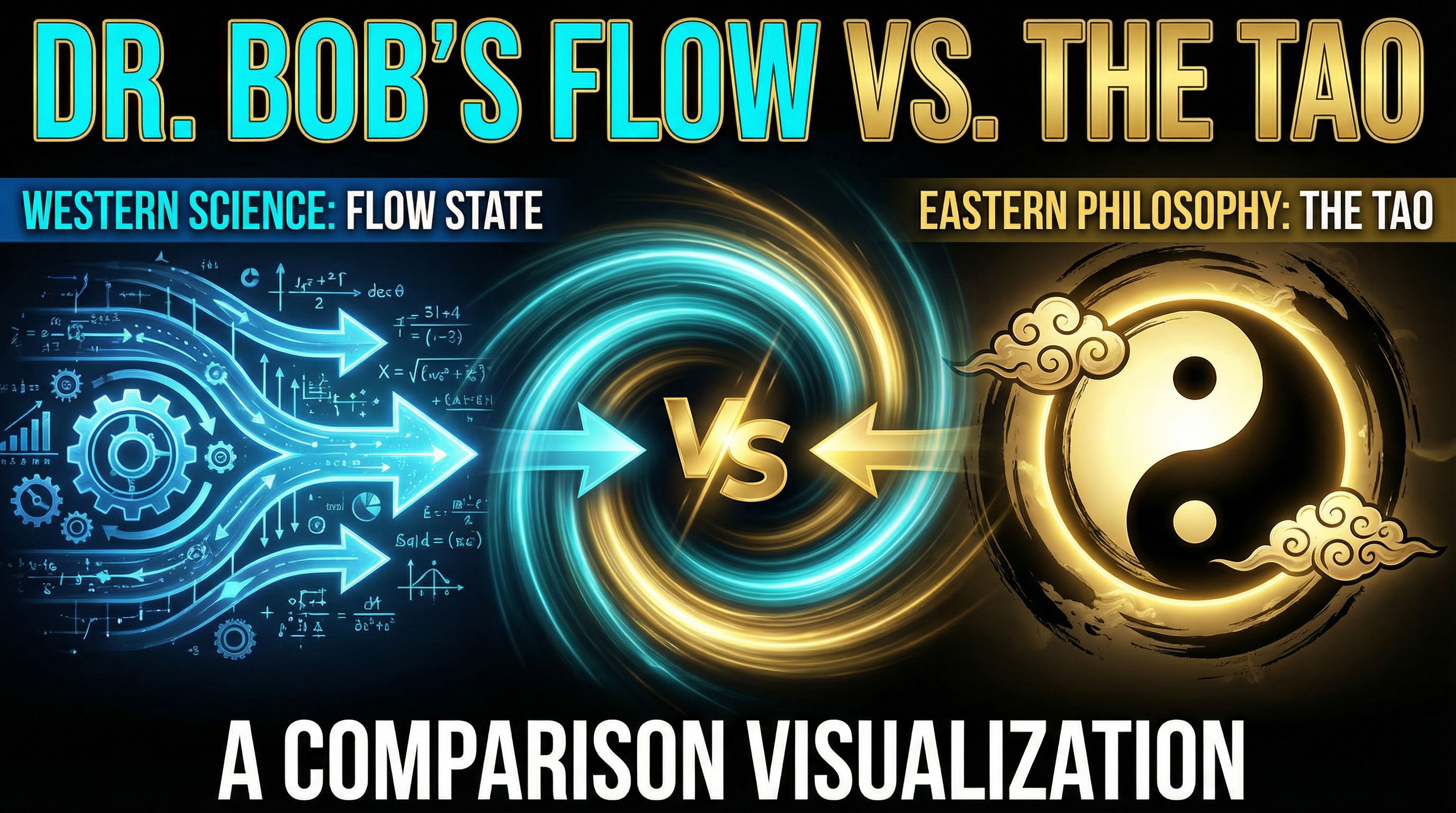
Dr. Bob's Flow vs. The Tao
Dr. Bob talked about 'flow' constantly. He was channeling 2,500 years of Taoist wisdom through a scientific lens. The connection explained.
Full Article
Dr. Bob's Flow vs. The Tao: How a Stoned Hippie Channeled 2,500 Years of Eastern Wisdom
You Think You Know Flow? Think Again.
You've heard the term "flow state." You've probably even used it. That feeling of being "in the zone," where time melts away and you're performing at your absolute peak. Mihaly Csikszentmihalyi made it famous, and now every productivity guru and their dog won't shut up about it. They sell you courses, books, and apps to "find your flow."
And it's mostly bullshit.
Not because flow isn't real. It is. But the way it's packaged and sold is a pale imitation of the real thing. It’s a domesticated, sanitized version of a force that’s wild, chaotic, and as old as the universe itself. What you call "flow" is a puddle. We're talking about the damn ocean.
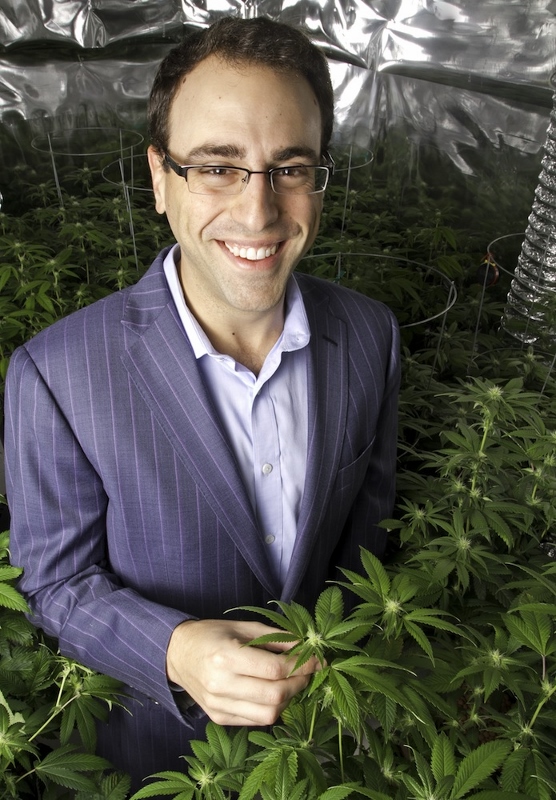
My mentor, the late, great Dr. Bob Melamede, talked about flow constantly. He was a cannabinoid researcher, a PhD in molecular biology, and looked every bit the part of a "stoned-out hippie." But that man was a prophet of modern science, and he was channeling 2,500 years of Eastern wisdom without even knowing it. He was talking about the Tao.
The Problem: You're Addicted to Equilibrium
Here’s the problem: your entire life, you've been taught to seek balance. Homeostasis. Stability. A nice, comfortable, predictable existence. Your biology screams for it, your culture reinforces it, and your brain rewards you for it. You want to be in a state of equilibrium, where everything is settled and nothing is changing.
But here’s the cosmic joke: the universe doesn't do equilibrium. Not for long, anyway. The second law of thermodynamics is the supreme ruler of our reality, and it states that entropy—disorder, chaos, randomness—always increases. Everything in the universe is constantly moving from a state of order to disorder. A system at equilibrium is a system that's dead.
"Life doesn't exist at equilibrium. Life exists far-from-equilibrium, on the ragged edge of chaos."
This was one of Dr. Bob's core teachings. A rock is at equilibrium. A corpse is at equilibrium. A living, breathing, adapting organism is in a constant state of flux, a whirlwind of chemical reactions and energy exchange, perpetually fighting off the inevitable slide into the abyss of disorder. You are not a stagnant pond. You are a river.
This is where the ancient wisdom of Taoism comes in. The Tao, often translated as "the Way" or "the Path," is the natural, spontaneous, and ever-changing flow of the universe. To be aligned with the Tao is to move with this current, not against it. It’s about embracing the chaos, not resisting it. It’s about understanding that the only constant is change.
The Application: Are You a FLP or a BLP?
So what does this all mean for you, right here, right now? It means you have a choice.
Dr. Bob used to talk about two kinds of people: Forward-Looking People (FLPs) and Backward-Looking People (BLPs).
Backward-Looking People are stuck in the past. They resist change. They cling to old ideas, old habits, and old identities. They are terrified of the unknown, and they try to build walls to protect themselves from the chaos of the world. They are fighting a losing battle against the second law of thermodynamics. They are trying to swim upstream, and they are slowly, inevitably, drowning.
Forward-Looking People, on the other hand, embrace the flow. They understand that change is the only constant. They are adaptable, resilient, and creative. They see the chaos not as a threat, but as an opportunity. They are the surfers, the dancers, the improvisers. They are aligned with the Tao. They are living in a far-from-equilibrium state, and they are thriving.
Being a FLP isn’t about being reckless. It’s about being mindful. It’s about paying attention to the present moment, to the subtle signals your body and your environment are sending you. It’s about letting go of the need to control everything and trusting in the process of self-organization. It’s about having the courage to step into the unknown, again and again.
The Takeaway: How to Surf the Chaos
So how do you become more of a FLP? How do you tap into this deeper, more powerful kind of flow?
- Embrace Impermanence: Stop clinging to things. Your job, your relationships, your identity—it’s all temporary. The more you accept this, the less you will suffer when things change.
- Practice Mindfulness: Pay attention to your breath. Feel the sensations in your body. Notice the thoughts passing through your mind without judgment. This is how you anchor yourself in the present moment, the only place where you have any real power.
- Nourish Your ECS: Your endocannabinoid system is your best friend in this journey. A healthy diet, regular exercise, and, yes, for some people, the conscious use of cannabis can all help to keep your ECS in tune.
- Seek Out Novelty: Get out of your comfort zone. Try new things. Travel to new places. Meet new people. Novelty is the food of the FLP. It’s what keeps you adaptable and resilient.
- Let Go of the Past: Forgive yourself. Forgive others. The past is a ghost. It has no power over you unless you give it power. The ECS is literally designed to help you forget. Let it do its job.
This isn't a quick fix. It's a lifelong practice. It's a fundamental shift in the way you see yourself and the world. It’s about moving from a mindset of control to a mindset of surrender. Not a passive, give-up kind of surrender, but an active, engaged, and joyful surrender to the magnificent, terrifying, and beautiful flow of the universe.
It's what the Taoists called Wu Wei, or effortless action. It's what Dr. Bob called living at the edge of chaos. It's the real flow. And it's available to you, right now, in this very moment.
The Deeper Dive: Consciousness and the Cosmos
Let's get a little weird. Dr. Bob wouldn't have it any other way. He saw the principles of far-from-equilibrium thermodynamics not just as a model for biology, but as a model for consciousness itself. He proposed that consciousness is an emergent property of the brain's complex, chaotic, and self-organizing neural network. Your thoughts, your feelings, your very sense of self—it's all a dissipative structure, a temporary pattern of energy and information that is constantly being created and recreated in the crucible of the present moment.
This idea has profound implications. It means that your consciousness is not a static thing, but a dynamic process. It's a verb, not a noun. And just like any other far-from-equilibrium system, it requires a constant input of energy and information to maintain its structure. This is why you need to sleep, to eat, to learn, to experience new things. You are literally feeding your consciousness, providing it with the raw materials it needs to build and rebuild itself, moment by moment.
And it connects back to the Tao in a beautiful way. The Taoist sages spoke of the "uncarved block," the state of pure potential that exists before thought and language impose their structure upon the world. This is the state of maximum entropy, of pure chaos. But out of this chaos, through the process of self-organization, the ten thousand things—the entire manifest universe—emerge. Your consciousness is a microcosm of this cosmic process. It is a dance between chaos and order, between the uncarved block and the intricate sculpture of your experience.
Comments
Related Articles
What the AI Panic Gets Wrong
Cannabis and Enlightenment
The Stoner Stereotype is Dead
Reality is Not What You Think
AI is a Mirror, Not a Monster
Want More?
Subscribe to The Forward Look on YouTube to get notified when new episodes drop.
Subscribe