JUSTIN HARTFIELD

WHY WE AGE · 4:11

Why do we age?

Why do we age? Damage builds up faster than the body clears it, and the inflammation that heals you stops switching off. That is inflammaging.

Why Do We Age? Inflammaging, Telomeres and Senescent Cells Watch on YouTube Subscribe

What causes aging: the hallmarks of aging, telomeres and senescent cells, what inflammaging is, why we die of old age, whether aging can be reversed (the old mice), why some people age faster than others, what biological age is, and why evolution didn't get rid of aging.

The full answer

Why do we age?

Why do we age? We age because damage builds up in our cells faster than the body can clear it, and the inflammation that's meant to heal us stops fully switching off, which scientists call inflammaging. I'm Justin Hartfield, I've spent twenty-five years in cannabis, and in mice, the system cannabis works on is part of that cleanup.

What causes aging?

What causes aging? In 2013, scientists led by Carlos López-Otín in Spain listed nine hallmarks of aging, from damaged DNA and worn-down telomeres to cells that stop dividing. In 2023 they made it twelve, with chronic inflammation among them.

Telomeres and senescent cells

Telomeres are the caps on the ends of your chromosomes, and in 1990 Calvin Harley's team showed they get shorter each time human cells divide in a dish. That may be part of why a cell eventually stops dividing for good.

Cells that stop dividing are called senescent cells, and they sit in your tissues leaking inflammatory signals. In 2016, a team at the Mayo Clinic cleared them out of normally aging mice from their first birthday on. Those mice lived about a quarter longer, with healthier hearts and kidneys.

What is inflammaging?

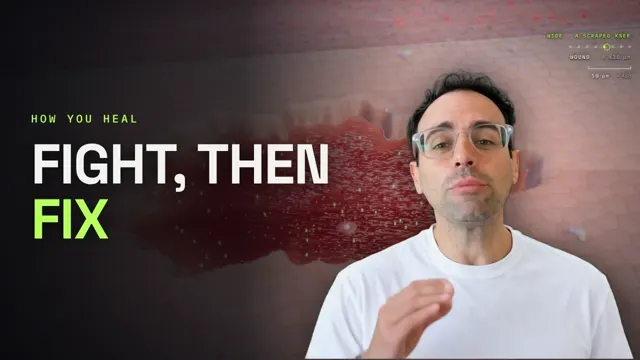
What is inflammaging? Think of the fight your body starts when you scrape your knee, and imagine it never quite ending.

Researchers call it inflammaging. As we get older, the fight switch never fully turns off.

The Italian immunologist Claudio Franceschi named it in 2000, and he argued that inflammation protects you while you're young and turns harmful late in life, in years evolution never planned for.

The biologist Dr. Bob Melamede, who I met in 2010 and who died in 2023, had his own framework for why this happens.

Dr. Bob thought aging was mostly a cleanup crew falling behind, and that the body's own keys, along with the plant's, could help it catch up. Parts of that have good evidence in mice. In people, it's still a theory.

Free radicals are the friction of life, and endocannabinoids are the oil of life.

Why do we die of old age?

Why do we die of old age? We die of the illnesses it brings, because age is the biggest risk factor for most of them.

A century ago, most people died of infections. Today most die of heart disease, cancer and other illnesses of age and inflammation.

Can aging be reversed?

Can aging be reversed? In mice, some of its effects have been turned back, including a drop in learning tied to the endocannabinoid system. In older animals, that system's main lock in the brain, CB1, works less well.

Mice born without CB1 age early. In old mice, a tiny daily dose of THC brought their learning back to the level of young ones. In young mice, it made it worse.

That was a team at the University of Bonn in 2017, working in mice, so what it means for people is still open.

Why do some people age faster than others?

Why do some people age faster than others? Less of it is in your genes than you'd think. In 1996, a study of almost three thousand pairs of Danish twins put the genetic share of lifespan at about a quarter. In 2018, family trees covering hundreds of millions of people put it below ten percent.

What is biological age?

What is biological age? It's how old your body acts, which can differ from the number of birthdays you've had. In 2013 the scientist Steve Horvath built a clock from chemical marks on DNA, and it can read a tissue as older or younger than its years.

Why didn't evolution get rid of aging?

Why didn't evolution get rid of aging? In 1977, the biologist Tom Kirkwood argued that bodies save energy by skimping on the repair of their own cells, so small errors pile up over a lifetime. To me, that's the cleanup crew falling behind, seen from evolution's side.

So we age because damage slowly outpaces repair, and the fight that heals you never quite switches off. The whole film is on my site, linked below, and next, how your body heals itself.

What the studies show

Every claim in this answer, the study behind it, who was studied, and who paid for the research. “None listed” means the paper names no funder.
What the video saysSourceWho was studiedFunded by
We age because damage builds up in cells faster than the body clears it López-Otín 2013
Kirkwood 1977
reviews; theory López-Otín 2013: Wellcome Trust, European Research Council; Kirkwood: none listed
The inflammation meant to heal you stops fully switching off: inflammaging Franceschi 2000
Furman 2019
perspective; review none listed; NIA, NHLBI and other NIH institutes
In mice, the system cannabis works on is part of that cleanup Turcotte 2016
Denaës 2016
Bilkei-Gorzo 2017
mice and cells Turcotte: CIHR; Denaës: none listed; Bilkei-Gorzo: none listed
2013: scientists led by López-Otín listed nine hallmarks of aging, from damaged DNA and worn telomeres to cells that stop dividing; 2023: twelve, chronic inflammation among them López-Otín 2013
López-Otín 2023
reviews, five authors (Oviedo, Madrid, London/Cologne, Barcelona, Paris) 2013: Wellcome Trust, ERC; 2023: none listed
1990, Calvin Harley's team: telomeres shorten each time human cells divide in a dish; that may be part of why a cell stops dividing for good Harley 1990 human fibroblasts in a dish; Harley at McMaster University, Canada (PubMed lists only his affiliation, so the line no longer says "a team in Canada" for all three authors) none listed
Cells that stop dividing are senescent cells, and they leak inflammatory signals Baker 2016 mice; review of the field in the paper see below
2016, Mayo Clinic: clearing them from normally aging mice from their first birthday, the mice lived about a quarter longer, with healthier hearts and kidneys Baker 2016
Baker 2011
mice carrying a built-in genetic switch (INK-ATTAC) on normal, not fast-aging, backgrounds; two genetic backgrounds, both sexes; the clearing was genetic, not a pill (hence "normally aging", where the draft said "ordinary") NIA, NCI, NHLBI
Researchers call it inflammaging; as we age, the fight switch never fully turns off Franceschi 2000 perspective none listed
2000: the Italian immunologist Claudio Franceschi named it; inflammation protects you young and turns harmful late, in years evolution never planned for Franceschi 2000 perspective none listed
Dr. Bob Melamede, met in 2010, died in 2023, had his own framework for why this happens (said as his framework) Seven Days 2023
Hartfield, two speeds
We die of the illnesses old age brings, because age is the biggest risk factor for most of them López-Otín 2013
NCHS
US death records; review
A century ago most died of infections; today most die of heart disease, cancer and illnesses of age and inflammation NCHS US death registration
In mice, some of aging's effects have been turned back, including a drop in learning tied to the endocannabinoid system; in older animals, CB1 works less well Bilkei-Gorzo 2017 mice (the CB1 decline is the abstract's summary of earlier animal work) none listed
Mice born without CB1 age early; in old mice a tiny daily THC dose brought learning back to young levels; in young mice it made it worse Bilkei-Gorzo 2005
Bilkei-Gorzo 2017
Komorowska-Müller 2023
Nidadavolu 2021
mice; one lab (Bonn) none listed for any of the four
1996: almost 3,000 pairs of Danish twins put the genetic share of lifespan at about a quarter Herskind 1996 humans, 2,872 twin pairs NIA
2018: family trees of hundreds of millions of people put it below ten percent Ruby 2018 humans, public family trees on Ancestry ("hundreds of millions of historical persons"), births in the 1800s and early 1900s Industry authorship: all 14 authors list company affiliations in PubMed, 2 at Calico Life Sciences (Alphabet's aging-research company; that ownership is not in the PubMed record) and 12 at Ancestry, whose public trees are the data; PubMed lists no grants (tagged "Research Support, Non-U.S. Gov't"); peer-reviewed in Genetics
Biological age is how old your body acts; 2013, Steve Horvath built a clock from chemical marks on DNA that can read a tissue as older or younger than its years Horvath 2013 human tissue samples NIA
1977: Tom Kirkwood argued bodies save energy by skimping on the repair of their own cells, so errors pile up Kirkwood 1977 theory none listed

Next answers

All 21 answers →

Where this answer came from

You’ve Been High Your Whole Life, the playable film

Free, in English, Spanish and German. You run the experiments yourself.

Play the film

Get the next answer first

Subscribe on YouTube, or get an email.