Justin Hartfield explains THC’s entry into an existing feedback system, Dr. Bob Melamede’s homeostatic framework, absolute risk estimates, anandamide findings, and what CBD and citicoline evidence can actually support.
The full answer
Can weed cause psychosis?
Can weed cause psychosis? It can, though the risk is small in populations of people with no prior signs of mental illness. I'm Justin Hartfield, and I've been selling cannabis for twenty-five years. To understand why the same plant can feel calming to one person and deeply disturbing to another, I want to bring in the biologist Dr. Bob Melamede, who I met in 2010. His starting point was the body's own cannabinoid system, and its role in keeping us in balance.
What counts as psychosis?
What is cannabis-induced psychosis? Cannabis-induced psychosis means hallucinations or delusions that start while someone is high or soon after, that they can't recognize as unreal, and that are bad enough to need a doctor. That's how the psychiatrists' manual, the DSM-5, describes it, and it goes well past the passing paranoia in my video on why weed makes you paranoid.
How long does cannabis-induced psychosis last? In published case reports, people were back to normal within a few hours to a few weeks. A 2026 review of thirty-three studies and about eighteen thousand people found that symptoms had gone into remission within six months in fifty to seventy percent, and carrying on using was the strongest predictor of doing badly.
The feedback system THC enters
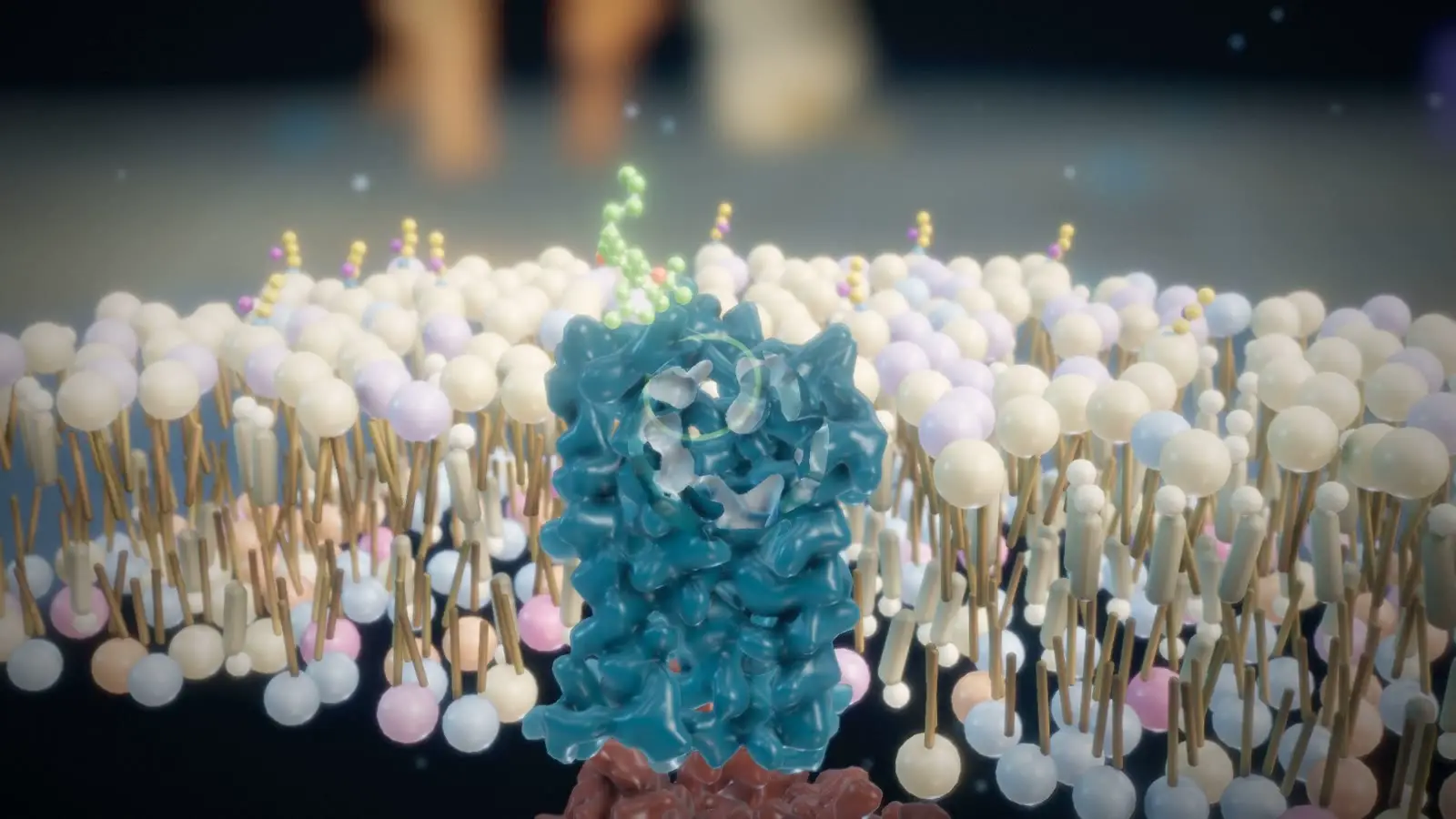
Your brain already makes cannabinoids, including anandamide and two-AG. At connections between nerve cells, these signals travel backward: the receiving cell tells the sending cell to adjust its output. CB1 receptors on the sending end help reduce neurotransmitter release, partly by changing calcium-channel activity. But CB1 also regulates inhibitory signals, the signals that restrain other neurons. Turning down a signal that acts as a brake can release activity elsewhere. So more CB1 stimulation does not simply mean a calmer brain. THC enters this existing network and changes how everything operates.
Dr. Bob's homeostatic framework
Bob connected that feedback to a bigger idea: living things continually use energy to maintain and repair themselves. He described life through far-from-equilibrium thermodynamics, like whirlpools or light combining together to form a laser beam.
In plain English, staying alive is an active process that involves both growth and repair. He saw the endocannabinoid system as one coordinator of that process. From that perspective, an unpleasant response to THC could be about dose, the person's starting state, and/or the network being disturbed. We do not have a clinical test that establishes that psychosis could be caused by ‘overloaded’ CB1 sensors, as is commonly attributed.
Dose, starting state and risk
Bob also emphasized that cannabinoid effects can change with dose and biological state. Researchers call effects that reverse direction across doses biphasic. That helps explain why a calming effect at one dose cannot guarantee the same effect at a larger dose. Baseline endocannabinoid signaling is another variable: frequent high-THC use, previous psychotic illness, and family history all factor in.
What the population studies actually show
How common is weed psychosis? Rarer than the odds ratios make it sound, because the outcome itself is rare. In the big European and Brazilian study, London had about forty six new cases of psychotic disorder per hundred thousand people per year. If cannabis were the cause, the authors estimated it would have been about thirty two without high potency weed. In 2009, a Bristol team estimated that, assuming cannabis caused schizophrenia, about two thousand eight hundred heavy-using men aged twenty to twenty-four in England and Wales would need to stop to prevent one schizophrenia case per year. I’m not sure criminalizing people for using their preferred medicine is justified by that estimate.
So, in short, Psychosis is rare. Daily high potency use makes it less rare. Both of those are true at the same time
Does cannabis cause schizophrenia?
Does weed cause schizophrenia in people with a history of mental illness? That's harder, because the arrow points both ways. The short-term effect isn't in doubt. In a 2023 London trial, forty-six healthy people vaped THC and scored higher on a scale of psychotic symptoms. But in Denmark, people diagnosed with schizophrenia were later diagnosed with cannabis abuse about two and a half times as often.
Is anandamide a protective response?
A small 2003 study found elevated anandamide in the blood of people with acute schizophrenia. Bob discussed it in his 2005 paper where he speculated that, in some people, an immune response could drive excess endocannabinoid activity associated with an abnormal mental state. A separate study by Andrea Giuffrida and colleagues measured anandamide in cerebrospinal fluid. Among untreated patients, higher levels were associated with less severe symptoms. Those authors proposed a compensatory response, as if the body was trying to counter the illness via its own endocannabinoid system.
CBD, whole-plant claims and citicoline
Could CBD or other compounds make THC safer? In one small trial, CBD given before THC reduced some measures of psychotic symptoms, but the difference in the main symptom score was not statistically significant. In another trial, adding CBD to inhaled THC did not significantly reduce the acute adverse effects measured. So CBD is not a reliable shield against THC-related psychosis. Though Dr. Bob often suggested citicoline for unpleasant effects of very high THC exposure.
What follows from this?
The body's cannabinoid system is an ancient, complex balancing system, shared across vertebrates from fish to humans. The useful question is how a substance interacts with a particular person, at a particular dose, and what happens afterward. The studies and the full film are linked below. Next: Is weed addictive?
What the studies show
Every claim in this answer, the study behind it, who was studied, and who paid for the research. “None listed” means the paper names no funder.