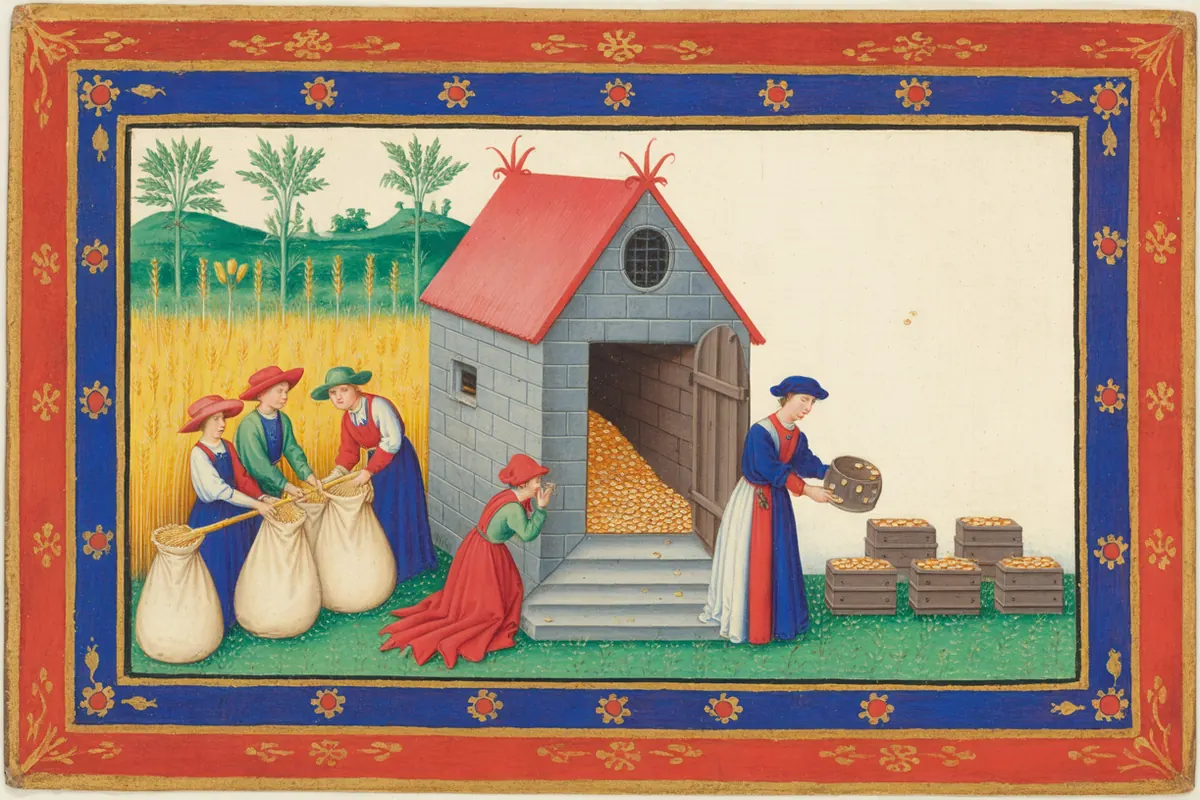
Money Is Stored Energy
Money is energy you saved for later; never put it where you do not understand it, and never in one place.
When you get a real paycheck, do one bit of math before you spend it. Take what landed in your account and divide it by the hours you worked to earn it. That number is what an hour of your life turns into. Now look at the next thing you want to buy and count it in hours. A nice dinner out might be most of a day. A car might be months.
That’s how I think about money. It’s work you did, stored so you can use it later. Rule one says you’re a flow: food and air come in, and work goes out. Money is a way to catch some of that work and keep it, the way a pond behind a dam keeps water for a dry month. It’s your energy, in a jar.
Because it’s stored work, people will always want it. Some will ask for it honestly. Some will offer to make it grow fast. Every few years a new thing comes along that everyone says is the future of money. Some of your friends will be in it. Someone at a party will tell you he doubled his money in a month. I’m not going to tell you what to buy or what to skip. I don’t know what the world will look like when you read this, and nobody knows where prices are going. Anyone who says they do is guessing, or selling.
What I can give you is rule five, pointed at money.
First, don’t put it where you don’t understand it. Here’s the test. Can you say, in two plain sentences, how this thing makes money and how you could lose yours? If you can’t, you don’t understand it yet. If the person selling it can’t, walk away. The people whose job is catching money cheats say the same. Be wary of anything that promises big returns with little or no risk. Stay away from anything you can’t get a straight answer about.
Second, never keep it all in one place. A whirlpool fed by many streams keeps spinning when one of them dries up. When the energy company Enron fell apart in 2001, thousands of its workers lost their jobs. Many also lost much of their savings in the same few months. More than half of the money in their retirement plan was in Enron’s own stock. Their work and their savings sat in one place, so one failure took both. Spread it out: more than one account, more than one kind of thing, more than one way to earn.
Third, test small before you bet big. With money, the cheapest test is often free. Follow the thing on paper for a few months before a single dollar goes in. Write down what you would have done, and what happened. If you do put money in later, put in only what you could lose without it changing your life, and think of it as the price of a lesson. This is where rule four comes in. A small loss rolls back. You learn, and you’re fine. A loss of everything is a fork, and it picks the road for years. Never make a bet that you can’t walk back from.
None of this is about getting rich. It’s about keeping what you worked for, so it’s there for the things you care about.
Try this in the next week.
Make a list of every place your money sits: the bank, any savings, any retirement plan, anything you’ve bought into, money a friend owes you. Next to each one, write two plain sentences. How does this grow? How could I lose it? Anything you can’t write those two sentences for is your homework. Then count the places. If one of them vanished tomorrow, what would be left?
One line to remember
Money is your work, saved. Keep it where you can explain it, and never all in one place.