
What happens when you smoke
The system that answers what happens to you
 ▶ Play this chapter
The script
Every line as it is spoken in the film, in order.
So what actually happens when you smoke? First, one thing about your own cannabinoids. They work differently from almost every other messenger in your brain.
Most of those messengers are made ahead of time and kept in tiny packets at the tips of nerve cells. Dopamine, serotonin, glutamate. When a signal arrives, out they go.
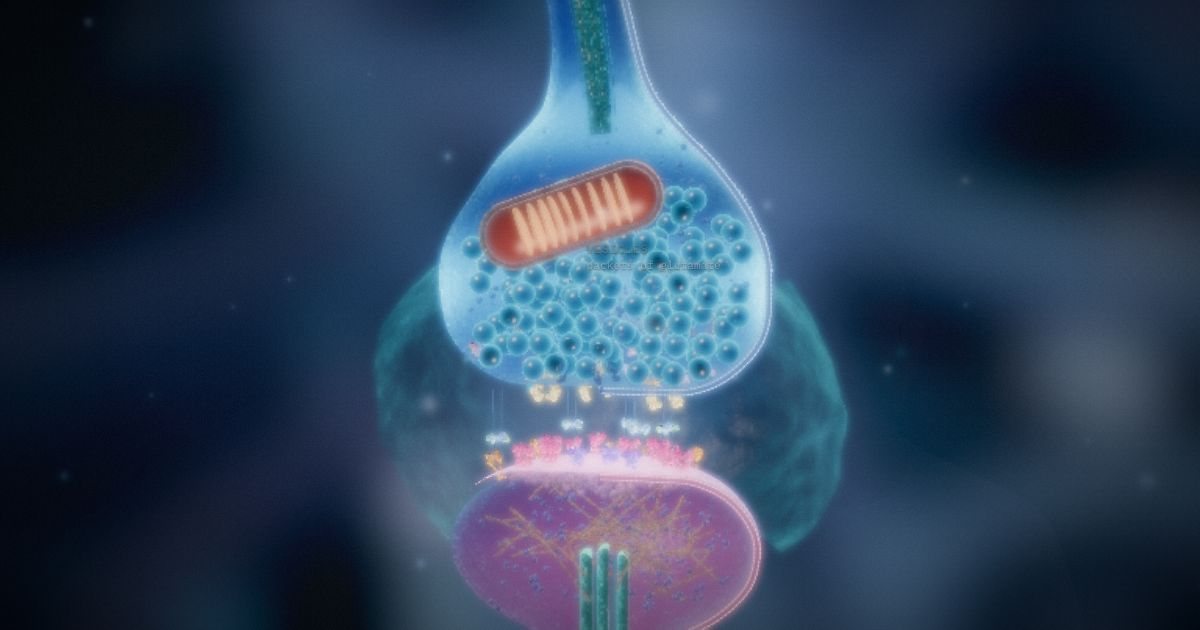
But as we've just seen, your cannabinoids aren't kept in packets. A cell makes them when something happens, cuts them from its own membrane, uses them right there, and breaks them down in moments.
So what makes a cell create them? Well, the things that happen to you. In 2012, seventy-one adults gave a speech to a panel of strangers. Right afterwards, the anandamide in their blood had gone up.
Think about the feeling you had in your body the last time you were really scared. Your body made some of these keys right then.
And when an old fear needs to fade, mice make more endocannabinoids in the amygdala.
Each time, your body is responding to an external stimulus. The keys are made exactly when and where they're needed.
THC comes in through your blood and opens locks all over your brain at once, whether anything happened or not. Your enzymes can't cut it, so it lasts two to three hours.
That's why being high feels the way it does. Where the locks are packed, things shift. If you've ever felt music land in your chest, or laughed your balls off uncontrollably at an inside joke with your BFF, or learned a profound insight, you've felt this system working.
Many people feel more in touch with the world around them. Music, food and touch feel more intense. In mice, CB1 even makes sweet taste stronger.
And the munchies? Remember the olfactory bulb that reads smells? In hungry mice, CB1 receptors there make food smell stronger, so they eat more. Cannabis turns up the same switch.
That's the weed high.
So the plant works through a system you were born with. How much it borrows, and for how long, is the next question.
Sources
Every claim in this chapter with its grade: E established · M emerging (one or two studies, or animals only) · F framework.
- EPiomelli D. The molecular logic of endocannabinoid signalling. Nat Rev Neurosci 2003;4:873–84. (made on demand from membrane lipids and released at once, not stored in vesicles like classical transmitters) link
- EDi Marzo V et al. Formation and inactivation of endogenous cannabinoid anandamide in central neurons. Nature 1994;372:686–91. link
- EWilson RI, Nicoll RA. Endogenous cannabinoids mediate retrograde signalling at hippocampal synapses. Nature 2001;410:588–92. link
- EKreitzer AC, Regehr WG. Retrograde inhibition of presynaptic calcium influx by endogenous cannabinoids at excitatory synapses onto Purkinje cells. Neuron 2001;29:717–27. link
- MDlugos A et al. Acute stress increases circulating anandamide and other N-acylethanolamines in healthy humans. Neuropsychopharmacology 2012;37:2416–27. (71 adults, Trier Social Stress Test: serum anandamide up right after) link
- EMarsicano G et al. The endogenous cannabinoid system controls extinction of aversive memories. Nature 2002;418:530–4. link
- EHerkenham M et al. Cannabinoid receptor localization in brain. PNAS 1990;87:1932–6. link
- EGrotenhermen F. Pharmacokinetics and pharmacodynamics of cannabinoids. Clin Pharmacokinet 2003;42:327–60. link
- ERamaekers JG et al. Cognition and motor control as a function of Δ9-THC concentration in serum and oral fluid: limits of impairment. Drug Alcohol Depend 2006;85:114–22. (smoked THC impaired motor control, impulse control and planning) link
- MTart CT. Marijuana intoxication: common experiences. Nature 1970;226:701–4. (a questionnaire of experienced users; sharper hearing, taste and touch were among the effects they described) link
- MDarakjian L et al. Exploring the interaction between cannabis and music. Ann N Y Acad Sci 2025;1551:140–58. (104 users: more hearing sensitivity and absorption in music while high than sober, by self-report) link
- MMoskowitz H, McGlothlin W. Effects of marihuana on auditory signal detection. Psychopharmacologia 1974;40:137–45. (23 men: THC made a tone in noise harder to detect, more so at higher doses) link
- MYoshida R et al. Endocannabinoids selectively enhance sweet taste. Proc Natl Acad Sci USA 2010;107:935–9. (mice: anandamide and 2-AG raised responses to sweet, through CB1 on taste cells; no effect without CB1) link
- MSoria-Gómez E et al. The endocannabinoid system controls food intake via olfactory processes. Nat Neurosci 2014;17:407–15. (fasted mice) link