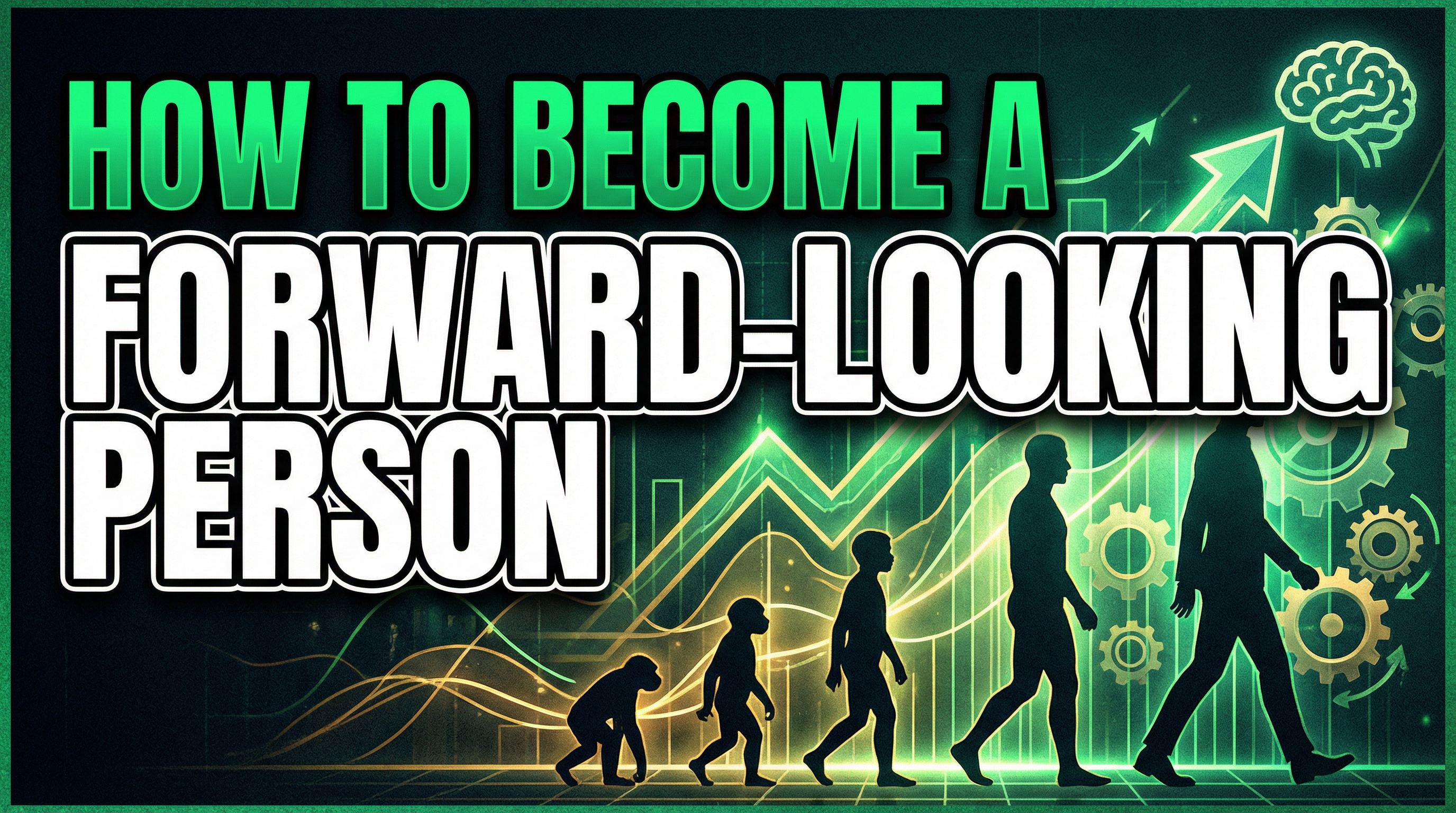
How to Become a Forward-Looking Person
Good news: neuroplasticity is real. You can rewire your brain to embrace change instead of fearing it. The practical guide to becoming an FLP.
Full Article
How to Become a Forward-Looking Person
You think you’re in control. You think you’ve got it all figured out. You’ve got your five-year plan, your retirement account, and your color-coded calendar. You believe in balance, in stability, in a world that makes sense.
Bullshit.
Your entire life is a desperate, deluded attempt to hold back the tide of chaos. You’re clinging to a crumbling sandcastle, pretending the ocean of entropy isn’t about to wash it all away. You’re a Backward-Looking Person (BLP), terrified of the future, clinging to a past that doesn’t even exist.
Sound harsh? Good. It’s supposed to. Because I’m here to tell you that your fear of the unknown, your obsession with “balance,” is the very thing holding you back from a life of growth, adaptation, and genuine vitality. It’s time to stop fighting the current and learn to flow with it. It’s time to become a Forward-Looking Person (FLP).
The Problem: Our Addiction to Equilibrium
From the moment we’re born, we’re taught to seek stability. A stable job, a stable relationship, a stable home. We’re told that happiness lies in achieving a state of equilibrium, a perfect balance where everything is predictable and safe. We’re sold a lie.
The universe doesn’t give a damn about your comfort. The second law of thermodynamics, the supreme ruler of our reality, states that entropy—disorder, chaos, randomness—is always increasing. Everything in the universe is in a constant state of decay and flux. Your body, your relationships, your career, your carefully constructed life—it’s all heading towards disorder.
"The only thing that’s permanent is change. The arrow of time only moves in one direction. You can’t go back."
Trying to maintain a state of perfect equilibrium is like trying to hold your breath forever. It’s a futile, exhausting battle against the fundamental nature of reality. You become a BLP, a person who resists change, who fears the future, and who clings to the illusion of a static past. You spend all your energy trying to patch up the cracks in your sandcastle, while the tide of time relentlessly pulls it apart.
This isn’t just a philosophical problem. It’s a biological one. Your body is a far-from-equilibrium system. It’s a swirling vortex of chemical reactions, a complex, self-organizing system that is constantly adapting and changing. When you resist change, you’re literally fighting against your own biology.
The Application: My Own Journey from BLP to FLP
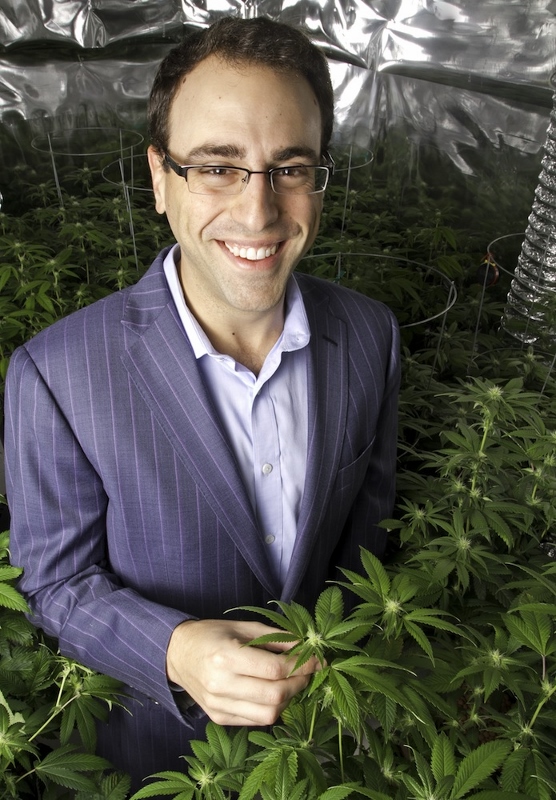
Understanding that our biology resists change helped me recognize how deeply ingrained certain fears and habits can be. For example, I once held strong preconceived notions about drug use, shaped by years of societal conditioning. However, encountering people who used substances like cannabis responsibly and productively challenged those assumptions and showed me that change often requires reassessing our beliefs. This experience was a small but important step in realizing that rigid thinking limits growth—a mindset I had embodied in my own life. I was living by strict routines and avoiding risks to the point where any unexpected event would cause significant anxiety. Recognizing this brittleness was crucial to becoming more forward-looking and adaptable.
My life was a spreadsheet. Every hour was accounted for. Every risk was mitigated. I had contingency plans for my contingency plans. On the surface, I was successful. Inside, I was brittle. The smallest deviation from my plan would send me into a spiral of anxiety. I was so focused on preventing failure that I forgot how to create success. I was so busy looking backward, trying to preserve what I had built, that I couldn’t see the massive opportunities right in front of me.
The turning point was a conversation with Dr. Bob. I was complaining about some business problem, and he just laughed. He said, “Justin, you’re trying to put the ocean in a box. Stop fighting it. Learn to swim.” It was a classic Dr. Bob koan—simple, profound, and delivered with a mischievous twinkle in his eye. He explained that my company, my body, my life—they weren’t machines to be engineered. They were ecosystems to be cultivated. They needed to be stressed, challenged, and pushed to the edge of chaos to grow.
That conversation was a seed. It took years to fully germinate, but it fundamentally changed me. I started to deliberately introduce novelty and chaos into my life. I started new companies in industries I knew nothing about. I traveled to places that made me uncomfortable. I started listening to people I disagreed with. I started saying “yes” to things that scared me.
Slowly, my brain started to rewire. The anxiety didn’t disappear overnight, but it began to loosen its grip. I found that the more I embraced uncertainty, the less I feared it. The more I let go of control, the more creative and effective I became. I was finally learning to swim.
The Takeaway: Your Practical Guide to Becoming an FLP (Expanded)
Becoming an FLP is a practice, not a destination. It’s a daily commitment to choosing growth over comfort. Here’s a more detailed look at how to integrate this into your life:
- Embrace Novelty (The 24-Hour Challenge): For the next 24 hours, do everything differently. Brush your teeth with your non-dominant hand. Listen to a genre of music you hate. Eat something you’ve never tried before. Talk to a stranger and ask them a genuine question about their life. The point isn’t to enjoy these things; the point is to jolt your brain out of its lazy, predictive loops. Your brain craves efficiency, which leads to habit. Your job is to fight that efficiency. This constant introduction of new stimuli is like a workout for your brain’s neuroplasticity.
- Practice Mindfulness (The 3-Minute Reset): You don’t need to sit on a cushion for an hour. Three minutes is all it takes. Set a timer on your phone. For three minutes, just sit and focus on your breath. When your mind wanders (and it will), gently guide it back. That’s it. Do this three times a day. This simple act trains your prefrontal cortex, the part of your brain responsible for executive function and emotional regulation. It’s the mental muscle that allows you to observe your fear-based BLP thoughts without getting swept away by them.
- Challenge Your Beliefs (The Devil’s Advocate): Pick one belief you hold strongly. It could be about politics, religion, or even your favorite sports team. Now, spend 30 minutes actively trying to argue against it. Find the most intelligent, persuasive arguments for the opposing view. This isn’t about changing your mind; it’s about making your mind more flexible. It’s about recognizing that your perspective is just one of many, and that truth is often found in the tension between opposing ideas.
- Nourish Your ECS (The Cannabinoid Diet): Your ECS is built from the fats you eat. Prioritize healthy fats like omega-3s from fish, flax, and chia seeds. These are the literal building blocks of your endocannabinoids. Cut down on processed foods and sugar, which create inflammation and disrupt ECS function. And yes, consider the intelligent use of cannabis. A small amount of THC or CBD can act as a “system reboot,” helping to restore balance to a dysfunctional ECS. It’s not about getting stoned; it’s about targeted therapeutic intervention.
- Find Your Flow (The Unscheduled Hour): Block out one hour in your calendar every day and label it “Flow.” During this hour, you are not allowed to do anything you have to do. No email, no chores, no obligations. You can do anything you want to do. Play an instrument. Write. Go for a walk in nature. Tinker with a project. The only rule is that it has to be something that engages you fully and that you do for its own sake, not for any external reward. This is how you rediscover your intrinsic motivation and reconnect with the joyful, creative, and adaptive part of yourself.
Closing: The Future is Unwritten
Becoming a Forward-Looking Person isn’t about predicting the future. It’s about embracing the fact that the future is unwritten. It’s about letting go of the need for certainty and control, and trusting in your ability to adapt and evolve. It’s about recognizing that you are a part of the great, cosmic dance of creation and destruction, a whirlpool of complexity in the ever-flowing river of time.
Stop building sandcastles. Start learning to surf.
Comments
Related Articles

Wu Wei: The Science of Effortless Action
The Tortoise Strategy
Dr. Bob's Most Controversial Ideas
The Hawaiians Knew: An Introduction to Huna
Carrying the Torch
Want More?
Subscribe to The Forward Look on YouTube to get notified when new episodes drop.
Subscribe