Cannabis Prohibition: A Case Study in Government Failure
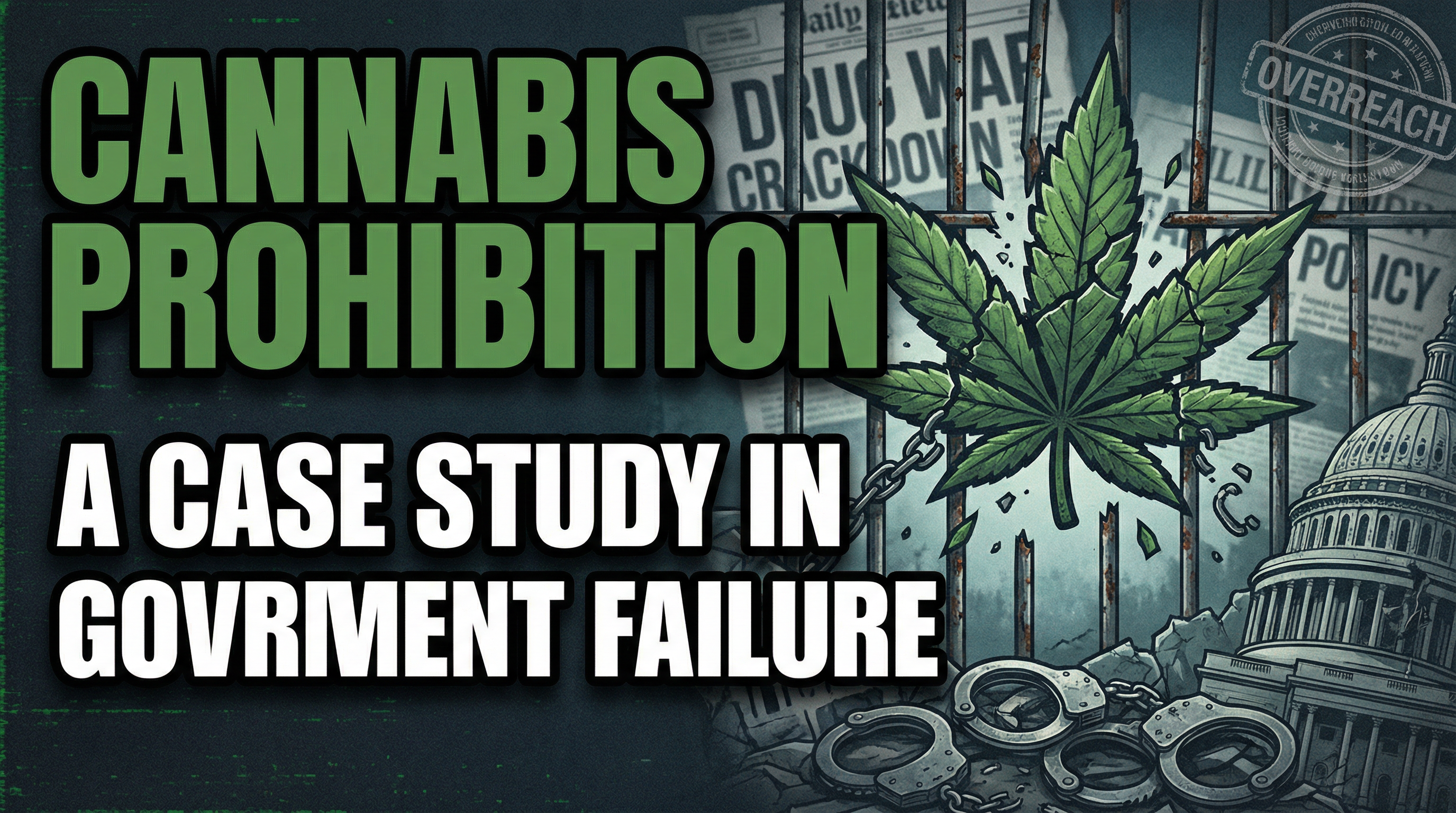
80 years of prohibition. Trillions wasted. Millions imprisoned. Zero reduction in use. The thermodynamics of why drug wars always fail.
Full Article
># Cannabis Prohibition: A Case Study in Government Failure
What if I told you the war on cannabis was doomed from the start, not by politics, but by physics? For 80 years, we’ve been told that cannabis is a menace to society, a dangerous drug that must be eradicated. We’ve wasted trillions of dollars, imprisoned millions of our own citizens, and militarized our police forces, all in the name of a drug war that has achieved absolutely nothing. Zero reduction in use. Zero victory. Just a whole lot of wasted time, money, and lives.
This isn't just a policy failure; it's a fundamental misunderstanding of how the universe works. You’ve been lied to. The whole damn thing is bullshit.
The Problem: A Century of Wasted Effort
Let’s get one thing straight: the prohibition of cannabis has been an unmitigated disaster. It’s a textbook example of a backward-looking policy (a BLP, as I call them) that ignores reality in favor of a fantasy of control. We were promised a drug-free America, a shining city on a hill, free from the supposed evils of a plant. What we got was a black market worth billions, a revolving door of non-violent offenders in our prisons, and a profound disrespect for the law.
Think about it. We’ve spent more money fighting cannabis than we did on the entire New Deal. We’ve arrested more people for cannabis possession than the entire population of North Dakota. And for what? Cannabis is more available today than it was in the 1960s. The only thing we’ve accomplished is making a lot of criminals rich and a lot of ordinary people criminals. The policy of prohibition was born from a toxic cocktail of racism, political opportunism, and sheer ignorance. In the 1930s, Harry Anslinger, the first commissioner of the Federal Bureau of Narcotics, needed a new enemy to justify his agency's existence after the end of alcohol prohibition. He found it in "marijuana," a plant that had been used for centuries in medicine and industry. Anslinger launched a propaganda campaign filled with lurid tales of "reefer madness," linking cannabis use to violence, insanity, and sexual depravity, particularly among minority communities. It was a cynical and effective strategy that led to the Marijuana Tax Act of 1937, the first federal law to effectively criminalize cannabis.
"The definition of insanity is doing the same thing over and over again and expecting different results."
This quote, often misattributed to Einstein, perfectly encapsulates our approach to drug policy. We’ve been banging our heads against a wall for 80 years, and all we have to show for it is a collective headache and a very bruised forehead. It’s time to stop the insanity. It’s time to look at the science.
The Application: The Thermodynamics of Freedom
Trying to prohibit cannabis is like trying to build a dam to stop the flow of time. It’s a fool’s errand. You can’t legislate away a plant that has co-evolved with humans for thousands of years. You can’t stop people from seeking out experiences that make them feel good, that help them to cope with the stresses of life, that connect them to something larger than themselves.
When you try to impose order on a complex system, when you try to create a closed system where there should be an open one, you are fighting a losing battle against entropy. The black market is a perfect example of self-organization, a complex system that has emerged spontaneously to meet a demand that the legal market is forbidden from supplying. It’s a testament to the power of human ingenuity and the indomitable spirit of freedom. Look at the way the cannabis industry has evolved in the face of prohibition. From clandestine growers in the mountains of Humboldt County to the sophisticated dispensaries of today, the cannabis community has shown a remarkable ability to adapt and innovate. This is self-organization in action. It’s a beautiful and powerful thing to witness.
Backward-Looking People (BLPs) can’t stand this. They want to control everything, to impose their will on the world, to create a society that is safe, predictable, and boring. They are terrified of chaos, of the unknown, of anything that challenges their rigid worldview. But Forward-Looking People (FLPs) understand that chaos is the raw material of creation. We know that the future is not something to be feared, but something to be embraced. We are the ones who are willing to take risks, to experiment, to adapt and evolve.
A Personal Note: My Journey with Cannabis
This clash between rigid control and openness came into sharp relief for me during an unexpected personal experience. I found myself in the company of people casually using cannabis—none of the stereotypes I had long been conditioned to expect. These were professionals, thoughtful and productive individuals whose use of the plant did not diminish their clarity or purpose. Trying cannabis for the first time, I realized that many of my fears were unfounded; the experience was far more subtle and manageable than I had imagined. This encounter challenged my preconceived notions and opened my eyes to the possibility that the societal fears surrounding cannabis may be more about control than reality. Such personal journeys are not unique, as millions have discovered cannabis to be a source of relief, creativity, and community, further highlighting the complex relationship between government policy, perception, and individual experience.
I know I’m not alone in this. Millions of people have had similar experiences with cannabis. They have found relief from pain, anxiety, and depression. They have discovered a source of creativity and inspiration. They have connected with a community of like-minded individuals who are passionate about freedom, self-expression, and the pursuit of knowledge. This is the story that the prohibitionists don’t want you to hear. This is the truth that they have tried so hard to suppress.
The Takeaway: Adapt and Evolve
So what’s the solution? It’s simple. We need to stop fighting a war we can’t win and start embracing a future that is already here. We need to legalize and regulate cannabis, not because it’s a panacea, but because it’s the only sane and rational thing to do. We need to treat cannabis not as a criminal justice problem, but as a public health issue. We need to educate people about the risks and benefits of cannabis, and trust them to make their own choices.
This isn’t about being "pro-drug." It’s about being pro-freedom, pro-science, and pro-common sense. It’s about recognizing that the world is a complex and chaotic place, and that the only way to navigate it successfully is to be flexible, adaptable, and open to change.
It’s time to end the war on cannabis. It’s time to stop wasting our money, our time, and our lives. It’s time to flow, adapt, and evolve.

Comments
Previous
EP 103: Why I'm a Thermodynamic Libertarian...
Next
EP 105: The Future is Decentralized...
Related Articles

The Universe Doesn't Care About Your Feelings
Own Your Outcomes

MANAWA: Now is the Moment of Power
Why You're Inflamed (And What To Do About It)
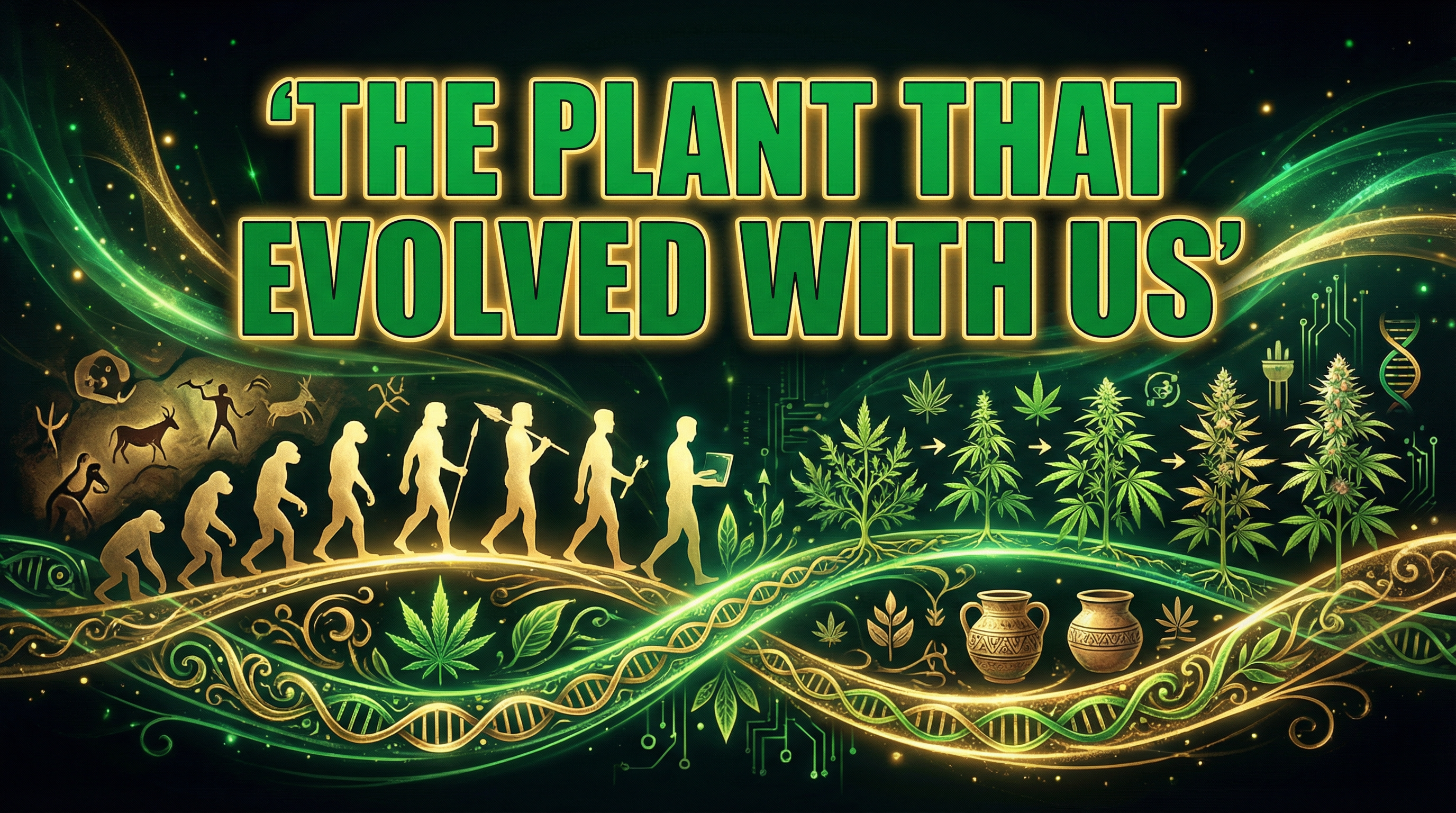
The Plant That Evolved With Us
Want More?
Subscribe to The Forward Look on YouTube to get notified when new episodes drop.
Subscribe