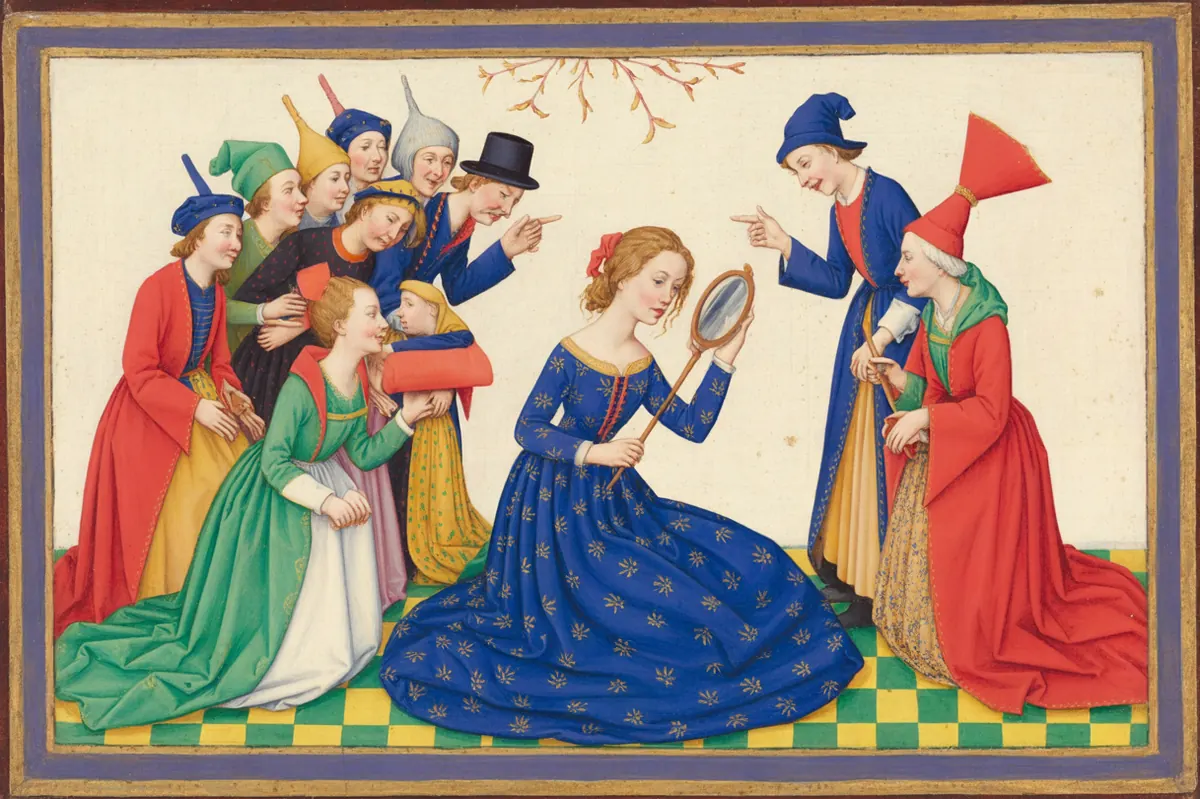
Whose Voice Is in Your Head
Many of your beliefs were handed to you by other people before you could check them; a belief becomes yours when you’ve tested it yourself.
One day you’ll be tired, and someone will do something small and annoying, and a sentence will come out of your mouth that you’ve heard before. Word for word. Same tone, same little sigh at the end. You’ll stop and wonder where that came from. You know where. You heard it a hundred times growing up. Some of those sentences will be mine. I hope a few of them are good ones.

That’s rule two, the map, showing you who drew it. You drew very little of your map yourself. Most of it was handed to you before you could check it. The people who raised you drew some. So did teachers, coaches, friends, the town you grew up in, and the shows you watched. In these letters I call that your Roots: the part of you that’s older than you. Your Roots feed you whether or not you ever look at them.
None of that is bad. Most of what you were handed kept you alive. Look both ways. Don’t touch the stove. Say thank you. If you had to test every one of those yourself, you’d be in trouble by lunch. The only problem is that a borrowed belief and a tested one feel exactly the same from the inside. Both sound like the truth. Both sound like your own voice.
Three things follow from this.
First, ask whose voice it is. A belief you were handed usually comes with a face. Say it slowly, out loud: “Money doesn’t grow on trees.” “Finish what’s on your plate.” “Never let them see you sweat.” Then listen for who’s saying it. Sometimes it’s a parent. Sometimes it’s a coach, a friend from long ago, or an ad you saw a thousand times. Sometimes you can’t hear anyone at all, and those may be the ones you built yourself. Knowing whose voice it is doesn’t make it wrong. It only tells you that you haven’t checked it yet.
Second, test it. That’s rule five: the world gets the last word. A belief becomes yours when you’ve seen it work in your own life. Many old rules were right for the age you were when you got them. “Don’t talk to strangers” kept you safe at six. At thirty, almost every job, friend and partner you’ll ever have starts out as a stranger. The rule wasn’t wrong. You grew past it. So when you find a borrowed voice, don’t argue with it in your head. Try the opposite in some small, safe way, and see what the world says. If the voice was right, keep it, and now it’s yours. If it wasn’t, thank it and let it go.
Third, choose the next voices. Whatever you feed, grows. That’s rule three. The voices in your head at fifty are moving in now, from whoever you spend your days listening to. That means the people you keep close, the things you read, and the things you scroll past at night. You can’t clear your head of voices, and you wouldn’t want to. But from here on, you get a say in whose get to stay.
That goes for me too. These letters are a voice in your head now. Don’t keep any of it on my say-so. Test it like the rest.
Try this tonight.
Write down ten things you believe about how life works. Short lines, about money, work, people, and yourself. Next to each one, write whose voice you hear when you read it. If you honestly can’t hear anyone, write “mine.” Then put a check mark next to the ones you’ve seen work in your own life. Don’t cross anything out. The lines with a name and no check mark are your list. Pick one, and find a small, safe way to test it before the week is over.
One line to remember
Every belief came from somewhere. Keep the ones that pass your own test.