The Machines Are Not Coming for You
AI is a big change like the ones before it; some work will go, and learning to use it early is the best bet you have.
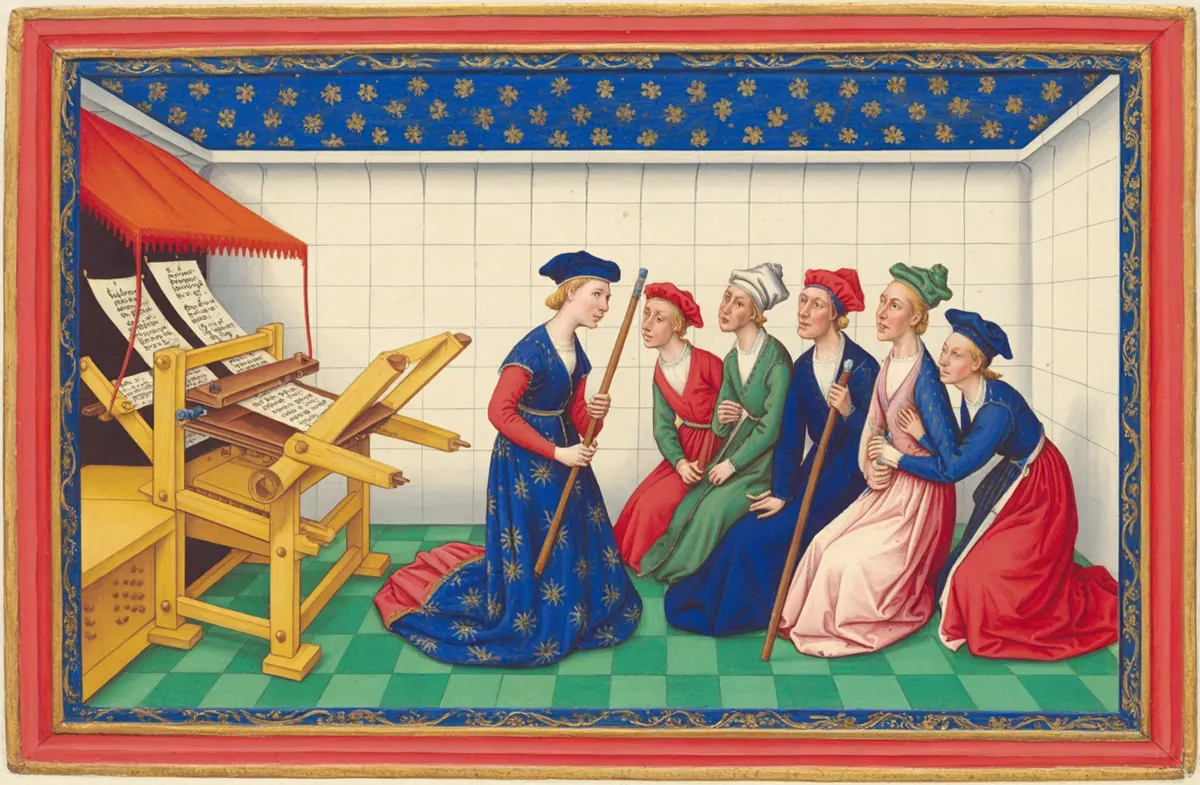
Around 1455, in the city of Mainz, Johannes Gutenberg printed a Bible on his new press. Before that, most books in Europe were written out by hand, one letter at a time. Almost forty years later, a head monk named Johannes Trithemius wrote a little book called In Praise of Scribes. He told his monks to keep writing books by hand. A printed book would never be as good, he said, and he liked animal skin better than paper to write on. Then he had his book printed.
I don’t tell that story to laugh at him. He had real reasons. He thought copying by hand was good for the person doing it, and he may well have been right. But the work of making books moved to the press anyway. One young man, Peter Schöffer, had paid his way through school in Paris by copying books. He went to work for Gutenberg in Mainz and became a printer himself.
Now you’re living through a change like that one. I’m not going to tell you it’s harmless. Some work will change, and some will go away. Between 1920 and 1940, the phone company in America swapped its operators, most of them women, for machines across more than half of its network. The women who already had those jobs were hit hardest. Ten years later, they were more likely to be in work that paid less, or not working at all. The young women who came after them still found work, in offices and in other jobs that were growing. The cost fell hardest on the people standing right where the change landed. That wasn’t their fault.
So why do I say the machines aren’t coming for you? Because they aren’t coming for anyone. A machine doesn’t want your job. It doesn’t want anything. What’s coming is a change, and change is what rule four is about.
First, rule four. You can only push now, and some pushes pick the road. A big change like this one is a long wobble. Things are unsteady, and nobody knows the new shape yet. While that lasts, small pushes count for more than they will once it all settles down. I believe that, but I can’t prove it. It’s why I think the time to learn a new tool is while the ground is still moving.
Second, rule five. Don’t argue about AI. Try it. Most of what you’ll hear about it is loud. It will save us all, or it will end us all. Neither side will settle it. The world will. Your job is smaller and more useful. Find out what it can and can’t do in your own work. I use these tools every day in mine. I hand them my messy notes and half-done ideas and ask them to find the holes. They will surprise you both ways. It will do some things fast and well. It will also get things wrong, sometimes while sounding very sure, so check what it gives you.
Third, here’s my bet, and I want to be honest that it’s a bet. The people who learn these tools early, and keep checking them, will land better than the people who wait. I can’t promise that. Nobody can. But if I had to pick, I’d want you to be the one who walked into the print shop.
Try this this week.
Pick one real task from your work or your life, something that takes you about an hour. Do it once with an AI tool helping you. Then write down three things: what it did well, what it got wrong, and what you still had to do yourself. That third list is where you’re needed. Next week, do it again with a different task, and see how the lists change.
One line to remember
The machines aren’t coming for you. The change is, so walk toward it.