The Ant Who Leaves the Trail
Getting very good at one way of doing things can trap you; even ant colonies keep a few wanderers and some spare hands, and so should you.
You’re going to get very good at something. A job you could do half asleep. A route you drive without thinking. A way with people that works most of the time. It will feel like winning, and most days it will be. I want to tell you about the quiet trap inside it, and the best teachers I know on this one are ants.
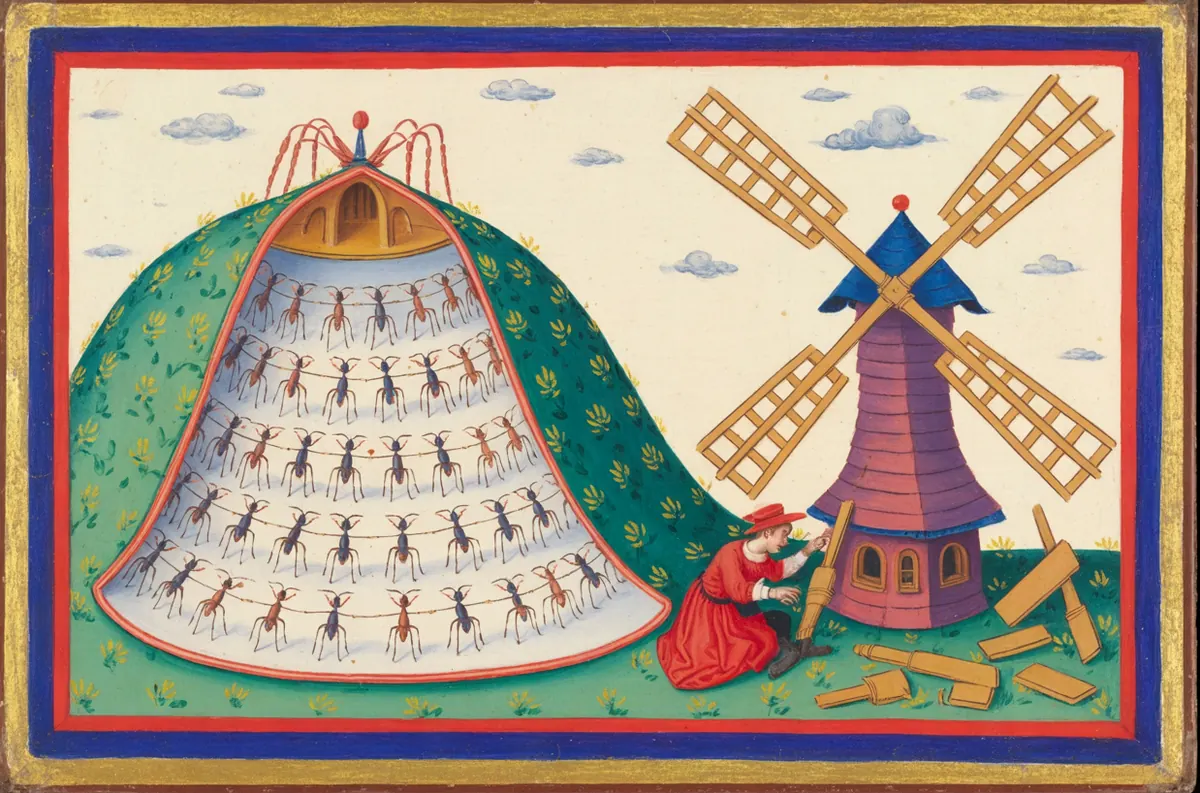
In many kinds of ants, an ant that finds food walks home and leaves a scent on the ground as it goes. Other ants follow the scent, find the food, and add their own scent on the way back. The more ants use a trail, the stronger it smells, and the more ants it pulls in. That’s how a nest with no boss finds its food fast. It’s a beautiful system.
It can also be a trap. A team in Brussels gave black garden ants a poor food source first. Once the ants had a trail to it, the team set out a better one. The ants kept marching to the poor one. The old trail smelled so strong that a new one never got started.
Army ants show the trap at its worst. Their workers see little or nothing, so they follow the scent of the ant in front. Now and then a group loses the main trail and starts following each other in a circle. People who study ants call it an ant mill. In 1921 the naturalist William Beebe wrote about one he found in the jungle of South America. It was about twelve hundred feet around, and each ant took about two and a half hours to go around once. Ants caught in a circle like that can march until they drop. Every ant is doing its job perfectly, and the whole group is going nowhere.
This is rule three and rule five, out in the dirt.
First, a trail is a groove. A groove is a path you fall into without trying. The more you walk it, the deeper it gets, and the harder it is to notice anything off to the side. That’s rule three: whatever you feed, grows. Your best habits are grooves. So are your worst ones. So is “the way we’ve always done it.”
Second, the world keeps moving the food. Rule five says the world gets the last word. A nest that only follows its old trail has stopped asking the world anything.
Here’s the part I love. The ants have an answer. Not every ant follows the trail well. Some wander off by mistake. People who study ants have built careful models of this, and the models say a nest often does better with a few wanderers. They’re the ones who stumble on new food. And in many nests, a big share of the ants sit around doing very little. When a team in Arizona took away the busiest workers, the idle ones stepped in within a week. They weren’t lazy. They were the spare hands.
So keep a few of your own ants off the trail. Spend a small slice of each week on something with no clear payoff: a new street, a class, a person outside your usual circle. Most of it will come to nothing. That’s the price of finding anything new. And leave some slack in your days. A week with every hour full looks smart on paper, and it has nothing left over for a bad day or a good surprise.
Try this in the next week.
Set aside one hour, three times, to wander on purpose. Walk a street you’ve never walked. Read the first chapter of a book from a shelf you never visit. Ask someone at work to show you what they do all day. Don’t aim for anything. At the end of the week, write down one thing you found that you weren’t looking for.
One line to remember
Follow the trail most days. Leave it some days. That’s where the new food is.